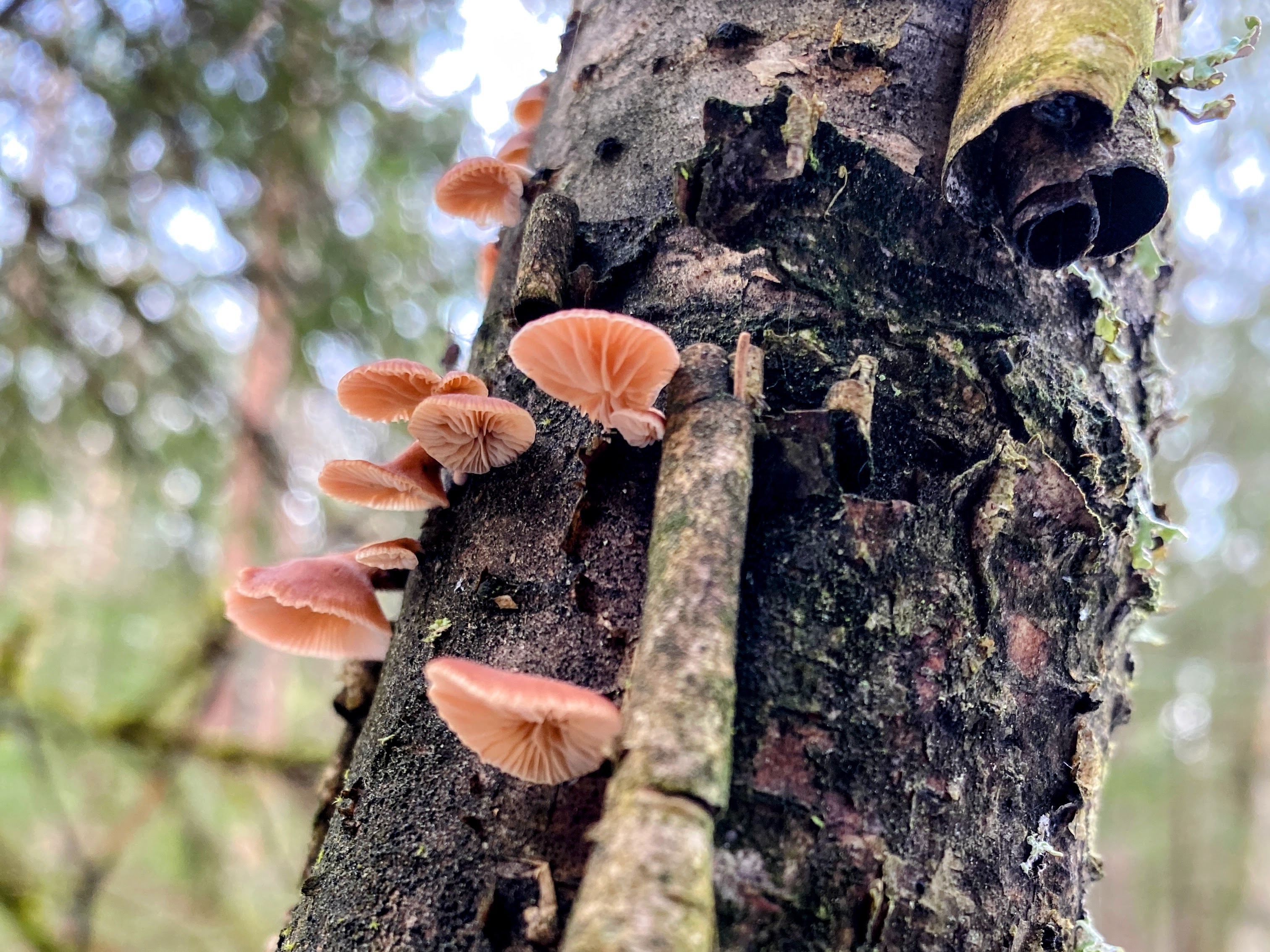
Gaping Panellus (Panellus ringens)
Index Fungorum Panellus ringens (Fr.) Romagn.
MycoBank Panellus ringens (Fr.) Romagn.
Gaping Panellus, open Panus.
ringens, a, um — gaping-mouthed, baring teeth; yawning. Pres. act. participle of ringor, rictus sum, ringi — to gape, to bare teeth.
Panus ringens (Fr.) Fr., Hymenomycetes europaei: 490 (1874)
Lentinus ringens (Fr.) Fr., Synopsis generis Lentinorum: 14 (1836)
Pocillaria ringens (Fr.) Kuntze, Revisio generum plantarum 3 (3): 506 (1898)
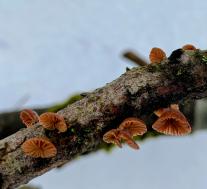
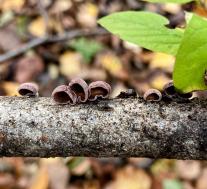
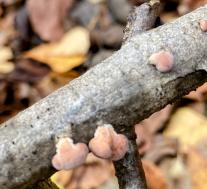
The English common name for this mushroom is "winter oysterling."
0.5–2 cm, initially bell-shaped to nest-like with an incurved margin, then laterally attached, with a short stipe attached to the top of the cap, with a thin radially striate, sometimes wrinkled margin; thin-fleshed, almost translucent, matte, with a whitish bloom or finely hairy, white-pubescent at the base (a characteristic feature); initially pinkish-gray with a violet tint, white-pink-lilac, darker toward the margin, yellowish or whitish at the base, later reddish-brown, red-brown with a lighter margin; in dry weather — pale, in moist conditions — lilac-brown.
Gills radiating from the point of attachment of the basidiome, narrow, sometimes forked without anastomoses, well separated from each other, ranging from grayish-pink to wine-brown and reddish-brown.
Short, 0.2–0.4 cm long and about 0.3 cm in diameter, lateral, attached to the top of the cap (a characteristic feature), yellowish, grayish, with white pubescence.
Thin, dense, gray-lilac; taste indistinct.
Weak, indistinct.
Spore print: white. Spores cylindrical, narrowly cylindrical, allantoid, smooth, colorless.
Grows singly or in small clusters on decaying hardwood. Prefers Populus, Betula, common bird cherry (Prunus padus), as well as Salix and alder as substrates. A rare species. Requires high humidity. Fairly widespread in the Northern Hemisphere.
Similar to the late-autumn Panellus violaceofulvus, which grows on coniferous wood.
A species considered rare everywhere, but as it seems to us, the matter is entirely due to its small size, substrate specialization, and the timing of fruiting body formation.
Add new comment