Variable Polypore (Cerioporus varius)
Index Fungorum Cerioporus varius (Pers.) Zmitr. & Kovalenko
MycoBank Cerioporus varius (Fr.) Zmitr. & Kovalenko
Variable Polypore, Variable Polyporus
Varius, a, um. 1) multicolored, variegated; spotted or piebald; striped; 2) different, various, diverse; 3) conducted with varying success; inclining now to one side, now to the other; changeable, inconstant; 4) mycol. variable.
Melanopus varius (Fr.) Pat., Les Hyménomycètes d'Europe: 137 (1887)
Polyporellus varius (Fr.) P. Karst., Meddeland. Soc. Fauna Fl. Fenn. 5: 37 (1879)
Boletus lateralis Bolton, An History of Fungusses, Growing about Halifax 2: 83 (1788)
Boletus varius Pers., Observationes mycologicae 1: 85 (1796)
Grifola varia (Fr.) Gray, A natural arrangement of British plants 1: 644 (1821)
Polystictus varius (Fr.) G. Cunn. (1965)
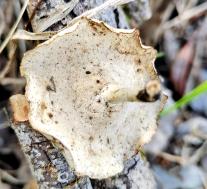
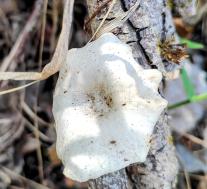
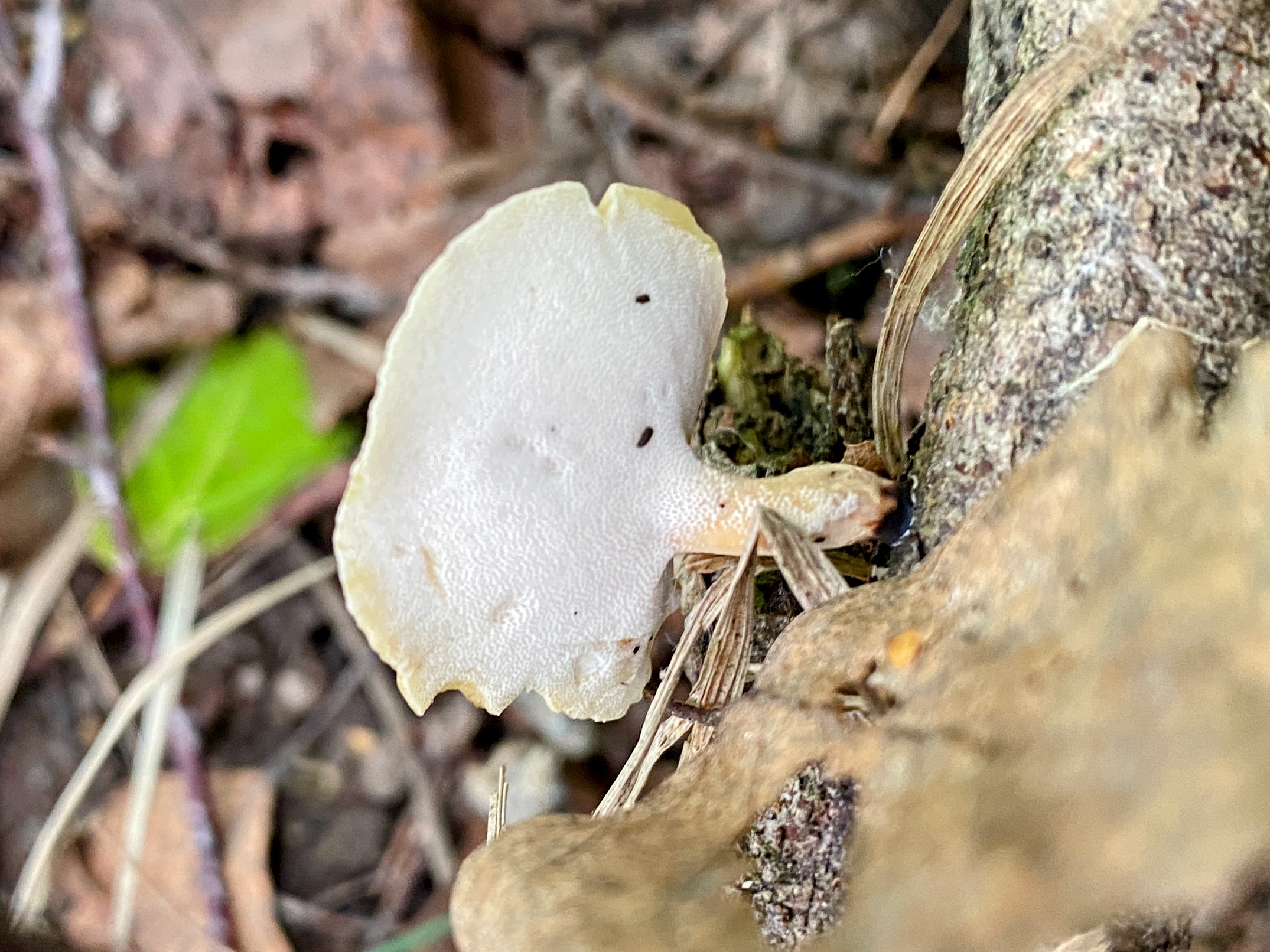
Despite its wide distribution range, it occurs sporadically.
Dimensions vary widely, from 3 to 12 cm; shape more or less funnel-like, often with a deep depression in the very center and relatively expanded, not always even margins. Coloration ranges across all shades of brown, darker when young, sometimes fading in mature specimens. Cap surface smooth, glossy in wet weather; noticeable radial stripes may occur.
Hymenophore tubular; tubes very small, white, slightly decurrent along the stipe.
Rather long and thin (4–7 cm tall, 0.4–0.8 cm thick), slightly expanding toward the top; darkening over time, starting from the base.
Thin, leathery, very elastic.
Strong, mushroom-like.
Spore print white.
On stumps, in forests, in parks, on deadwood of deciduous trees (birch, alder, willow, linden, oak, ash), rarely on living trees. Causes white rot. Despite its wide distribution range, it occurs sporadically.
Polyporus varius, despite its variability, is distinguished by a number of characteristics that set it apart from related species. These include, in particular, a well-developed black stipe (in Chestnut Polypore, (Picipes badius), the stipe is usually short and thick) and a white hymenophore with very small pores, allowing this mushroom to be distinguished from old, worn specimens of the large-pored Tuberous Polypore (Polyporus tuberaster).
Add new comment