Peck's Hydnellum (Hydnellum peckii)
Index Fungorum Hydnellum peckii Banker
MycoBank Hydnellum peckii Banker ex Peck, Bull.
Bleeding Tooth, Bloody Tooth, Strawberries and Cream, Devil's Tooth
peckii — dedicated to Peck (Charles Horton Peck, 1833–1917, American botanist and mycologist).
Bleeding Tooth
Bloody Tooth
Strawberries and Cream
Devil's Tooth
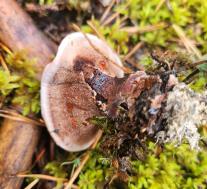
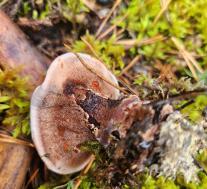
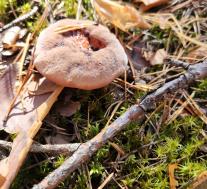
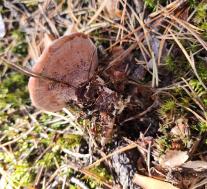
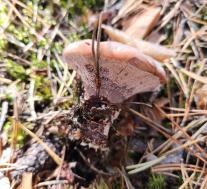
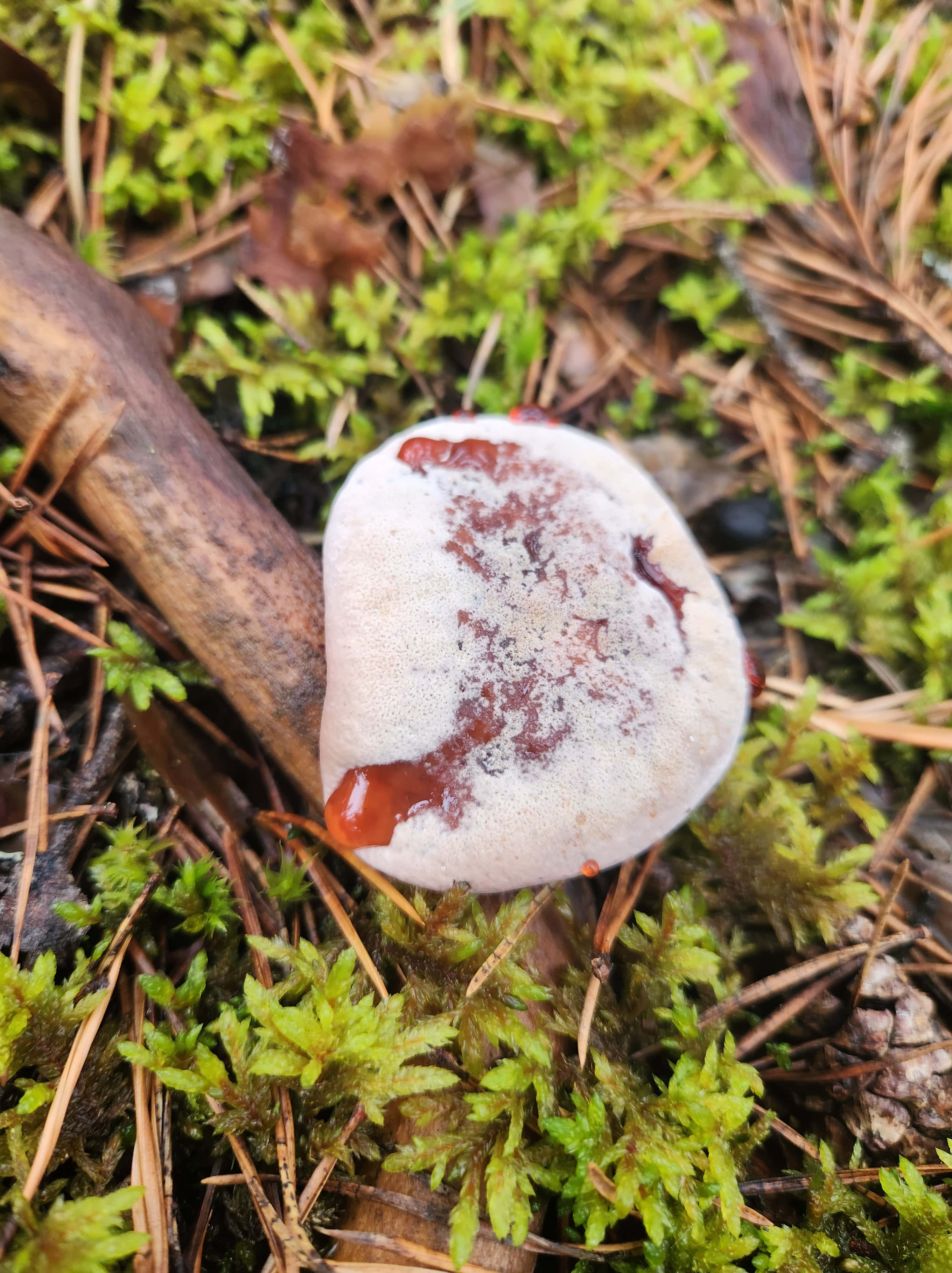
An exceptionally bright and striking mushroom. And precisely because of this, it has generated a host of rumors and myths around itself. This mushroom is sometimes listed as deadly poisonous, sometimes credited with the taste of strawberry shortcake. Some claim that the mushroom hunts insects, luring them with sweet liquid. There are assertions that this mushroom is carnivorous. In fact, this mushroom is a symbiotroph, meaning that it receives the bulk of its nutrients from a mycorrhizal partner, and for Peck's Hydnellum this is Scots pine. It is not poisonous, although inedible due to its bitter taste. And the ruby-colored droplets that appear on the surface of the fruiting body are a widespread phenomenon among fungi known as guttation—that is, the exudation of liquid to "release turgor pressure." Turgor or intracellular fluid pressure is the main mechanism by which fungi lift the forest litter with their fruiting bodies, and to prevent fungal cells from being destroyed in wet weather, there must be a mechanism to reduce this pressure; in fungi, this mechanism is guttation.
30–12 cm in diameter, convex, cushion-like, often irregular in shape, becoming funnel-shaped with radially arranged folds in old age. Surface uneven, bumpy; in young stage velvety, beige with pinkish tones; with age becomes smooth and darkens from center to margins, acquiring reddish-brown, brown, or dark brown coloration. In wet weather, drops of red liquid exude on the surface, leaving brown spots after drying.
Short, 20–40 mm long, 10–30 mm in diameter, cylindrical, fusiform or conical, same color as the cap, woolly or with matted fibers at the lower part, overgrowing the substrate.
Light, pinkish-brown with darker zones and sometimes with yellow spots. Taste, according to some sources, bitter, acrid, slightly sour, somewhat astringent.
Weak, not pronounced.
Spore print light brown. Spores broadly ellipsoid, almost spherical, with uneven, coarse warts.
Grows singly or in small groups on acidic soils in coniferous forests, according to some sources old-growth forests with pine (Pinus) and spruce (Picea). The species prefers very poor, acidic sandy soils, and the very presence of mycelium in the soil depletes it, reducing nitrogen and organic compound content.
Not listed in Red Data Books.
Rusty Hydnellum (Hydnellum ferrugineum) in young stage has a light coloration and exudes drops of red liquid, making it very similar to H. peckii. But it is easily distinguished by brownish tones in its coloration and a mild, non-bitter taste. The fruiting bodies of Rusty Hydnellum are noticeably denser and heavier, and the surface is somewhat smoother.
Add new comment