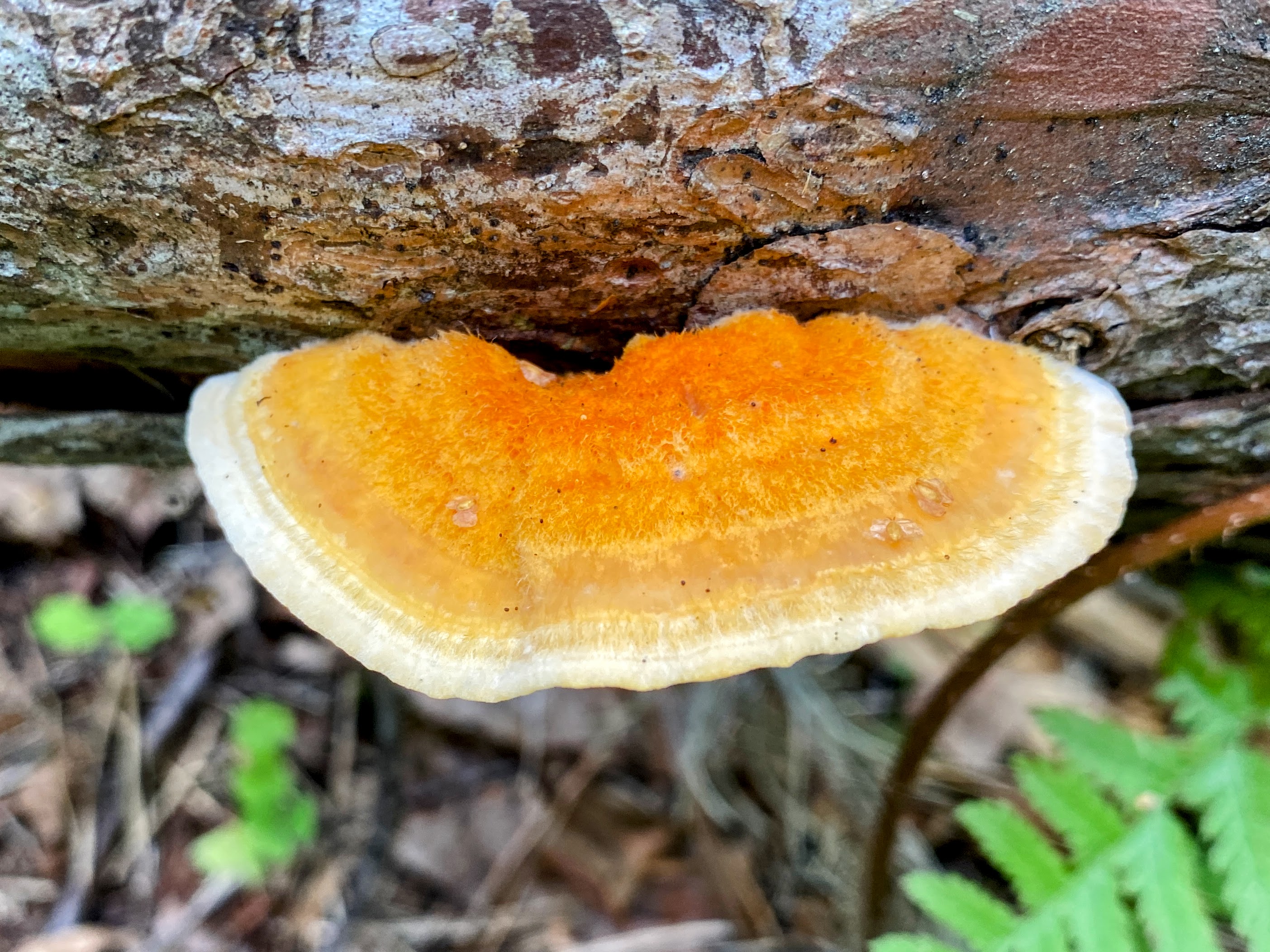
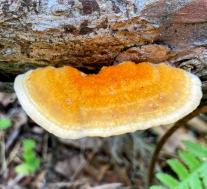
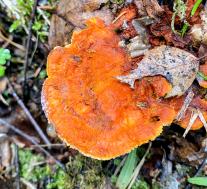
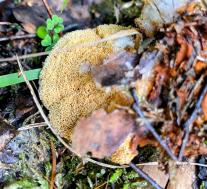
Annual, sessile, prostrate-reflexed, occasionally subprostrate, solitary or imbricated with 2-3 caps, sometimes fused into rosettes, half-lobed, fan-shaped, elongated tongue-shaped, with a stalk-shaped narrowed base, smooth or with a wavy margin, up to 10-15 cm in greatest dimension and up to 1-3 cm thick, soft-lipped when fresh, brittle and fragile when dry, very light after water loss. The cap surface ranges from rough to nearly naked, furrowed and uneven, unclearly zonal, radially wrinkled, fibrous, appressed-woolly toward the base, sometimes tufty pubescent along the margin; the color is red-orange, brick-colored, rusty-brown in old age. The edge of the fruiting body is thin, fringed, whitish-yellowish, and at the end the same color as the surface of the cap.
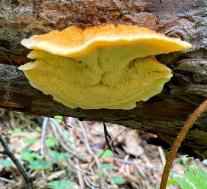
The tubules are single-layered, thin-walled, and 2-5 mm long. The surface of the hymenophore is the same color as the basidioma (darker deeper in the tubules). The pores are initially rounded-angular, later becoming irregular, unequal in size, sinuous, irpex-shaped, with torn, sharply serrated edges, averaging 1-2 per 1 mm, sometimes merging and then becoming larger.
Add new comment