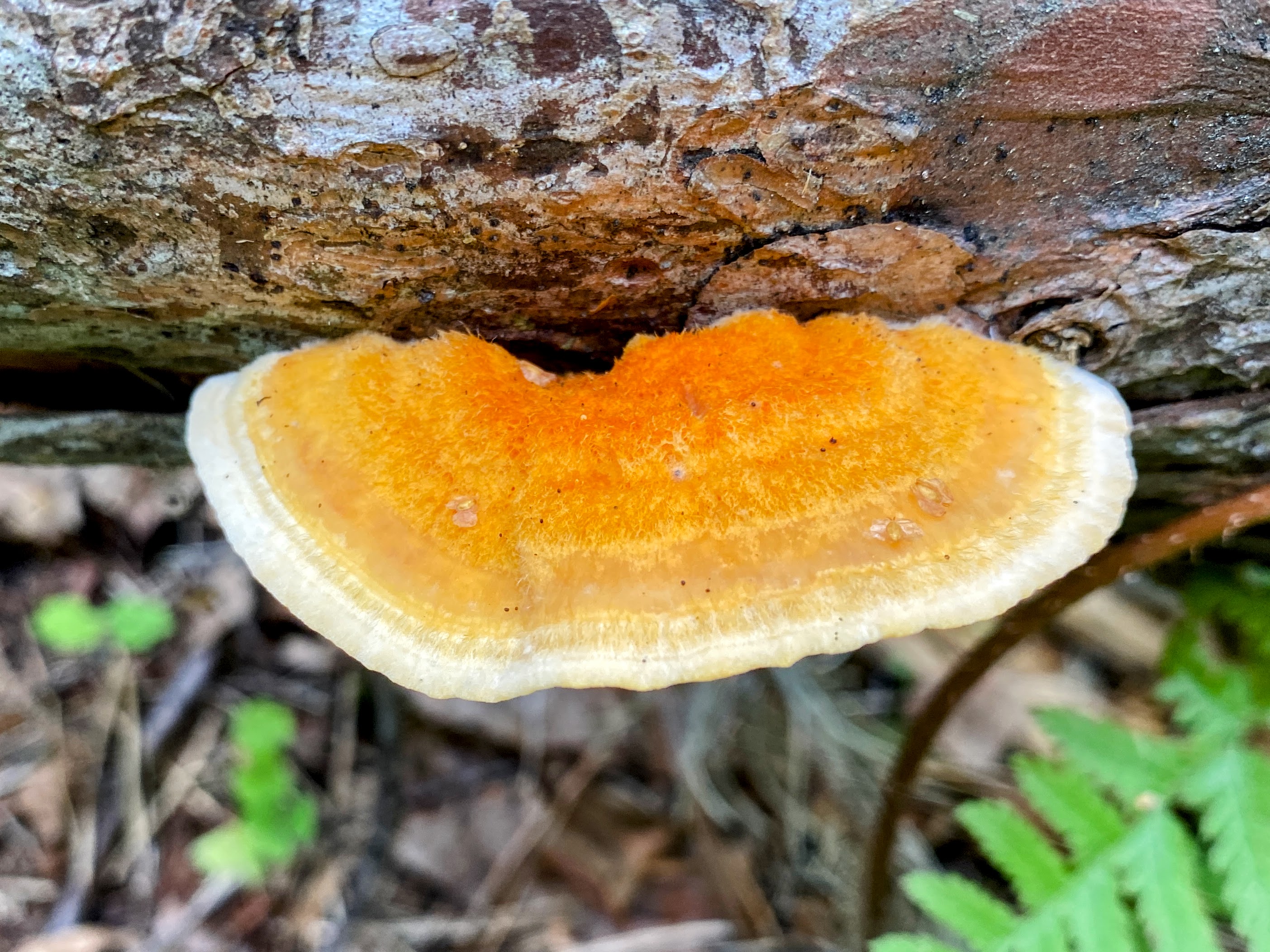
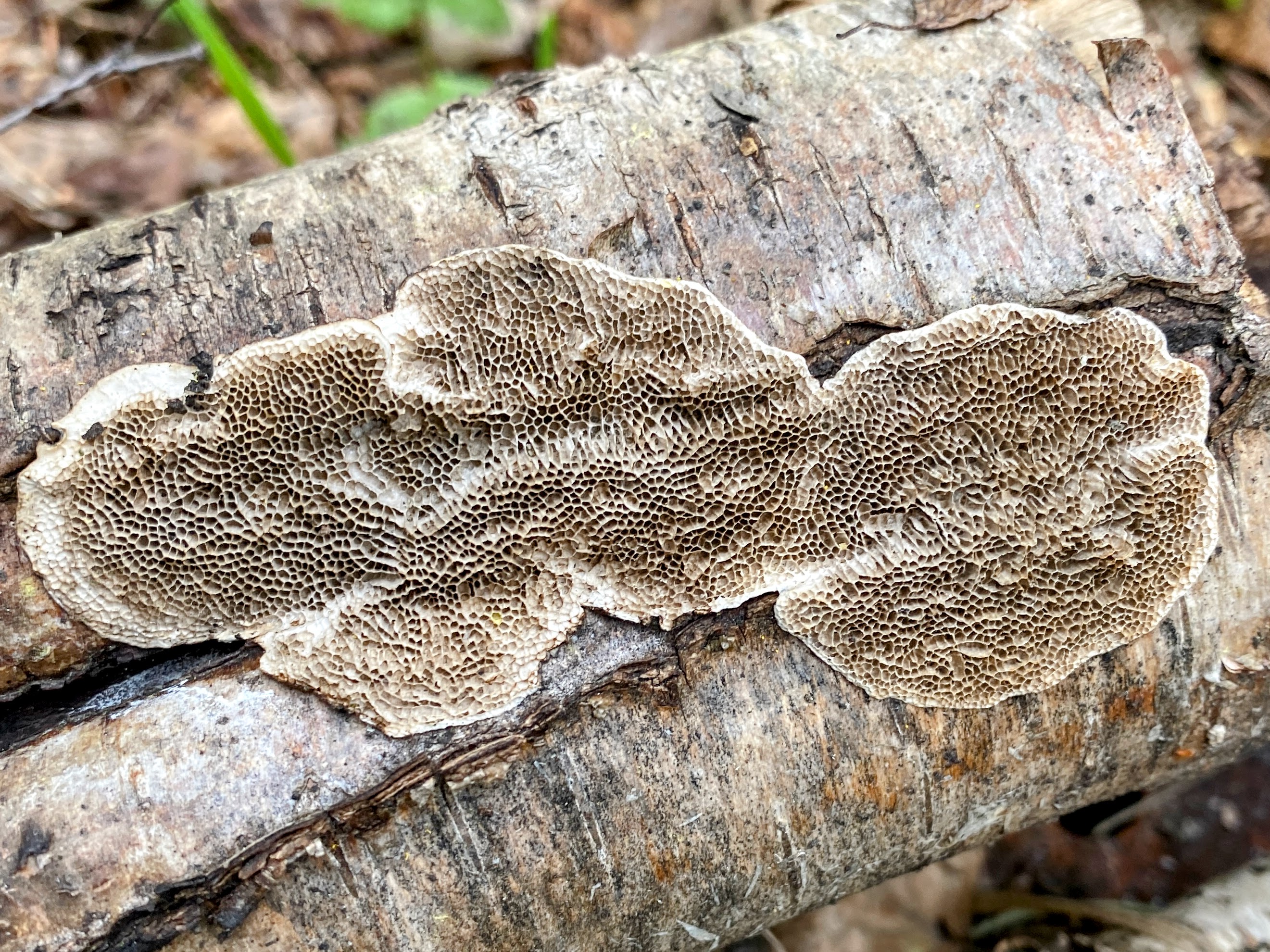
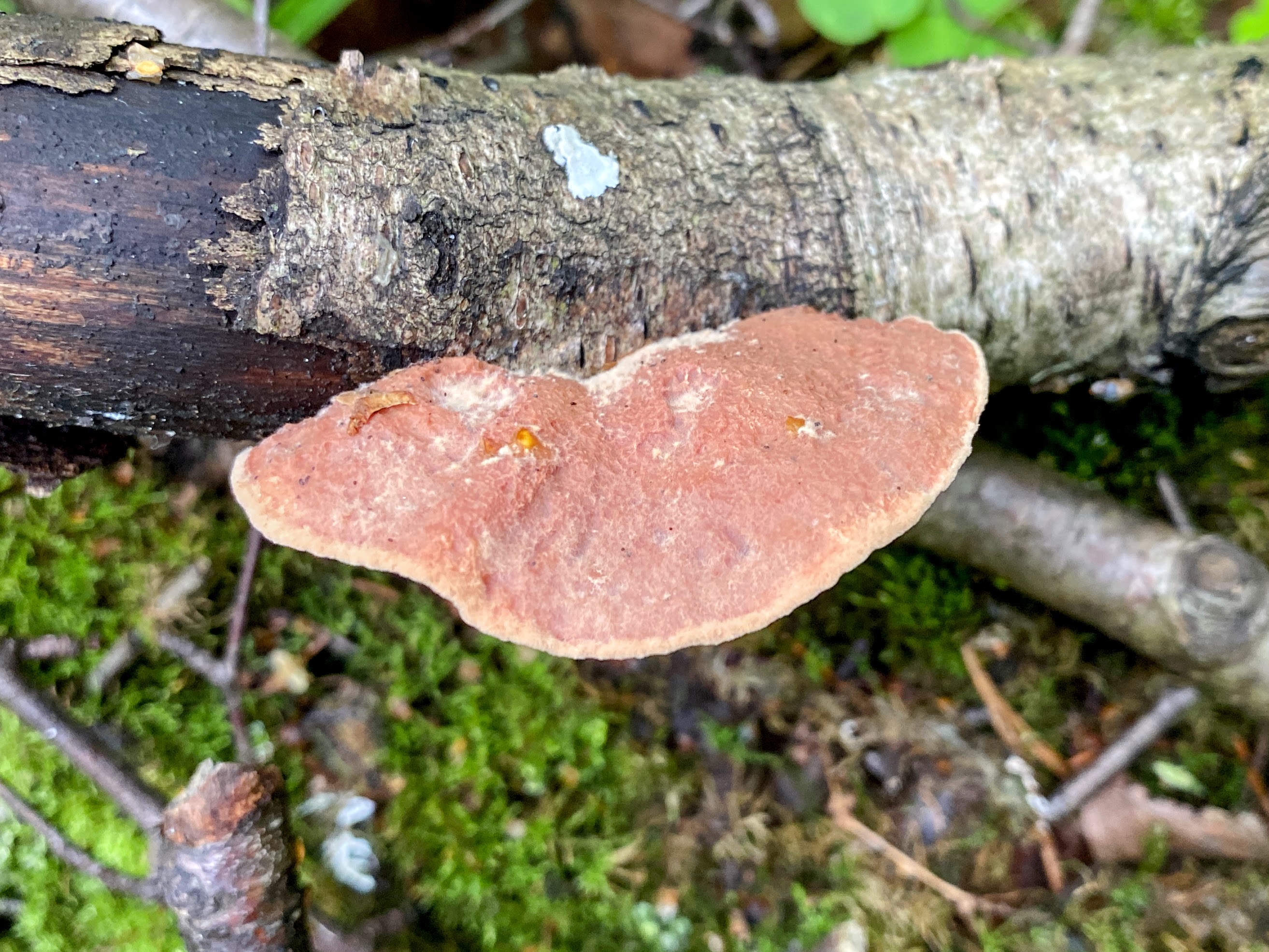
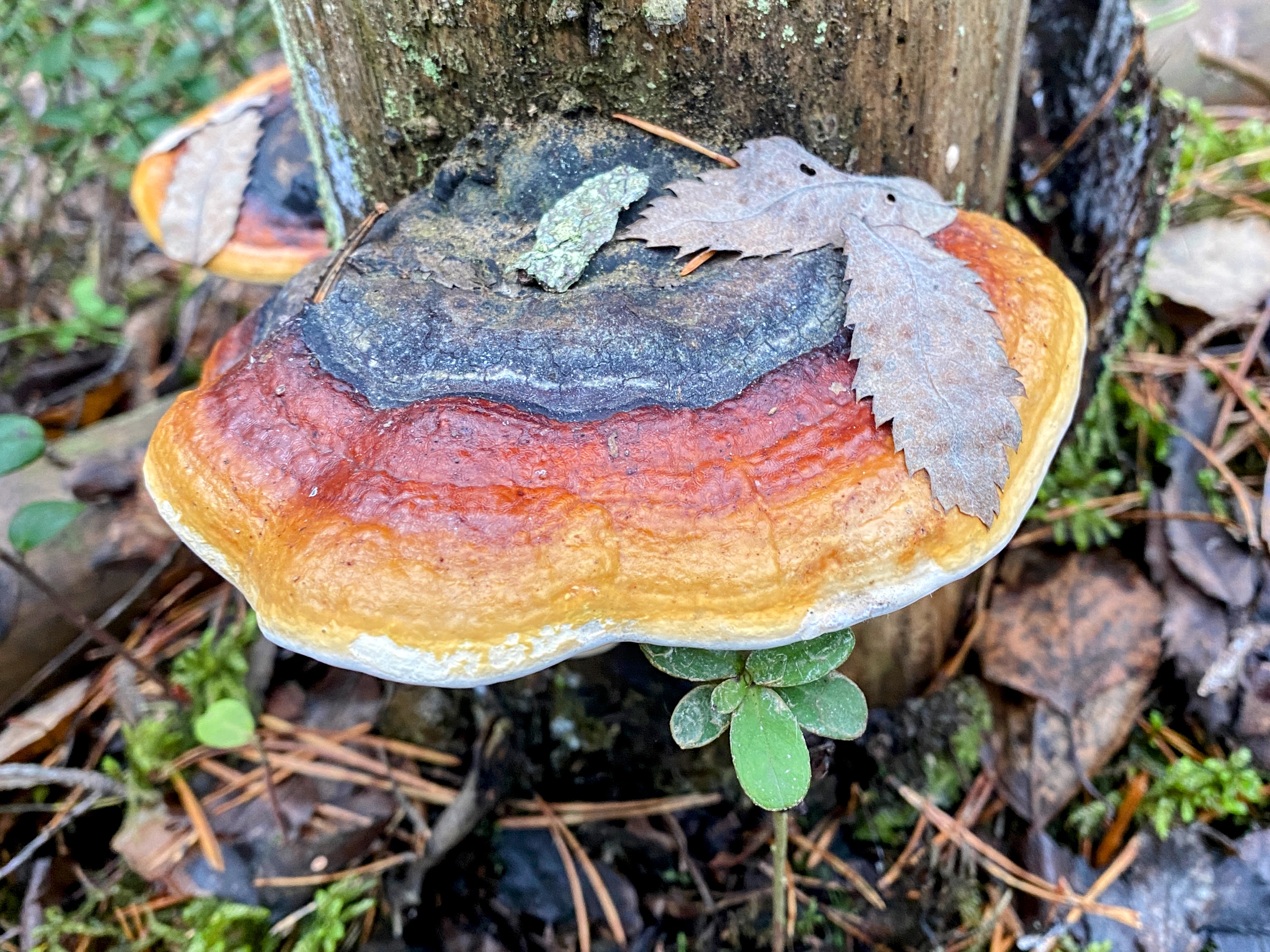
Aphyllophoroid fungi (also spelled aphyllophoraceous) are an artificial, traditional grouping of basidiomycete fungi. Historically, most species now placed in this category were classified under the order Aphyllophorales; however, modern taxonomy shows they actually belong to a wide range of distinct lineages, including the orders Russulales, Polyporales, Thelephorales, and others.
This group is defined by morphological diversity rather than evolutionary relationships. Traditionally, it has included various wood-decaying polypores with tough, leathery to corky fruiting bodies and a dimitic or trimitic hyphal system, as well as certain terrestrial basidiomycetes—both saprotrophs and mycorrhizal species—that lack the typical gilled or pored structure of agaricoid and boletoid mushrooms (for example, species in the genus Hydnellum).
The boundaries of the aphyllophoroid group are intentionally flexible and overlap with other morphological assemblages. Most notably, it intersects with the clavarioid fungi (club and coral fungi), which are sometimes included within the aphyllophoroids, as well as with certain agaricoid mushrooms that exhibit atypical hymenophore structures.