Anise funnel (Collybia odora)
Говорушка пахучая
Current name

Index Fungorum    Collybia odora (Bull.) Z.M. He & Zhu L. Yang
MycoBank    Collybia odora (Bull.) Z.M. He & Zhu L. Yang

Other names

Fragrant collybia, Sweet-scented talker, Anise talker.

Systematic position
Specific epithet etymology

odor, ōris m. — 1) smell, odor; 2) bad smell, stench; 3) aroma, fragrance; 4) pl. perfumes, fragrant ointments; 5) smoke, vapor, steam.

Synonyms

Clitocybe odora (Bull.) P. Kumm., Der Führer in die Pilzkunde: 121 (1871) 

Gymnopus odorus (Bull.) Gray, A natural arrangement of British plants 1: 606 (1821) 

Lepista odora (Bull.) Harmaja, Karstenia 15: 15 (1976)

Agaricus moschatus J.F. Gmel., Systema Naturae Ed. 13 2 (2): 1416 (1792) 

Rubeolarius odorus (Bull.) Raithelh., Die Gattung Clitocybe: 17 (1981) 

Agaricus odorus var. odorus (?) 

Agaricus odorus f. odorus (?) 
General description

The anise scent is due to the presence of p-anisaldehyde and a small amount of benzaldehyde. This odor can reveal the mushroom's presence even before it is spotted visually.

Habit
Fruiting body
Agaricoid (cap and stipe)
Hymenophore
Lamellate (gills present, including folded or rudimentary)
Fruiting period (list)
JunJune (1st–10th)June (11th–20th)June (21st–30th)JulJuly (1st–10th)July (11th–20th)July (21st–31st)AugAugust (1st–10th)August (11th–20th)August (21st–31st)SepSeptember (1st–10th)September (11th–20th)September (21st–30th)
Mushroom cap

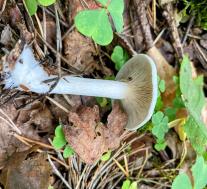
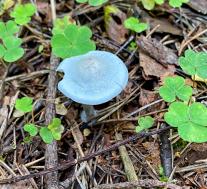
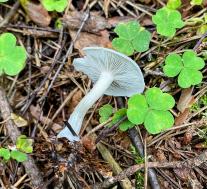
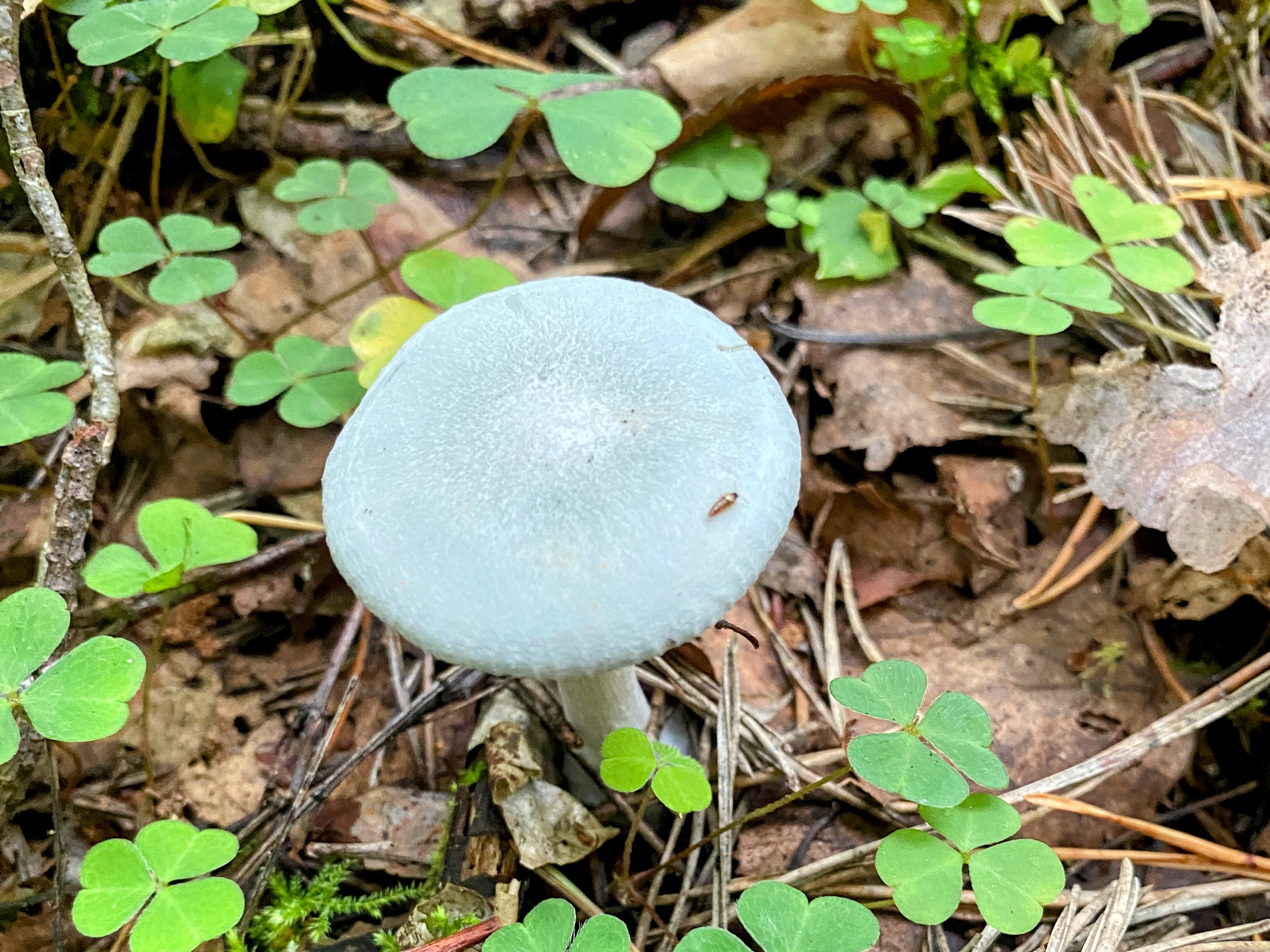
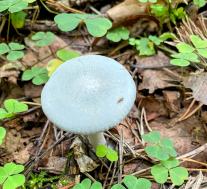
3–10 cm in diameter; initially convex, slightly umbonate, expanding to convex with an inrolled margin, moderately fleshy; later becoming shallowly depressed, sometimes with a raised margin with age, thinly fleshy, smooth, pale greenish-blue, whitish-bluish, sometimes with a brownish center, fading slightly.

Gills frequent, decurrent, pale greenish.

Stem

Up to 8 cm long, up to 1 cm thick, thickened at the base, same color as the cap or lighter.

Flesh

Thin, pale gray or pale green, with a mild taste.

Odor

Strong anise-dill scent.

Microscopy

Spore print white. Spores ellipsoid, smooth, non-amyloid.

Ecology and distribution

Litter saprotroph. Found in both deciduous and coniferous forests; widespread in temperate zones, occurring in Asia, Europe, and North America. Fruits infrequently but annually.

Fruiting

July–September

Nutritional properties
Edible

Edible mushroom (category 4) of moderate quality; used fresh (boiled for about 15 minutes), can also be salted or pickled; young, more fleshy specimens are preferable. The aroma diminishes after cooking.

Similar species

Distinguished from the rarely encountered and also edible fragrant collybia (Collybia confluens) by the greenish cap color and greenish tones on the gills and stipe. From all small whitish mushrooms, it is easily distinguished by its strong anise scent. Sometimes the aroma can be detected even without bending down to a group of these talkers.

Notes

Most species of Clitocybe are poisonous, containing muscarine and muscarine-like compounds; some are lethally toxic. Antibiotics (such as clito cytin, diatretin, nebularin, etc.) have been isolated from several species. Very few species are edible, and their culinary qualities are modest; due to the difficulty of accurate species identification, collecting Clitocybe mushrooms is not recommended even for experienced foragers.

Link to this page for printed editions
Shipovalov A.G. Anise funnel (Collybia odora) - Mushrooms of Vologda Region [Electronic resource] URL: https://xn----7sbancweblffgklubds60aja.xn--p1ai/en/anise-funnel-collybia-odora (accessed: 13.04.2026).
Share link

Add new comment

One file only.
2 MB limit.
Allowed types: png jpeg jpg jpe gif webp svg.
Allowed types: png gif jpg jpeg webp svg.

Plain text

  • No HTML tags allowed.
  • Lines and paragraphs break automatically.
  • Web page addresses and email addresses turn into links automatically.
Add image
Maximum 8 files.
2 MB limit.
Allowed types: png jpeg jpg jpe gif webp svg.
Allowed types: png gif jpg jpeg webp.
January (1st–10th)
January (1st–10th)
January (11th–20th)
January (11th–20th)
January (21st–31st)
January (21st–31st)
February (1st–10th)
February (1st–10th)
February (11th–20th)
February (21st–28th/29th)
March (1st–10th)
March (1st–10th)
March (11th–20th)
March (11th–20th)
March (21st–31st)
March (21st–31st)
April (1st–10th)
April (1st–10th)
April (11th–20th)
April (11th–20th)
April (21st–30th)
April (21st–30th)
May (1st–10th)
May (1st–10th)
May (11th–20th)
May (11th–20th)
May (21st–31st)
May (21st–31st)
June (1st–10th)
June (1st–10th)
June (11th–20th)
June (11th–20th)
June (21st–30th)
June (21st–30th)
July (1st–10th)
July (1st–10th)
July (11th–20th)
July (11th–20th)
July (21st–31st)
July (21st–31st)
August (1st–10th)
August (1st–10th)
August (11th–20th)
August (11th–20th)
August (21st–31st)
August (21st–31st)
September (1st–10th)
September (11th–20th)
September (21st–30th)
October (1st–10th)
October (1st–10th)
October (11th–20th)
October (11th–20th)
October (21st–31st)
October (21st–31st)
November (1st–10th)
November (1st–10th)
November (11th–20th)
November (21st–30th)
December (1st–10th)
December (1st–10th)
December (11th–20th)
December (21st–31st)