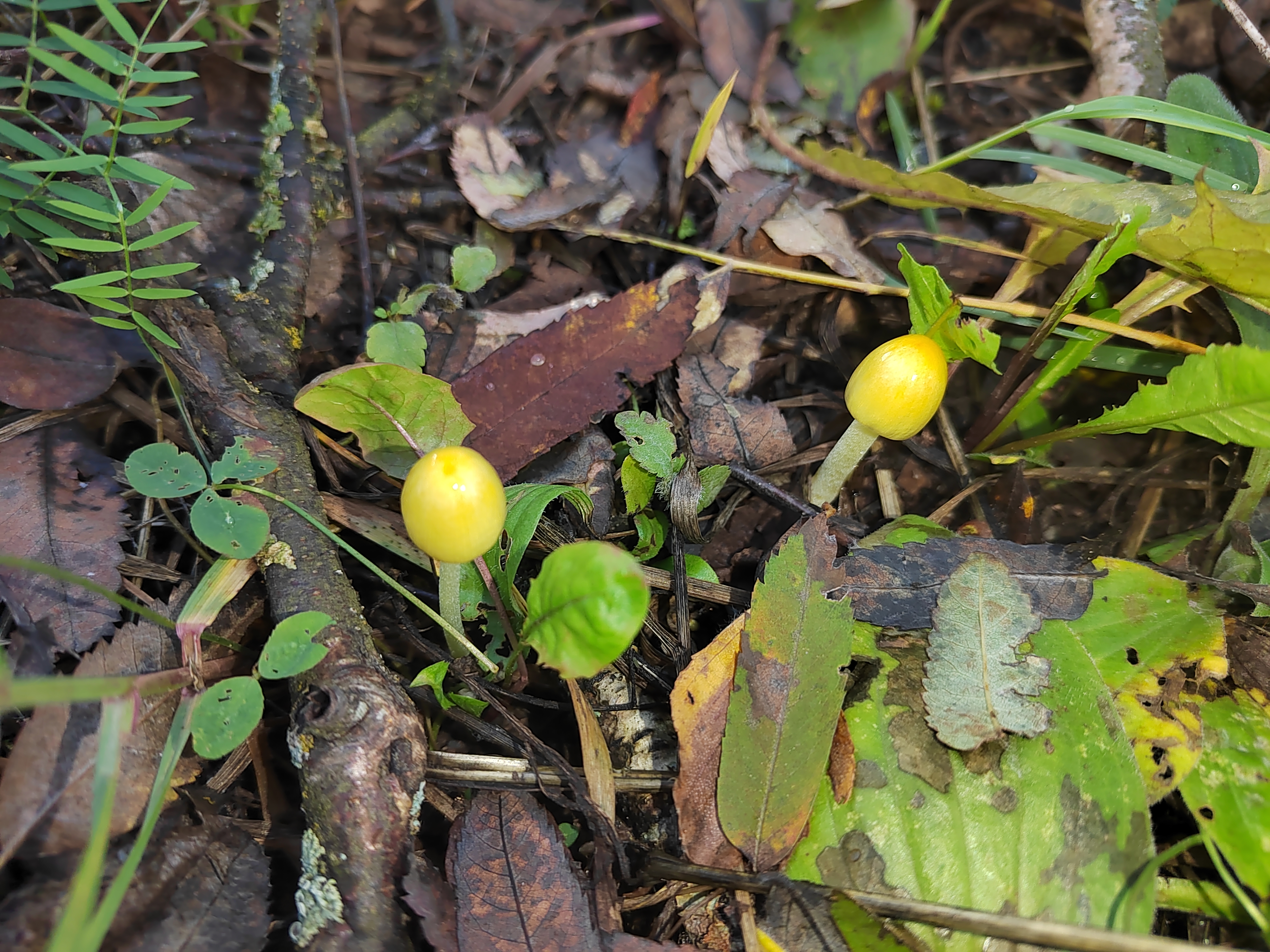
Family: Bolbitiaceae
Family of fungi within order Agaricales (Gilled mushrooms).
A small family identified by Rolf Singer in 1948, which, according to a 2008 assessment, includes 287 species in 17 genera (apparently excluding the genus Agrocybe, which has a disputed family affiliation). The main family characteristics include a lamellar (including underdeveloped) hymenophore, a hymenodermal pileipellis, and spores that are colored in brown tones.
The fruit bodies are small, occasionally medium-sized, differentiated into a cap and a stem, and have a variety of shapes: most genera are agaricoid, but there are also secotioid, cyphelloid, and gasteroid genera. The caps range in size from 0.5 to 8 cm in diameter, and are bell-shaped or conical, becoming flatter with age; they are usually white or brownish, but can also be brightly colored. Many species have ribbed or radially grooved caps. The coloration is typically yellow or brown. The gills are light at first, darkening with age from the maturing spores. The stems are thin, often long (2-4 diameters of the cap), sometimes with a ring; the general veil is absent, the private veil is present in the nect.