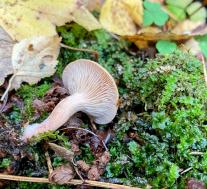
Feeble Milk-cap (Lactarius tabidus)
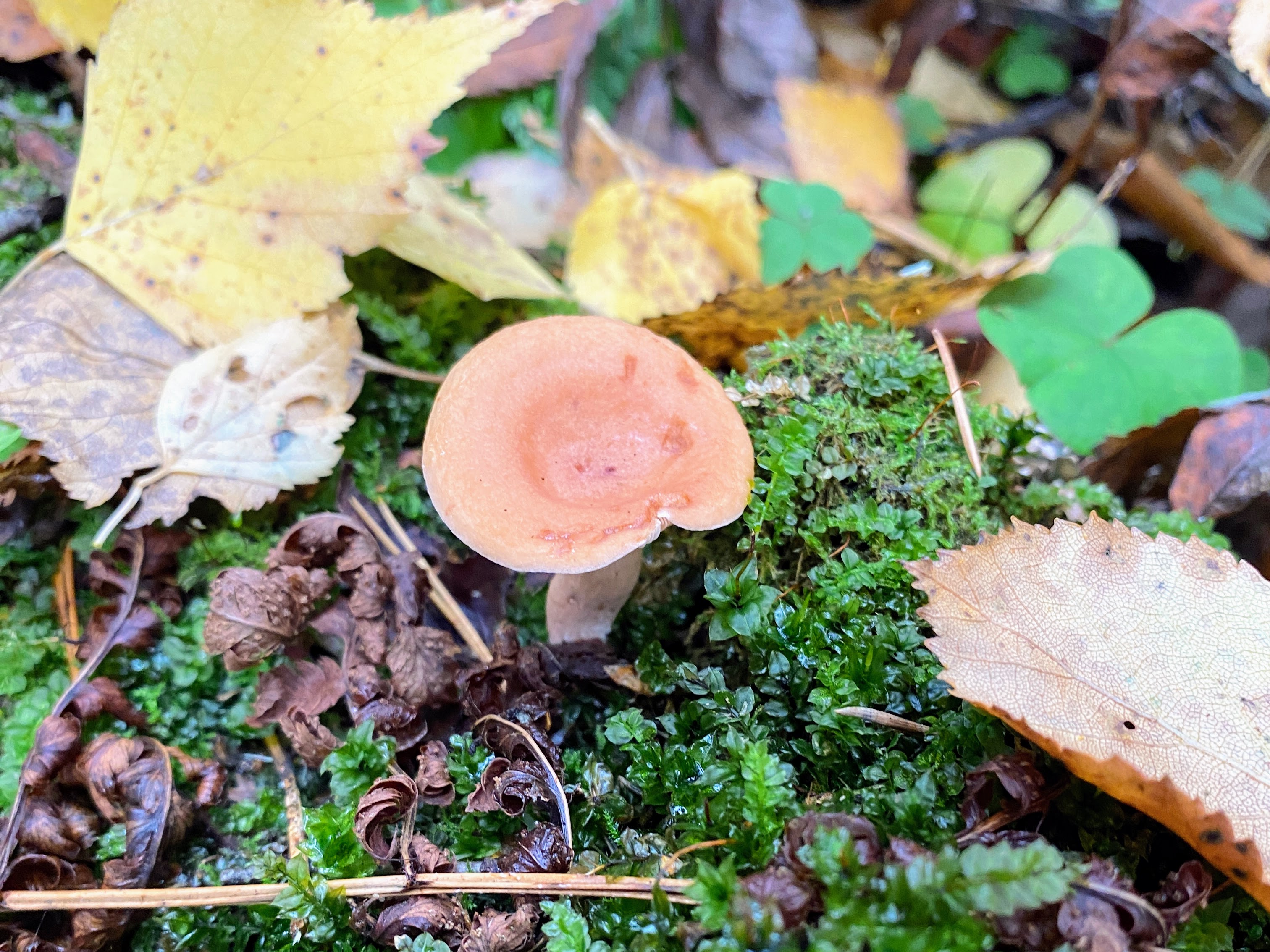
(Lactarius tabidus
Current name

Index Fungorum    Lactarius tabidus Fr
MycoBank    Lactarius tabidus Fr

Other names

Tender Milk-cap

Systematic position
Specific epithet etymology

tābidus, a, um — decomposing, rotting; wasting away, feeble. From tābēs, is f. (f.) decomposition, decay, rotting + -idus (suffix denoting quality or state).

Synonyms

Lactarius mitissimus var. tabidus (Fr.) Quél.
Lactarius subdulcis var. tabidus (Fr.) Quél.
Lactifluus tabidus (Fr.) 

General description

In Western literature, the mushroom is considered inedible and possibly even poisonous. The basis for this is not particularly serious—the change in color of the milky latex when exposed to air, from white to yellow. In Russia, however, the mushroom is traditionally classified as conditionally edible.

Habit
Fruiting body
Agaricoid (cap and stipe)
Hymenophore
Lamellate (gills present, including folded or rudimentary)
Fruiting period (list)
JunJune (1st–10th)June (11th–20th)June (21st–30th)JulJuly (1st–10th)July (11th–20th)July (21st–31st)AugAugust (1st–10th)August (11th–20th)August (21st–31st)SepSeptember (1st–10th)September (11th–20th)September (21st–30th)
Mushroom cap

3–8 cm in diameter; initially hemispherical or convex with incurved margins; as the fruiting body develops, it expands, the margins unfold, and the cap becomes depressed-spreading, eventually forming an irregular funnel shape with a small central umbo or without one. Cap surface dry, smooth or slightly velvety; coloration variable, yellowish-brown, ochre, in any shade or intensity; young mushrooms are generally darker and evenly colored, while in maturity the caps of Feeble Milk-cap may fade in sunlight to a dirty white.
Gills rather crowded, sometimes forked, with numerous short gills ("lamellulae") toward the cap margin, slightly decurrent, light creamy.

Stem

3–6 cm high, 0.3–0.7 cm thick at the base, enlarged downward; with a loose pith in young mushrooms, becoming hollow at maturity; stipe surface smooth, concolorous with the cap. White mycelial pubescence can be observed at the base of the stipe.

Flesh

Thin, brittle, whitish or light pink; taste neutral or slightly acrid; latex rather scanty, mild, white, slowly turning yellow on exposure to air.

Odor

Weak, mushroom-like.

Microscopy

Spore print: creamy. Spores broadly ellipsoid, ornamented, amyloid.

Ecology and distribution

A mycorrhizal fungus that forms symbiotic associations. Establishes mycorrhiza with birch or pine. Grows on mossy surfaces, in moist and damp places, singly or in small groups, quite frequently.

Fruiting

June–September

Nutritional properties
Conditionally edible

Feeble Milk-cap does not require soaking; its thin, brittle flesh becomes unpleasantly loose and spongy when salted.

Conservation status

Not listed in the Red Data Book of the Russian Federation or its regional Red Lists.

Similar species

Unlike the sweet milk-cap (Lactarius subdulcis) and the mild milk-cap (Lactarius aurantiacus), the latex of Feeble Milk-cap turns yellow when exposed to air.

Notes

One of the earliest and most abundant mushrooms suitable for salting.

Link to this page for printed editions
Shipovalov A.G. Feeble Milk-cap (Lactarius tabidus) - Mushrooms of Vologda Region [Electronic resource] URL: https://xn----7sbancweblffgklubds60aja.xn--p1ai/en/feeble-milk-cap-lactarius-tabidus (accessed: 13.04.2026).
Share link

Add new comment

One file only.
2 MB limit.
Allowed types: png jpeg jpg jpe gif webp svg.
Allowed types: png gif jpg jpeg webp svg.

Plain text

  • No HTML tags allowed.
  • Lines and paragraphs break automatically.
  • Web page addresses and email addresses turn into links automatically.
Add image
Maximum 8 files.
2 MB limit.
Allowed types: png jpeg jpg jpe gif webp svg.
Allowed types: png gif jpg jpeg webp.
January (1st–10th)
January (1st–10th)
January (11th–20th)
January (11th–20th)
January (21st–31st)
January (21st–31st)
February (1st–10th)
February (1st–10th)
February (11th–20th)
February (21st–28th/29th)
March (1st–10th)
March (1st–10th)
March (11th–20th)
March (11th–20th)
March (21st–31st)
March (21st–31st)
April (1st–10th)
April (1st–10th)
April (11th–20th)
April (11th–20th)
April (21st–30th)
April (21st–30th)
May (1st–10th)
May (1st–10th)
May (11th–20th)
May (11th–20th)
May (21st–31st)
May (21st–31st)
June (1st–10th)
June (1st–10th)
June (11th–20th)
June (11th–20th)
June (21st–30th)
June (21st–30th)
July (1st–10th)
July (1st–10th)
July (11th–20th)
July (11th–20th)
July (21st–31st)
July (21st–31st)
August (1st–10th)
August (1st–10th)
August (11th–20th)
August (11th–20th)
August (21st–31st)
August (21st–31st)
September (1st–10th)
September (11th–20th)
September (21st–30th)
October (1st–10th)
October (1st–10th)
October (11th–20th)
October (11th–20th)
October (21st–31st)
October (21st–31st)
November (1st–10th)
November (1st–10th)
November (11th–20th)
November (21st–30th)
December (1st–10th)
December (1st–10th)
December (11th–20th)
December (21st–31st)