Family: Russulaceae
Russulaceae — family of fungi within order Russulales.
Description
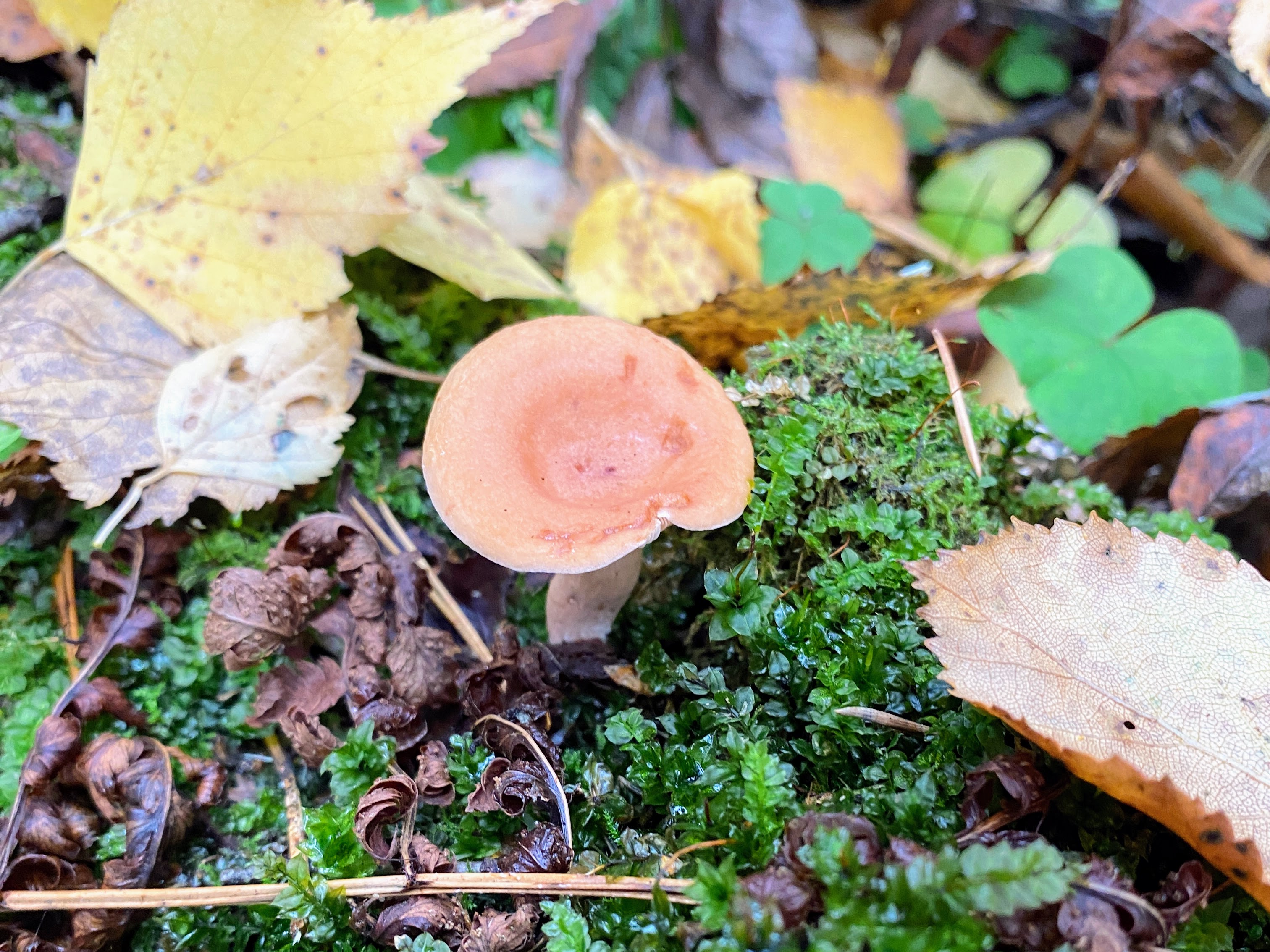
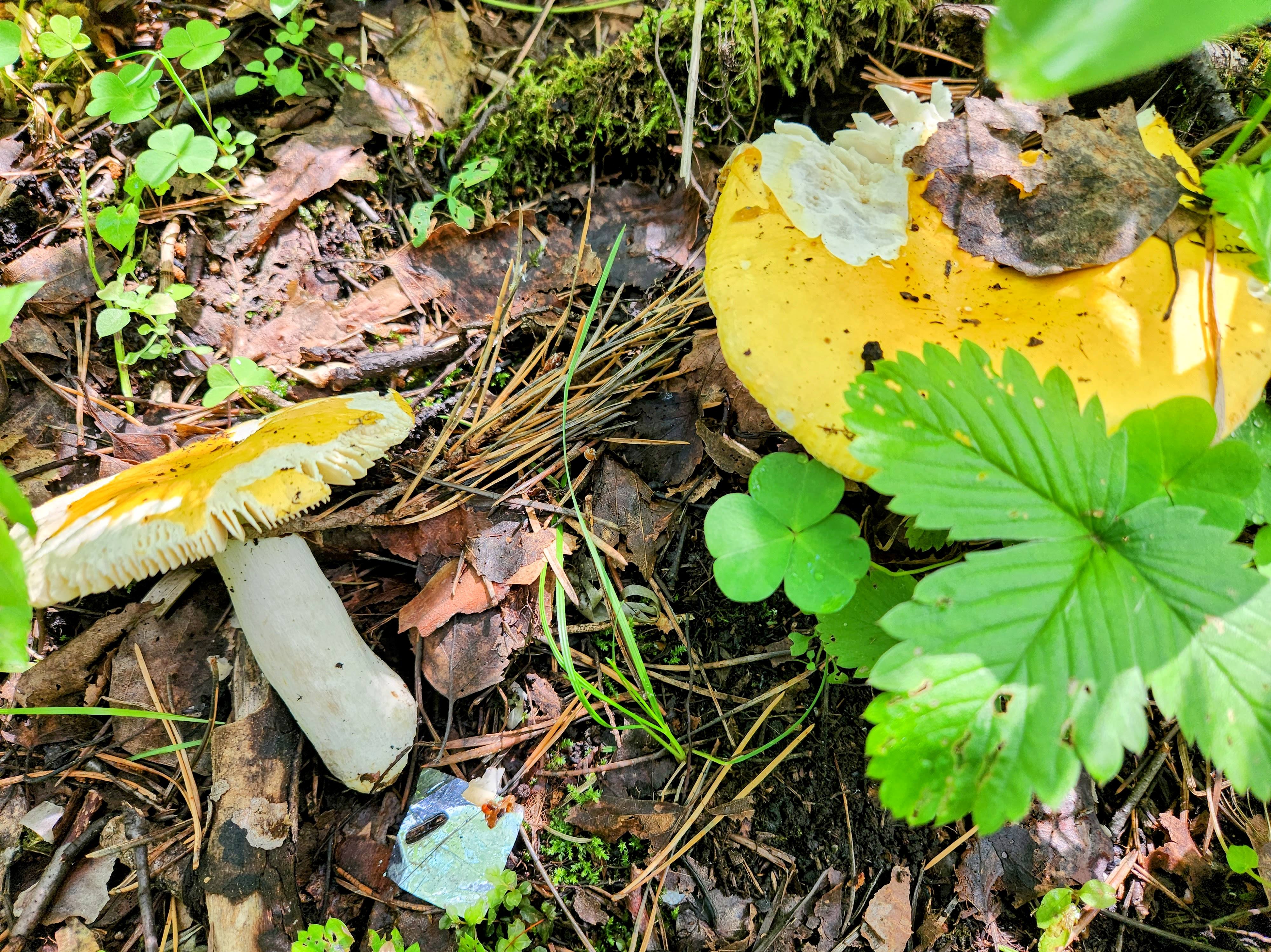
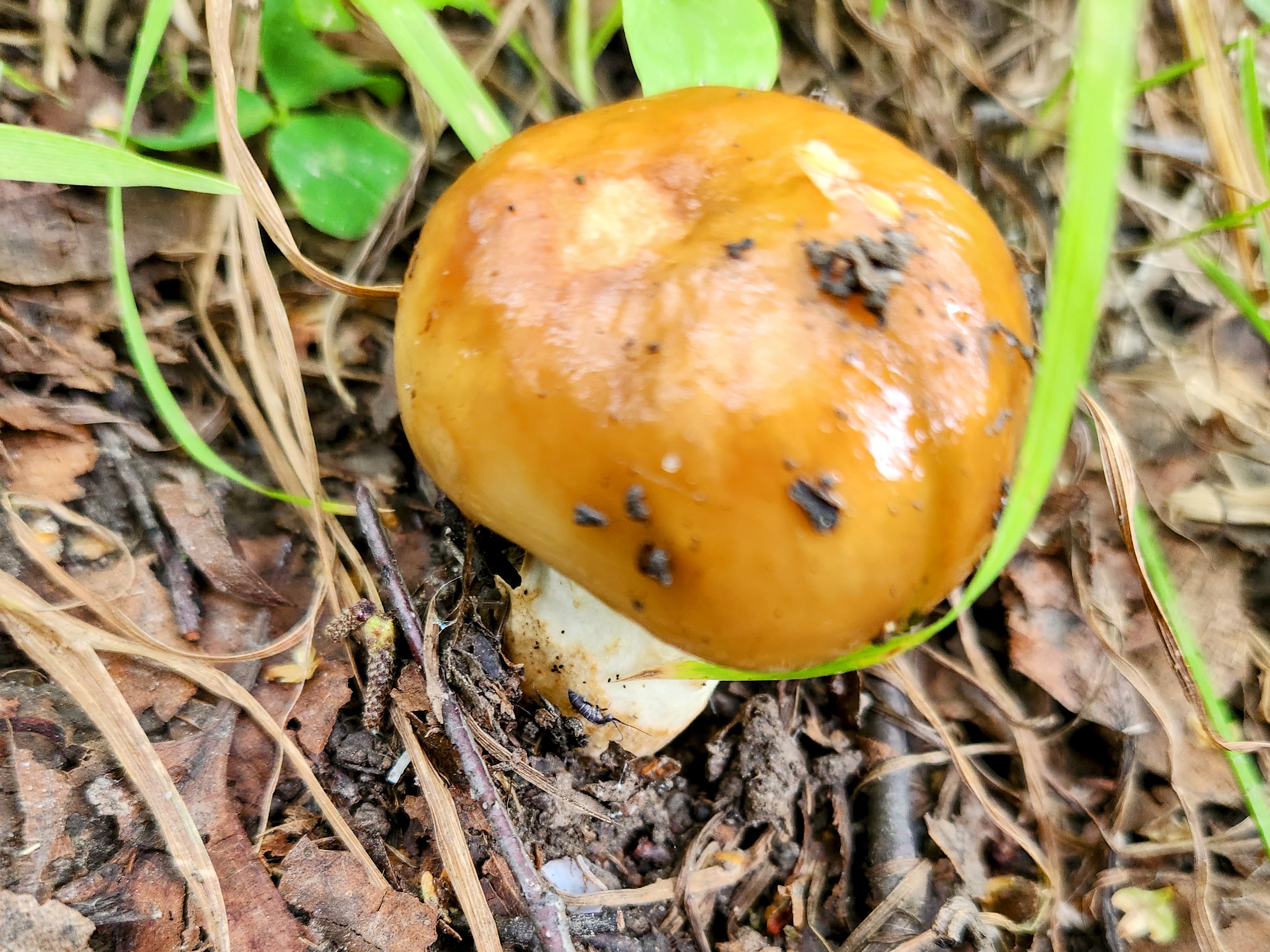
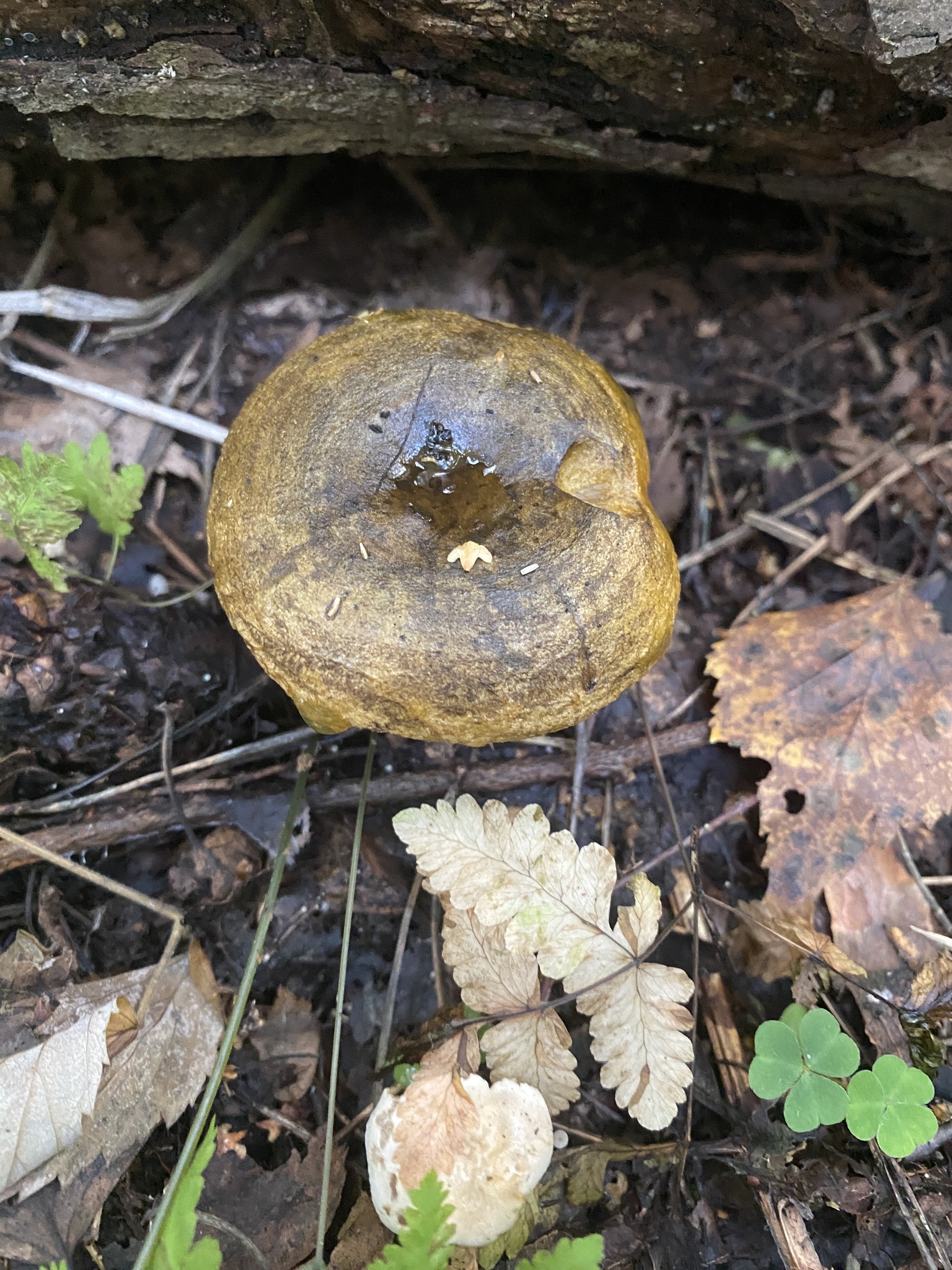
Fruit bodies with cap and central stem. Cap convex, even, concave, funnel-shaped depressed. Edge blunt, sharp, rounded, straight, incurved, smooth, ribbed-grooved, pubescent, shaggy, fringed. Surface dry, slimy, bare, velvety, scaly, fibrous, white, yellow, red, brown, green, blue, or mixed tones.
Gills adnate, decurrent, thin or thick, frequent, rare, with lamellulae or without them, forked, sometimes with anastomoses, from white to bright yellow.
Stem cylindrical, club-shaped, narrowed downward, dense, solid or with cavities, tubular, dry, slimy, white or color of cap.
Veil present, universal or partial.
Flesh dense, loose, brittle, heteromerous (with groups of oval or spherical cells of spherocysts surrounded by hyphae), with rare or frequent laticifers, taste bland, sweetish, sharp, burning or bitter, smell various.
Spore print from white to ochre and yellow tones. Spores amyloid, with various ornamentation.
Basidia 2- or 4-spored, club-shaped.
Cystidia lanceolate, fusiform, cylindrical, often with appendage or without it.
Cap cuticle dry or gelatinous, composed of following elements in various combinations: hyphae, cells, dermatocystidia and primordial hyphae.
Type of carpophore development in majority of species gymnocarpous, very rarely pseudoangiocarpous, hemiangiocarpous, in tropical species pilangiocarpous or michangiocarpous, then pilangiocarpous, hemiangiocarpous.
All species form ectotrophic mycorrhiza with woody plants and shrubs.
Found in various forest types from Arctic to tropics on all continents of the globe, except Antarctica.
Most widely distributed in forests of Northern Hemisphere.
All species with bland taste consumed as food, species with sharp and bitter taste after special processing. There are poisonous species, for example Russula foetens, R. emetica, Lactarius helvus, L. trivialis and L. pallidus (Stadelmann et al., 1976, cited in: Singer, 1986).
Historical reference
Position of family Russulaceae in system of agaricoid fungi still problematic. Kreisel (1909) separates independent order Russulales. Similar viewpoint held by M.Ya. Zerova and S.P. Wasser (1974; see also: Zerova et al., 1979), K.A. Kalamees (1978), Moser (Moser, 1978, 1983).
On the contrary, Singer (Singer, 1962, 1975b) and, following him, L.N. Vasilieva (1973) recognize order Agaricales, in which russuloid fungi are at family rank.
Later Singer (Singer, 1986) in order Agaricales introduces suborders and separates suborder Russulineae with two families Russulaceae and Bondarzewiaceae.
Scope of family Russulaceae repeatedly revised. Malencon (1931) unites natural series of genera Asterospores into two families: Russulaceae and Asterogastraceae.
Kreisel (1969) and Moser (Moser, 1978, 1983) place in family Russulaceae Russula and Lactarius, as well as gastroid genera Elasmomyces Cavara, Macowanites Kalchbr., Arcangeliella Cavara, Martellia Metr., Zelleromyces Sing. et A. H. Smith. Pegler and Young (Pegler, Young 1979), having studied spore morphology of gastroid Russulales, leave in family Russulaceae only Cystangium Sing. et. A. H. Smith, Arcangeliella and Macowanites, transferring remaining genera to family Elasmomycetaceae.
Reason for such diversity of opinions lies in which characteristics are taken as basis when separating taxa of certain rank.
Russuloid fungi distinguished from all lamellar fungi by presence in fruit bodies of spherocysts and laticifers, amyloid ornamented spores and, finally, type of carpophore development.
By these characteristics russuloid fungi closer to gastromycetes than other families of order Agaricales.
Key for determination of genera of family Russulaceae
1. Milky juice present, abundant (flows out on cutting in drops). Cap concave or funnel-shaped, with incurved, downturned or straight, sharp edge. Flesh dense. Gills flexible. Tramal gills near edge without spherocysts — Lactarius.
— Milky juice absent. Cap even, slightly depressed, with straight edge. Flesh and gills very brittle. Tramal gills near edge with spherocysts — Russula.
Reference materials:
Lower plants, fungi and bryophytes of Soviet Far East. Fungi. Vol. 1. Russulaceae, Agaricaceae, Cortinariaceae, Paxillaceae, Gomphidiaceae, Strobilomycetaceae (1990)