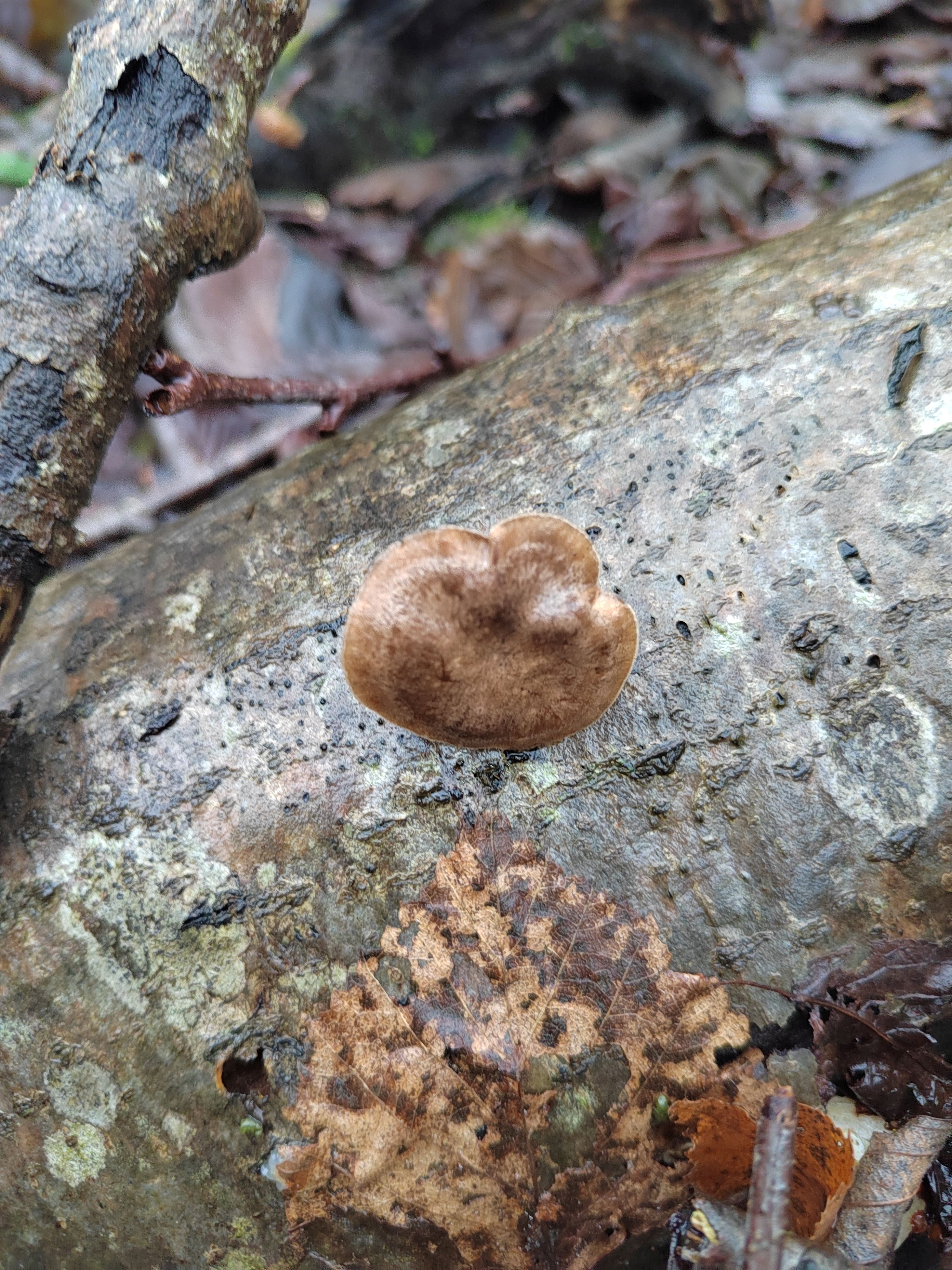
Genus: Lentinus (Sawgill)
Lentinus (Sawgill) - genus of fungi of family Polyporaceae.
Etymology
Lentinus, Lentinus. From lento, avi, atum, are, to bend + inus, a, um, terminal element meaning property.
Systematic position of sawgills currently not entirely clear; generally accepted that genus Lentinus belongs to family Polyporaceae of order Polyporales in class Agaricomycetes. That is, sawgills currently recognized as relatives of polypores.
Russian name "пилолистник" (saw-leaf) was given due to characteristic feature of gill structure in species assigned to this genus - serrated edge of gills, like saw blade. Currently some species having Russian name "пилолистник" transferred to other genera (Neolentinus, Heliocybe), while several species with tubular hymenophore type transferred into genus Lentinus itself.
Type species
Lentinus crinitus (L.) Fr., Syst. orb. veg. (Lundae) 1: 77 (1851)
Description
Basidiomata annual, medium to large sized, paravelangiocarpous or secondarily gymnocarpous, with nearly central, eccentric or lateral (sometimes reduced) stem.
Cap densely fleshy or fleshy-fibrous, initially slightly convex, then expanded to funnel-shaped, with erect or appressed scales, cream, grayish, brown, wood-colored.
Tissue rather thick, fleshy-fibrous, homogeneous, white.
Hymenophore lamellar, gills decurrent, strongly serrated-toothed, whitish or yellow-cream.
Hyphal system dimitic. Generative hyphae with clamp connections, moderately branched in stem and cap flesh, somewhat inflated, in gill mediustratum densely arranged forming irregular or subdivergent trama, in cuticle (epicutis) radially arranged, hyaline or with thickened brownish walls.
Skeletal hyphae hyaline, unbranched, predominant in stem.
Cheilocystidia cylindrical to nearly clavate, thin-walled, hyaline.
Pleurocystidia absent, or present as hymenial fusoid leptocystidia.
Basidia elongate-clavate, 4-spored, with well-expressed central constriction and clamp at base.
Spores large (over 7 µm long), cylindrical or fusoid, hyaline, smooth, thin-walled, non-amyloid, acyanophilous; whitish in mass.
Grow on wood of deciduous, less frequently coniferous trees.
Cause brown rot or white rot with brown spots.
Reference materials:
Zmitrovich I. V. et al. — Pleurotoid Fungi of Leningrad Region (2004)