What do mushrooms smell like?
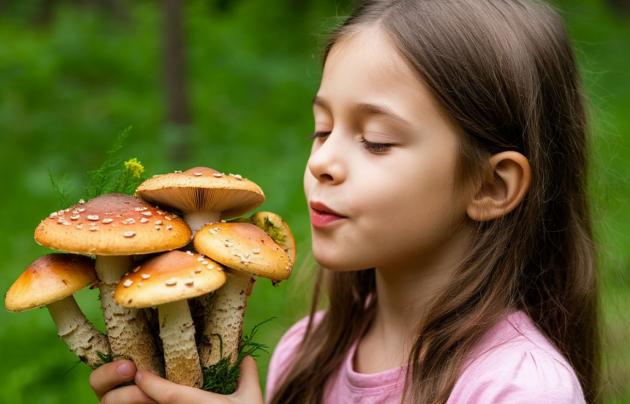
Sometimes the odor of a fruiting body is an important diagnostic character for assigning a mushroom to a particular genus or even species! However, it is worth remembering that this trait is subjective and variable.
🧄 Garlic and onion
(some species of the genus Marasmius (Garlic Parachute); species with a garlic or onion scent are placed in the separate genus Mycetinis)
🌿 Mint / menthol
(blackening russula, Russula nigricans)
⚗️ Chlorine / bleach
(destroying angel, Amanita virosa)
🥕 Radish and horseradish
(frosted dapperling, Mycena pura; rosy dapperling, Mycena rosea; deadly webcap, Cortinarius orellanus; poison pie, Hebeloma crustuliniforme)
🌰 Bitter almond
(laurel russula, Russula laurocerasus; rooter fibercap, Hebeloma radicosum)
🥒 Fresh cucumber
(dung roundhead, Protostropharia semiglobata; thick-stemmed volvariella, Volvopluteus gloiocephalus)
🍅 Tomato leaves
(mealy rosette, Leucocybe candicans)
🌸 Anise / aniseed
(aniseed funnel, Collybia odora / Lepista odora; sweet waxcap, Hygrophorus agathosmus; fragrant tooth, Hydnellum suaveolens; horse mushroom, Agaricus arvensis; some populations of the oyster mushroom, Pleurotus ostreatus)
🍊 Citrus
(citrus milkcap, Lactarius citriolens)
💐 Floral scents
(wood blewit, Lepista nuda; lilac fibercap, Lepista glaucocana; black-spored roundhead, Stropharia melanosperma)
🌶️ Ground black pepper
(blue roundhead, Stropharia pseudocyanea)
🌾 Fresh flour / meal
(many species of Tricholoma; fieldcap, Agrocybe pediades; St. George's mushroom, Calocybe gambosa; funeral bell, Galerina marginata)
🧼 Laundry soap
(soapy knight, Tricholoma saponaceum — develops this odor when boiled; raw specimens have a pleasant spicy scent)
💄 Cheap perfume
(pinkgill, Lepista irina)
🕯️ Camphor
(camphor milkcap, Lactarius camphoratus)
📜 Coumarin / new-mown hay
(floccose milkcap, Lactarius helvus)
🥥 Coconut flakes
(pine milkcap, Lactarius mammosus, and some other Lactarius species; some populations of the greasy ringcap, Stropharia inuncta)
🧅 Rotting onion
(overmature fruiting bodies of the Satan's bolete, Boletus satanas)
🥔 Turnip / rutabaga
(grey spotted amanita, Amanita spissa)
🥔 Raw potato
(citron amanita, Amanita citrina)
🧪 Ammonia
(some species of the genus Mycena)
🪨 Damp excavated earth
(porphyry amanita, Amanita porphyria; sulphur tuft, Hypholoma fasciculare; foul knight, Tricholoma virgatum; some species of Cortinarius; overmature fruiting bodies of Leccinum)
🪰 Carrion / rotting flesh
(species of the genera Phallus (Stinkhorns), Mutinus (Dog Stinkhorns), Clathrus (Lattice Stinkhorns))
🐐 Goat / billy-goat
(goat webcap, Cortinarius traganus)
🏥 Carbolic acid / phenol
(ivory bolete, Hemileccinum impolitus, and some species of Agaricus, notably the yellow-staining mushroom, Agaricus xanthodermus)
🥬 Rotting cabbage
(fetid micromphale, Micromphale foetidum)
🔥 Burning plastic
(shaggy parasol, Echinoderma asperum — develops this odor when boiled)
🐟 Herring / salted fish
(yellowing russula, Russula xerampelina)
🐟 Dried fish
(some populations of the woolly milkcap, Lactarius vellereus)
🐕 Dog kennel / "doggy" odor
(girdled knight, Tricholoma focale)
Note: Odor descriptions are inherently subjective and may vary between observers, populations, and environmental conditions. Always use smell as a supporting character in identification, never as the sole criterion — especially when assessing edibility.