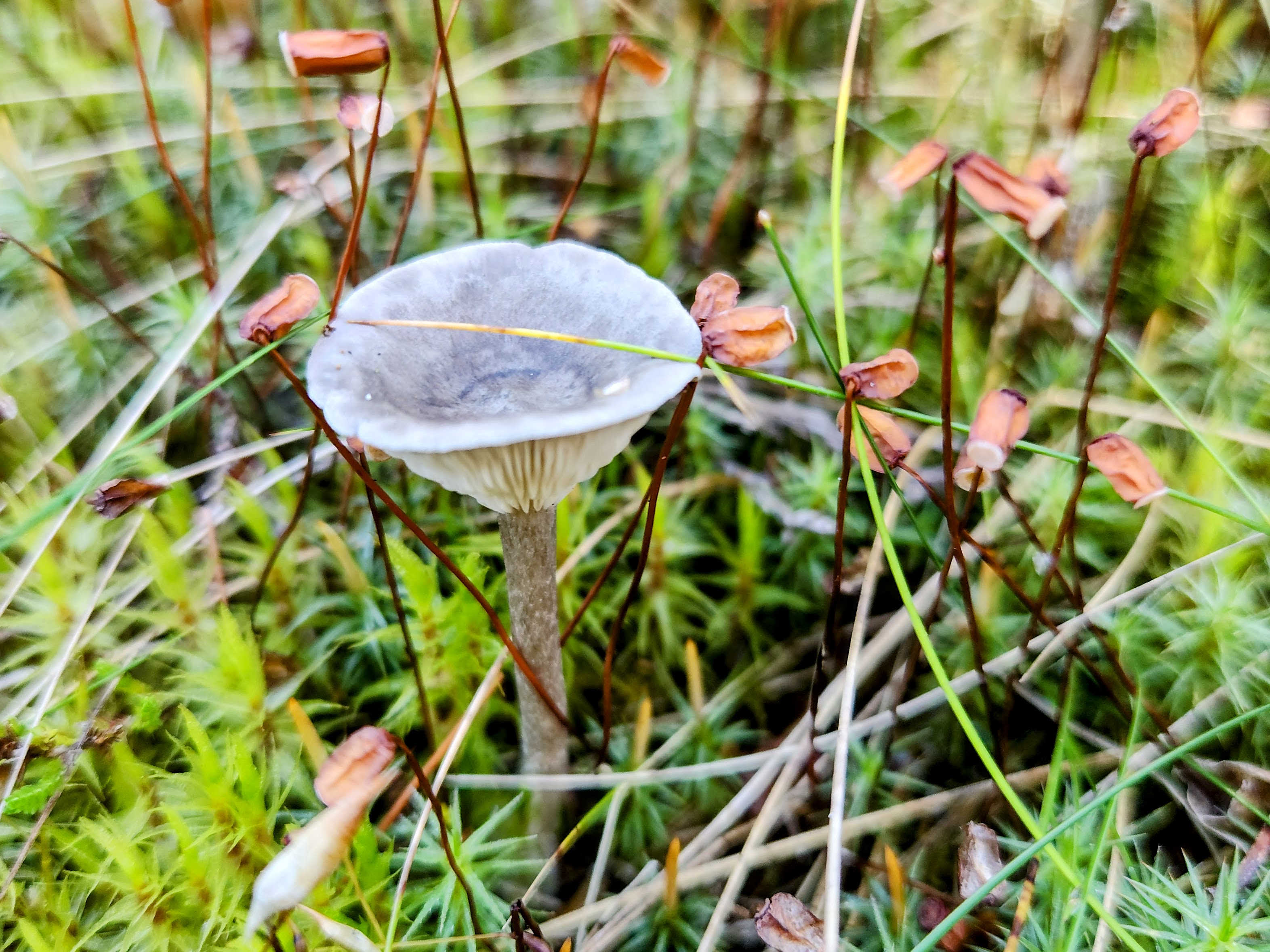
Family: Hygrophoraceae (Hygrophorus family)
Hygrophoraceae (Hygrophorus family) - family of fungi within order Agaricales (Gilled mushrooms).
Family Hygrophoraceae first proposed in 1907 by Dutch botanist and mycologist Johannes Paulus Lotsy, who assigned to it species with thick rare light or colored "waxy" gills, but white spore print, as well as similar by habit, but having black spore print gomphidiums (Gomphidius, now family Gomphidiaceae in order Boletales) and genus of parasites-mycofiles Asterophora (now in Lyophyllaceae). Family recognized and legitimized in 1951 during revision of Agaricales order composition by Rolf Singer. Subsequently family expanded and included also genera Neohygrophorus, Camarophyllopsis, Cuphophyllus, Humidicutis, Hygroaster, Hygrocybe, Hygrotrama (= Camarophyllopsis), Neohygrophorus (= Pseudoomphalina) and Pseudohygrocybe (= Hygrocybe). Regarding systematic position and self-justification of existence of this family no unanimous opinion exists: Cornelis Bas in 1990 proposed to disband family, transferring genera to Tricholomataceae, and in same year Marcel Bon designated order Hygrophorales, currently not recognized. At present family includes both cap-stem mushrooms with agaricoid differentiated fruit bodies with lamellar hymenophore, and genera of corticioid fungi (spread over substrate fruit body), lichenzied fungi (basidiolichens) and genus Arrhenia, consisting of species with both agaricoid and cyphelloid fruit bodies. As of 2023 family counts 34 genera and over thousand species.
Fruit bodies agaricoid (differentiated into cap and stem), cyphelloid (unclearly differentiated with funnel-shaped enlargement, often directed downward) and corticioid (spread over substrate), of various sizes. Caps from 1-2 to 15-18 cm in diam., hemispherical, bell-shaped or conical, in maturity – weakly convex to expanded or concave, wide-funnel-shaped, often slimy, various coloration. Hymenophore of agaricoid species – lamellar. Gills thick, rare or medium frequency, always adnate, in many species more or less decurrent on stem, white or colored; nevertheless spore print of Hygrophoraceae always white. Partial and universal veil usually absent, in individual species weakly developed slimy partial veil present. Flesh thin, waxy, brittle, usually not changing color upon cutting, in majority of species without pronounced smell and taste in raw form.
Mycorrhiza formers with various trees (Hygrophorus), probable symbionts with herbs (Hygrocybe), mosses (Arrhenia) or soil saprotrophs; individual species and small genera with corticioid fruit bodies – wood saprotrophs. Inhabit forests and meadows among grass, predominantly on poor soils. Autumn, less frequently spring, even less frequently – summer mushrooms.
Prevailing opinion states that type genus of family – Hygrophorus contains neither poisonous nor objectively inedible (bitter, tough, smelly, psychotropic) species; individual species of Hygrocybe considered poisonous (H. conica, H. persistens), many – inedible due to thin flesh and bland taste. Representatives of smaller genera, except rare exceptions, inedible.