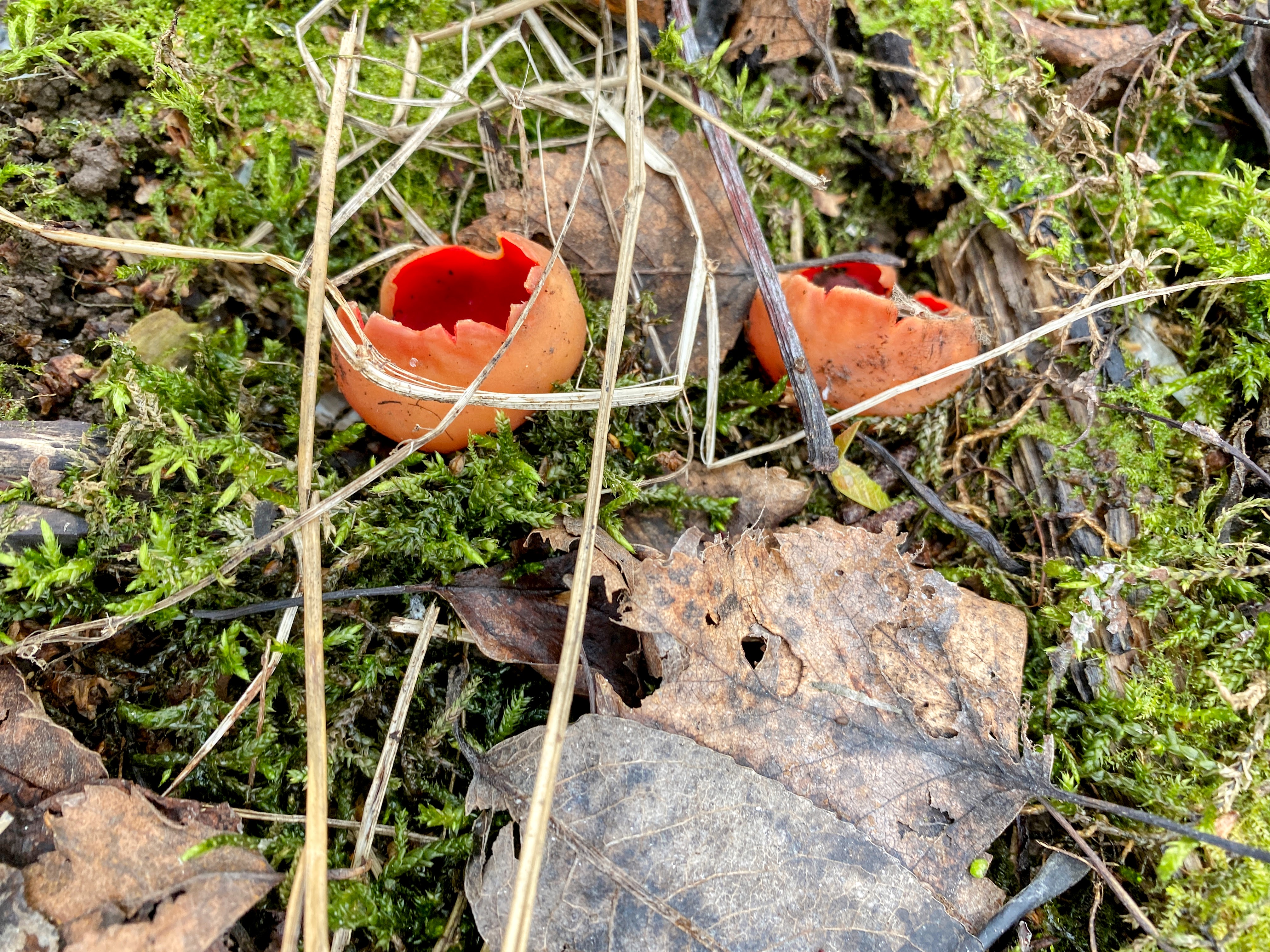
Family: Sarcoscyphaceae
Sarcoscyphaceae - family of fungi within order Pezizales.
Established by Norwegian discomycete specialist F.E. Eckblad and French mycologist M. Le Gal in 1968. Currently counts about 100 species in 13 genera, distributed worldwide. Genera included in this family also belong to extrataxonomic group "discomycetes". Type genus - Sarcoscypha, name formed by Latinization of Greek words and literally means "fleshy cup".
Fruit body - more or less differentiated apothecium, small or medium sizes, initially closed or semi-closed, cup-shaped, in unfolded form, as a rule, saucer-shaped (in genus Wynnea - ear-shaped), occasionally fully resupinate, with stem-like outgrowth, less frequently with full long stem, occasionally sessile. Apothecia of largest species reach 6-8(10) cm in diam. and 3-6 cm high (in Wynnea sparassoides up to 30 cm). Coloration various, often bright (yellow, red, pink), more saturated on inner surface of apothecium covered with hymenium. Surface smooth, in some species hairy, especially along edge. Flesh thin, dense, cartilaginous consistency, as a rule without pronounced smell and taste.
Sarcoscyphaceae - saprotrophs on forest litter, small fragments of decaying wood (twigs, chips), less frequently on soil and large fallen logs. No association with forests of certain composition or suspicions of mycorrhizal relationships observed. Distributed worldwide, in various climatic zones - from arctic to tropical.
Representatives of genera included in this family, as a rule, non-toxic, however have no food value due to small sizes and thin cartilaginous flesh lacking pronounced taste or aroma. Brightly colored apothecia of Sarcoscypha species often used as edible decoration in plating of various dishes. Medicinal qualities of Sarcoscyphaceae poorly studied. In forestry Sarcoscyphaceae also have no significant value due to low mass of fruiting. One species of genus Cookeina used as attractant in fishing.