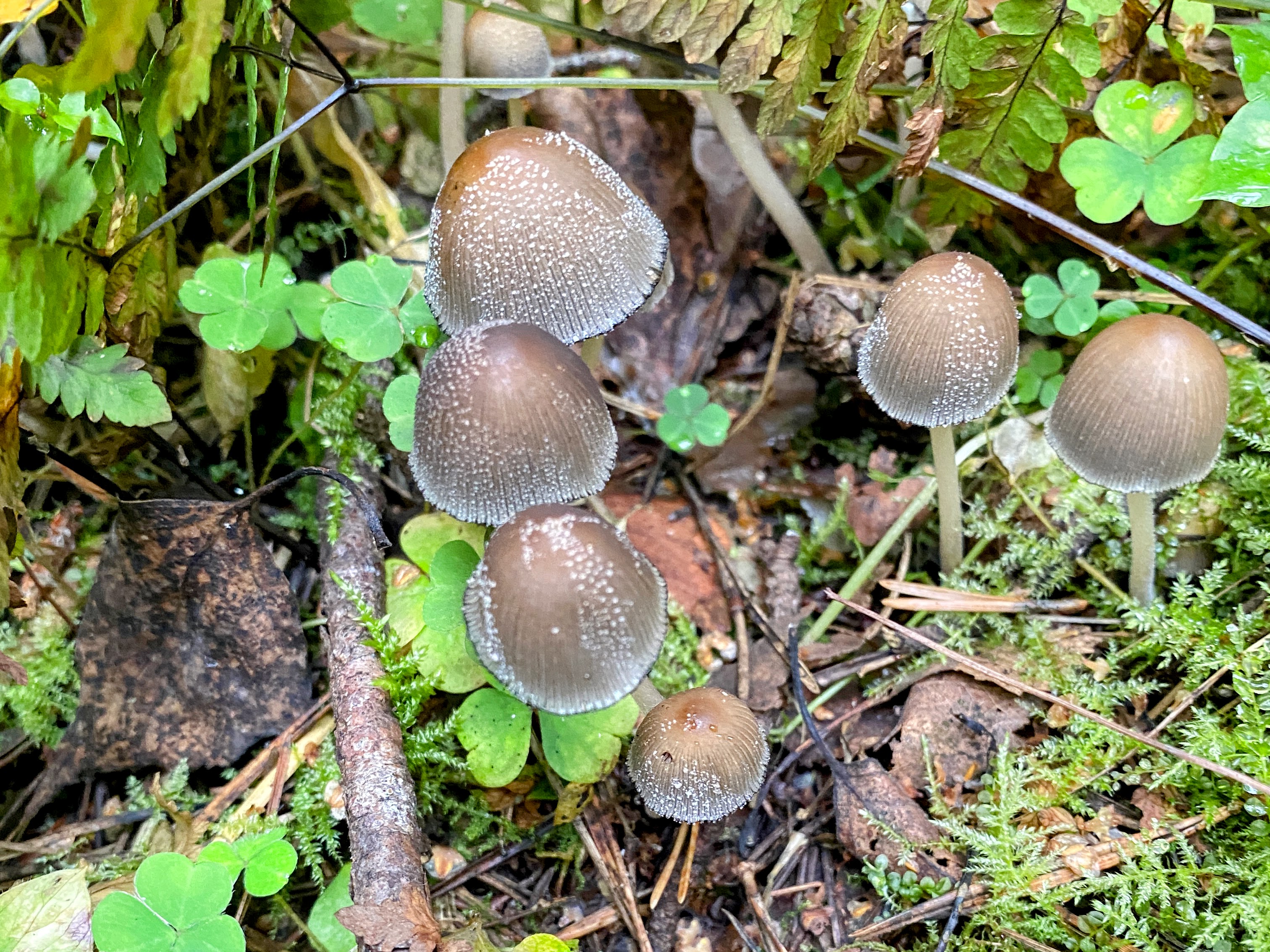
Family: Psathyrellaceae
Psathyrellaceae - family of fungi within order Agaricales.
Separated in 2001 for unification of genera including species with thin-fleshy consistency of flesh of differentiated fruit body, dark-colored spores and lamellar hymenophore. Genera of former family Coprinaceae (Overeem & Weese, 1924) transferred to family, abolished after downsizing of genus Coprinus by genetic characteristics, except itself truncated genus Coprinus, transferred to family Agaricaceae. Includes as of 2023 about 20 genera.
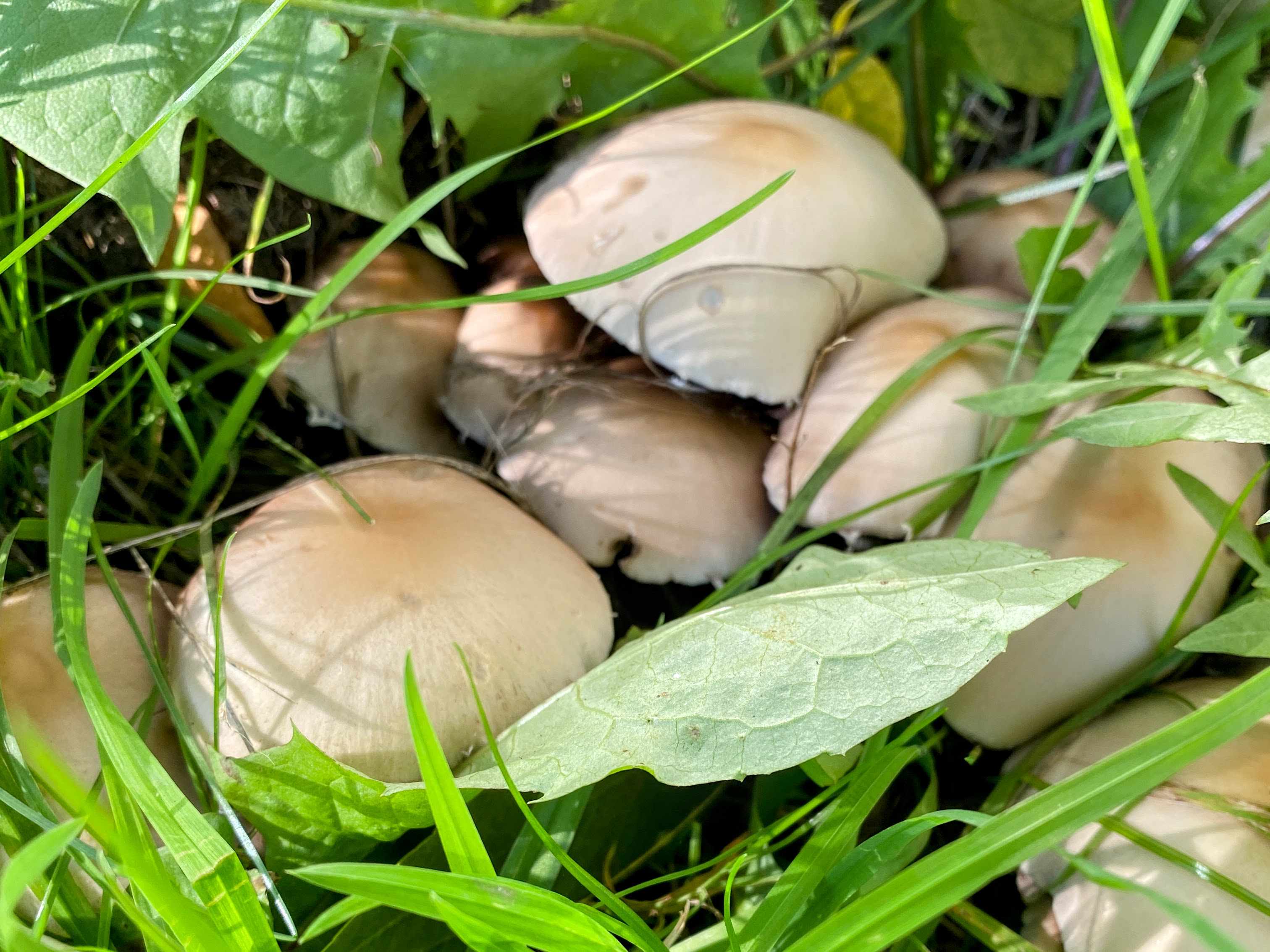
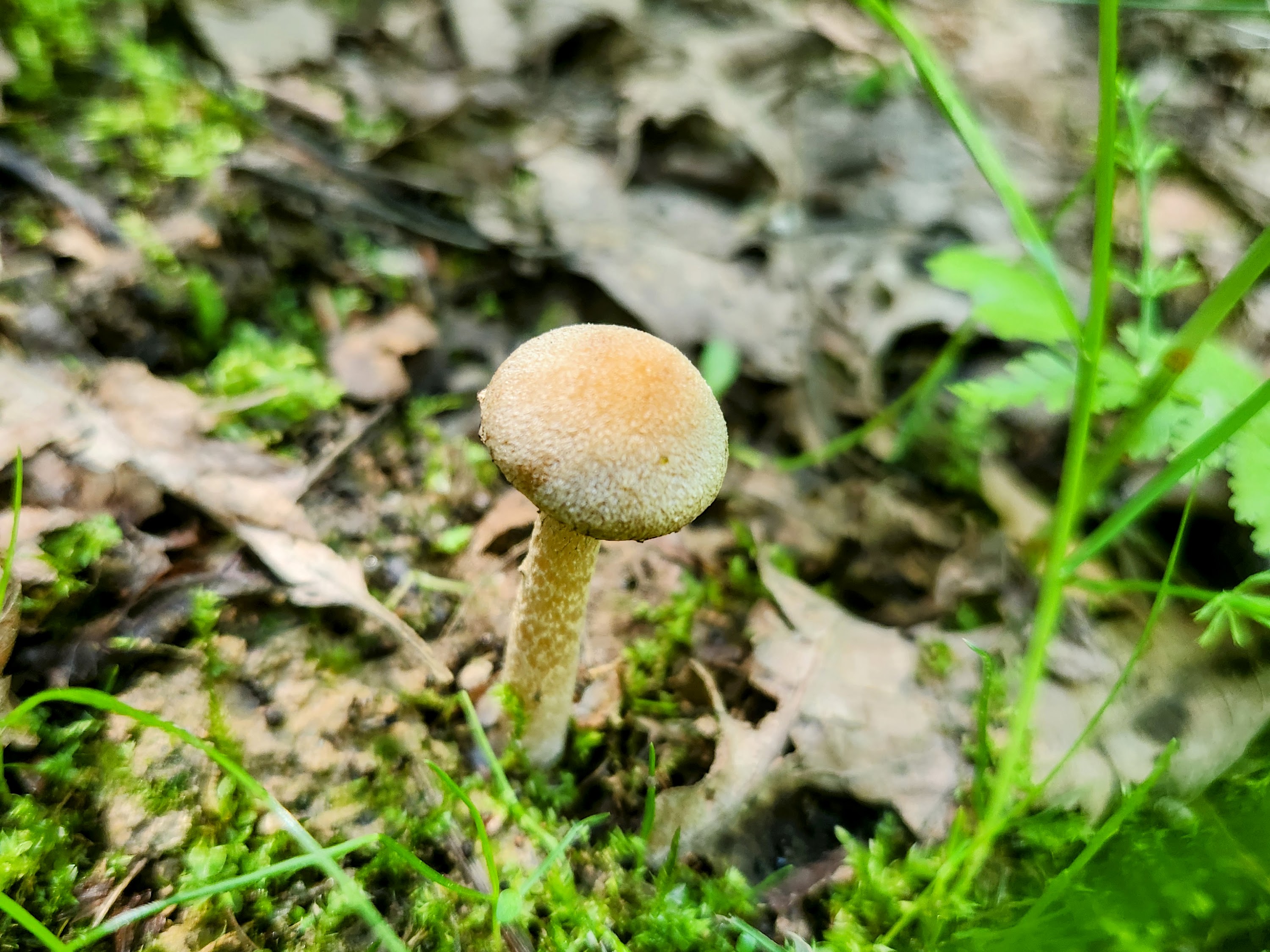
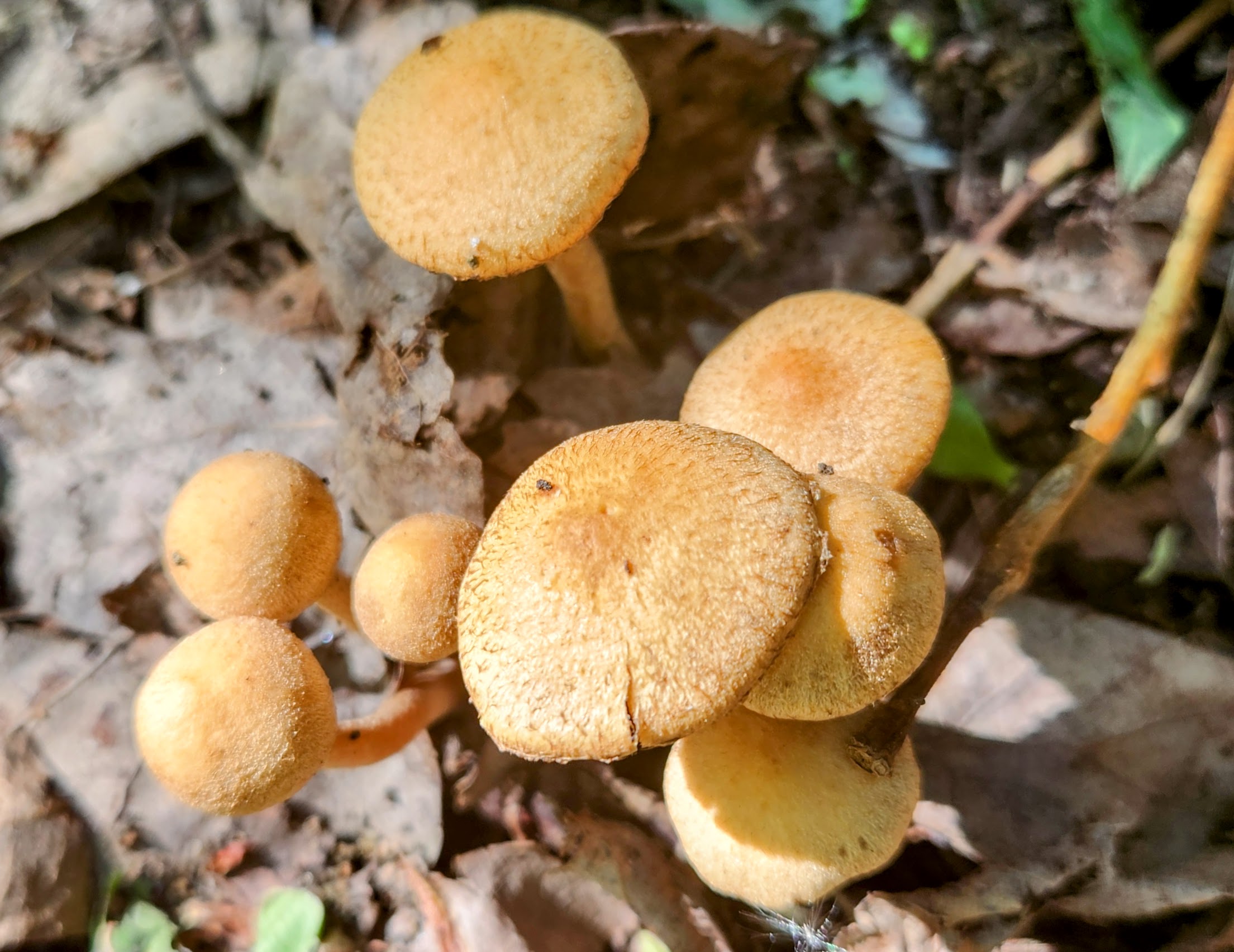
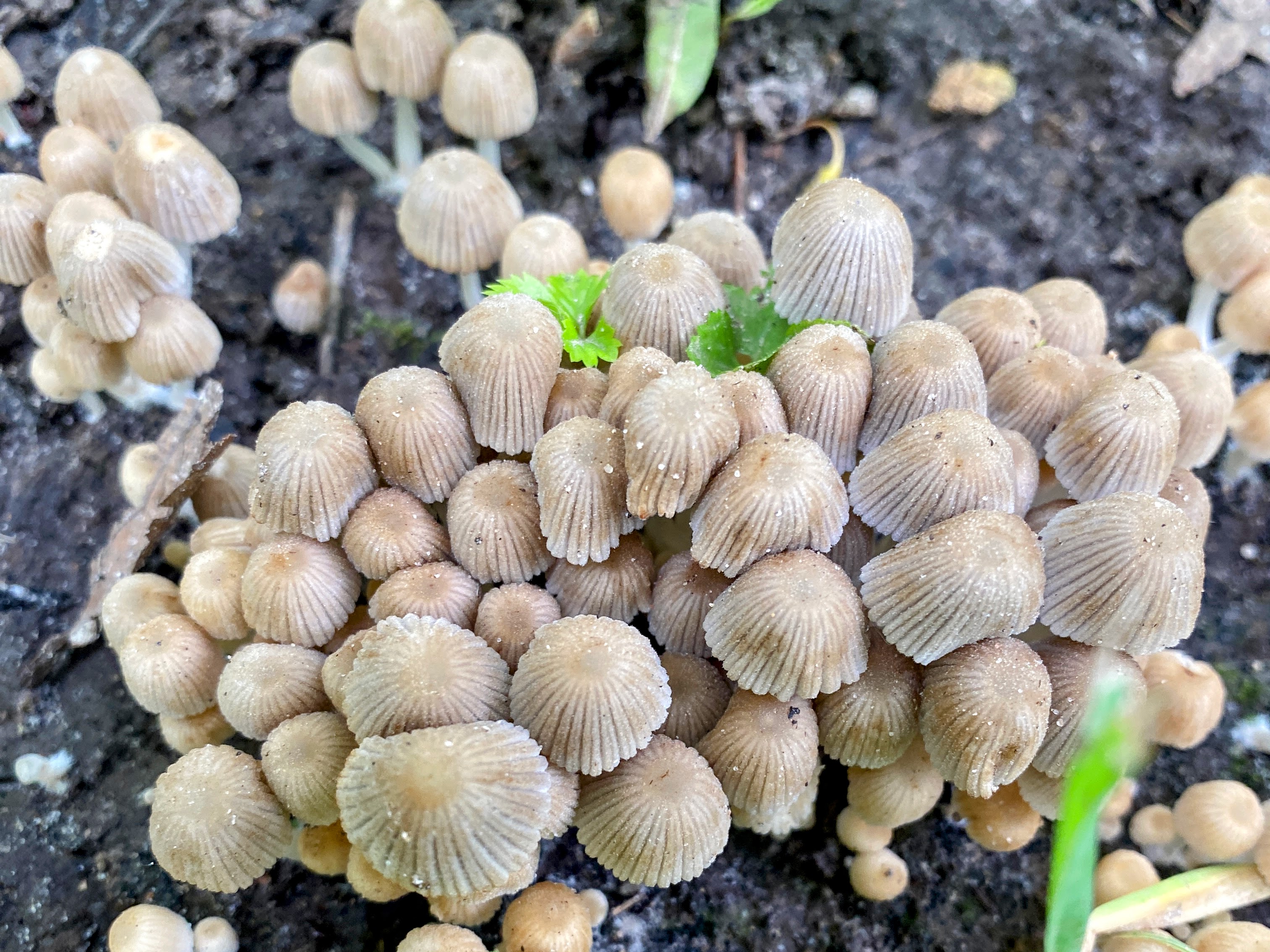
Fruit bodies differentiated into cap and stem, small and medium sizes, with weakly developed veils or without them. Caps from 0.3 to 8-10 cm in diam., in young mushrooms ovoid or bell-shaped, less frequently conical or hemispherical form, in maturity opening to weakly convex, expanded, flat, sometimes weakly concave with uplifted edges, often with ribbed, striate edge, in many species hygrophanous or even translucent. Coloration pale: in white, yellowish, brownish, gray, dark-brown tones, often non-uniform, with darker center. Surface smooth or scaly, in many species radially finely-grooved toward edges. Hymenophore lamellar. Gills free or adnate, in maturity dark-colored: dark-gray, dark-brown, black, in some genera with age self-decomposing (autolysis). Spore print brown or black. Universal veil usually absent, partial - weakly developed, membranous or cobwebby type, leaving on stem ring or disappearing without trace. Stems usually proportionally long (2-3 diameters of cap, up to 10-12, sometimes up to 20 cm high), fragile and brittle, cylindrical form, often curved. Flesh thin-fleshy, without pronounced taste and smell or with unpleasant smell, usually not changing color upon cutting.
Saprotrophs on decaying wood, various plant residues, humus-rich soil, manure, less frequently - facultative parasites of weakened trees. Family contains no mycorrhiza formers, although individual species may be associated with forests of certain composition. Found in any biotopes and distributed across entire globe.
Some representatives of family edible, however have no significant food value due to thin and/or self-decomposing with age flesh. More or less widely known as edible mushrooms only three species: Candolleomyces candolleanus (Candolle's psathyrella, false honey fungus Candolle), Psathyrella spadiceogrisea (chestnut-brown psathyrella) and complex of Coprinopsis atramentaria (common inkcap) and close to it hard-to-distinguish species. Some species toxic in presence of alcohol (contain coprine, delaying ethanol metabolism). In forestry have value as saprotrophs on plant residues. In some species properties of medical character revealed: for example, coprine-containing species may be used for aversive therapy of alcoholism.