Genus: Pholiota (Scalycap)
Pholiota (Scalycap) — genus of fungi of family Strophariaceae.
Etymology
From φολίς, ίδος (pholis, idos) f, scale + ota, terminal element meaning possession of a trait.
Large genus belonging to family Strophariaceae and, unlike many other genera from strophariaceous fungi, not transferred by any taxonomist to another family as alternative classification. Established by Paul Kummer in 1871, who also designated Pholiota squarrosa as type species. As of 2020s, comprises about 150 species.
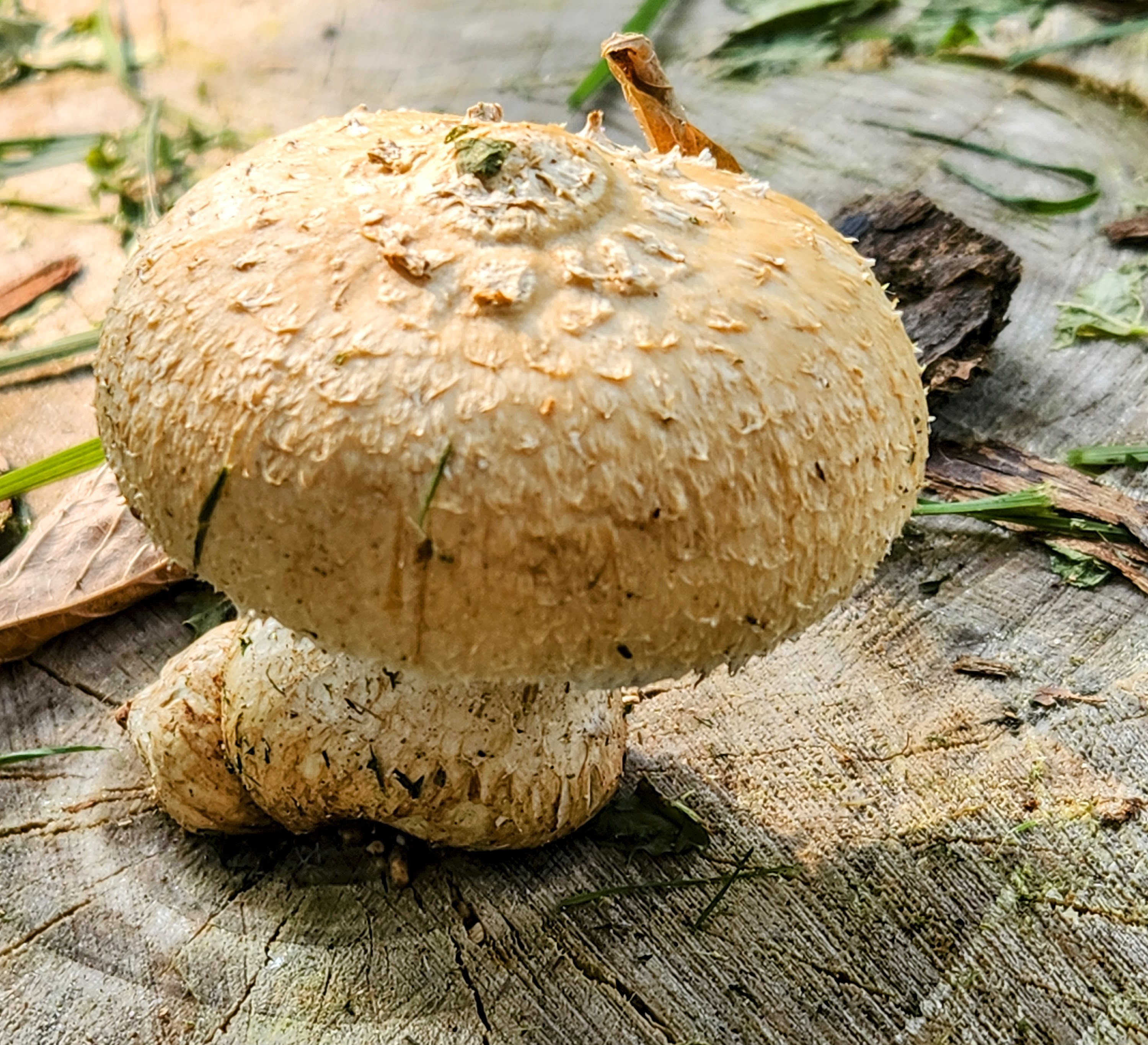
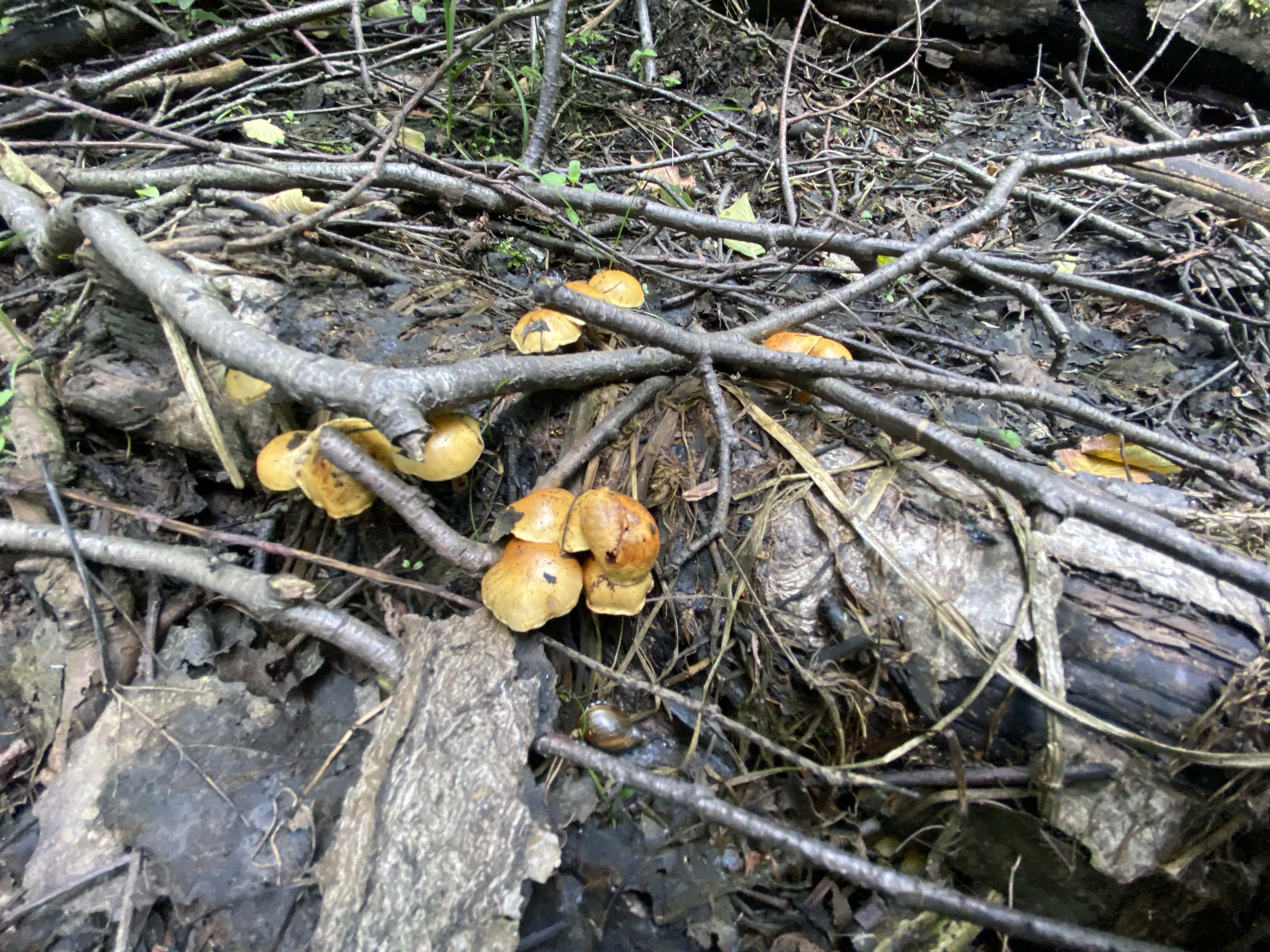
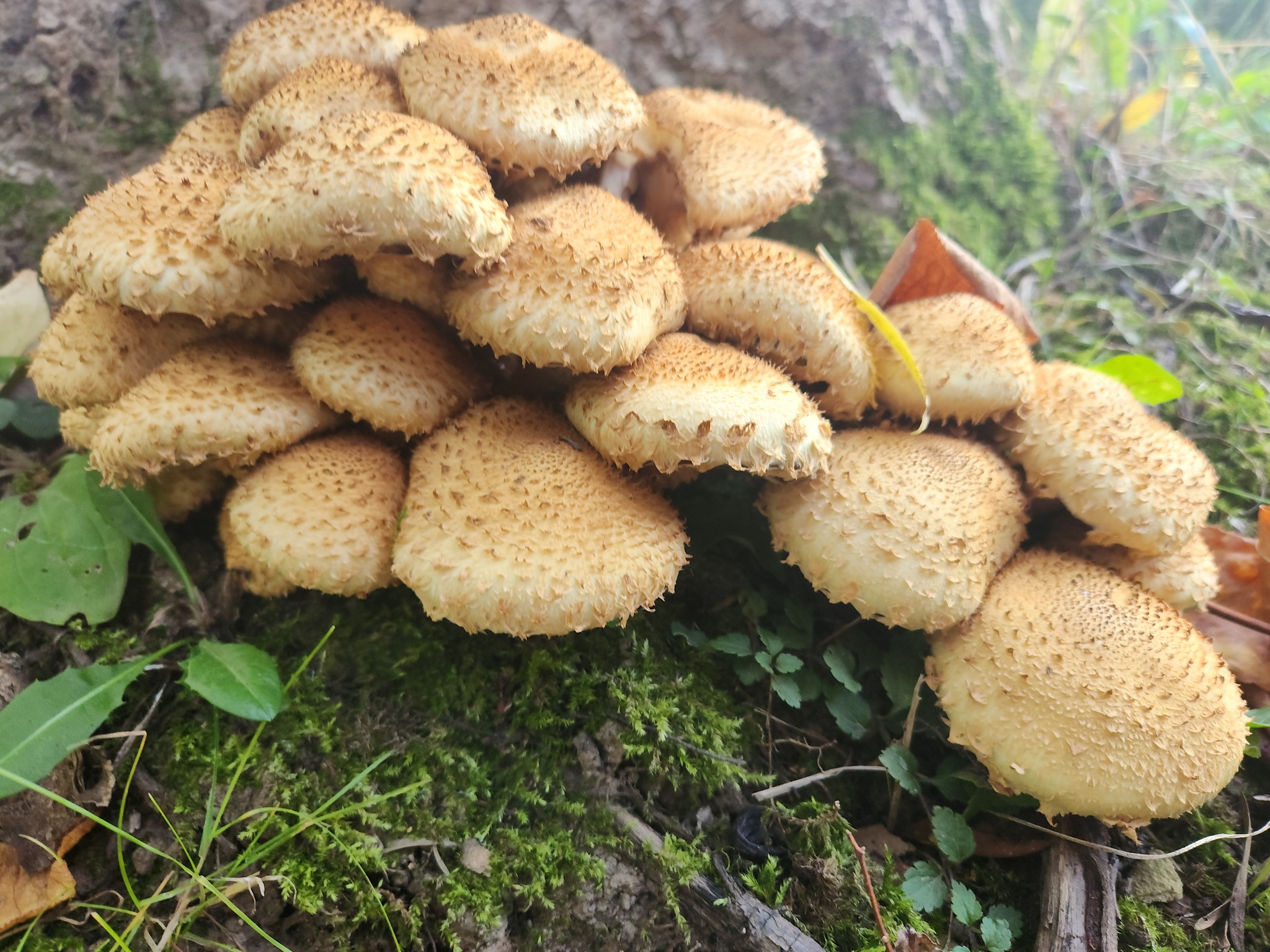
Fruit bodies medium to large sized, clearly differentiated into cap and stem; species previously included in Pholiota with secotioid fruit bodies transferred to other genera. Caps 2-12, in some species up to 20 cm in diam., initially nearly round, with time expanding to plano-convex, flat, expanded, surface usually coarsely scaly, less frequently with scattered, rarely arranged individual scales or smooth; coloration usually in yellow, orange or brown tones. Hymenophore lamellar. Gills adnate, in some species in maturity more or less decurrent, usually light, then darkening from maturing spores to rusty-brown or dark-gray tones. Partial veil present, well-preserved, membranous, mucous-cobwebby or mucous type, leaving on stem a ring or ring zone. Stems long (2-3 cap diameters in young mushrooms, 1-2 in mature), cylindrical, often more or less curved; characteristic clear demarcation of smooth (upper) and scaly (lower) part of stem by ring (collar or band-shaped) or ring zone. Flesh dense, usually not changing color when cut, in many species bitter tasting when raw. Fruit bodies of scalycaps grow, as a rule, in clustered groups, less frequently in scattered groups, even more rarely singly.
Saprotrophs on dead wood of various degrees of decay, less frequently parasites of living trees (usually severely weakened); individual species carbophilous, growing on old campfires and fire-damaged wood.
Most species of scalycaps non-toxic, but not consumed as food due to bitter taste, which may either weaken or disappear completely, or persist after heat treatment. Non-bitter species usually little-known and infrequently encountered, and difficult to identify under amateur conditions. Limitedly popular edible mushrooms are only cultivated East Asian species P. nameko (often sold in stores under guise of honey fungi) and scalycaps of P. aurivella complex ("royal honey fungus"). Individual species mildly toxic, causing various digestive disorders; toxicity also suspected in species P. squarrosa, poisonous in presence of alcohol and causing (similar to Paxillus involutus) destruction of red blood cells.