Genus: Armillaria
Armillaria — genus of fungi of family Physalacriaceae.
Etymology
Armillaria f, Armillaria, Honey fungus. From αρμόζω (armozō), to fit together + aria terminal element meaning possession of a trait. Also armilla, ae f, bracelet.
Type species
Armillaria mellea (Vahl) P. Kumm., Führ. Pilzk. (Zerbst): 134 (1871)
Originally described as a tribe in 1821 by Fries, Armillaria was elevated to status of independent genus by Friedrich Staude in 1857. Latin name of species can be approximately translated as "little bracelet": this is connected with presence of ring in species of this genus. Initially Armillaria belonged to family Tricholomataceae, recently was transferred to Physalacriaceae based on results of genetic research showing close relationship with other genera also assigned to this family, but distant relationship with Tricholoma and other Tricholomataceae. Genus Armillaria long time served as "wastebasket" for fungi having white spores, adnate gills and partial veil: thus, for example, Tricholoma cingulatum, Tricholoma caligatum and other Tricholoma species with pronounced partial veil were at one time assigned to it. At present about 40 species are assigned to genus.
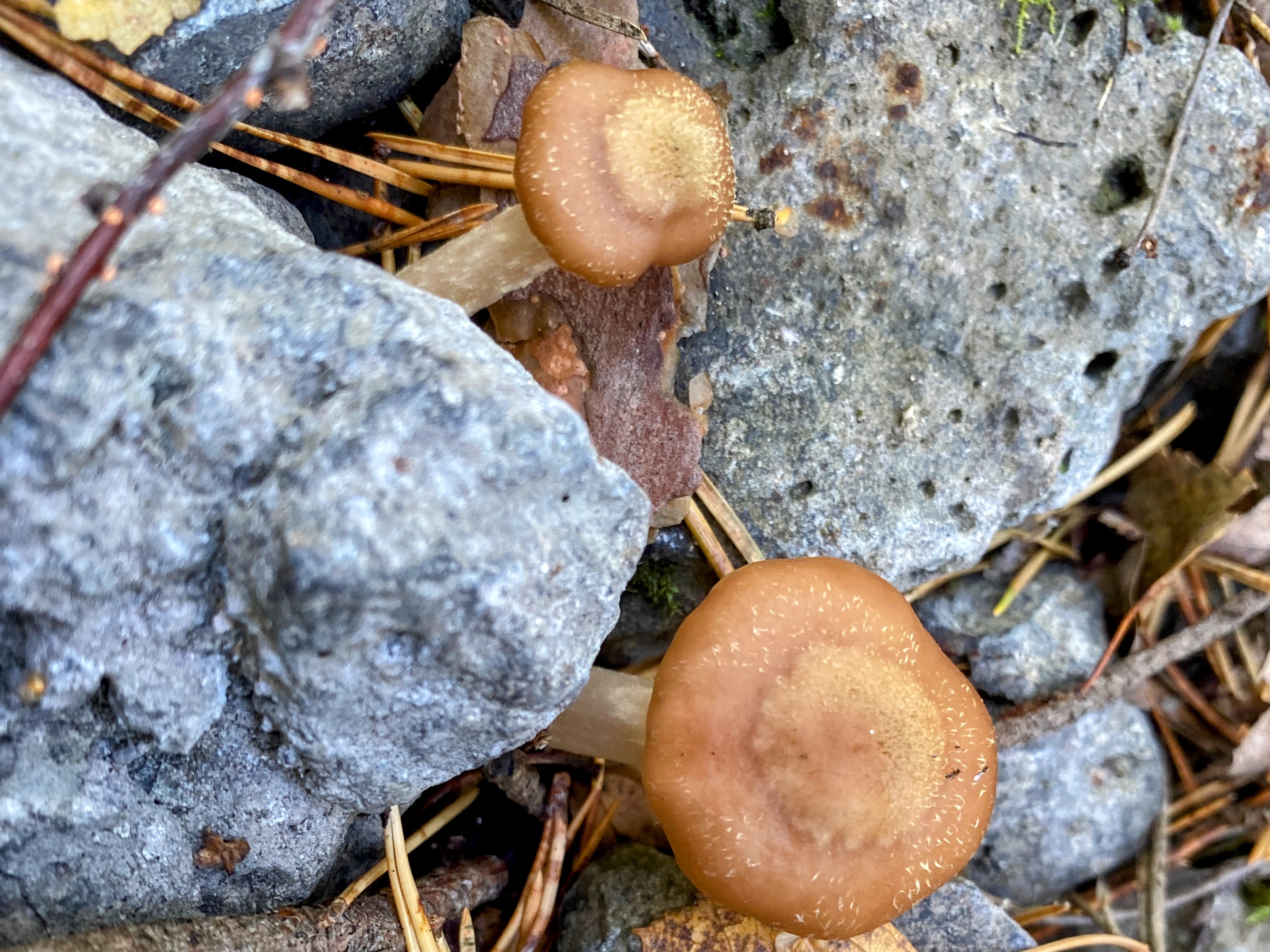
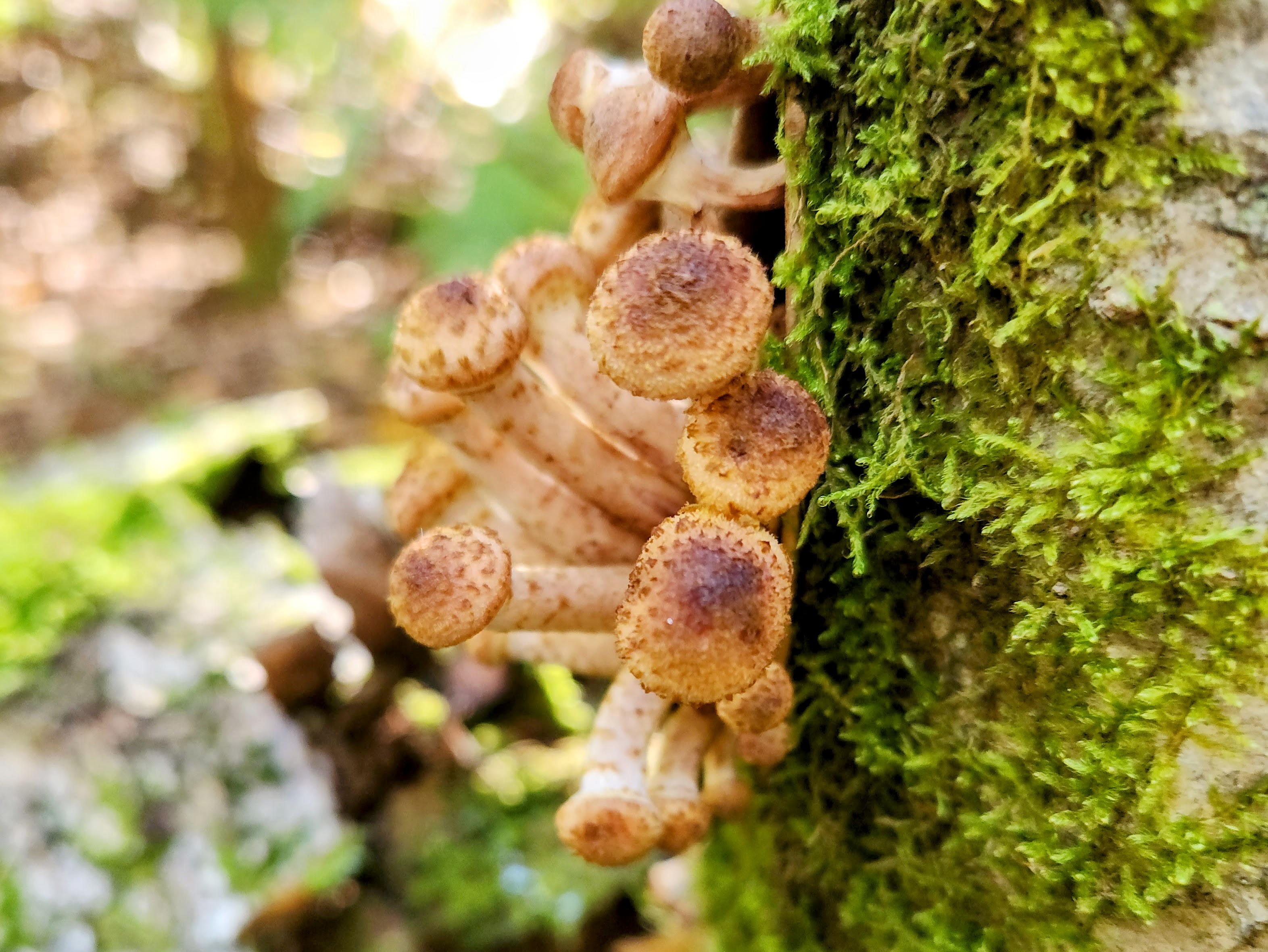
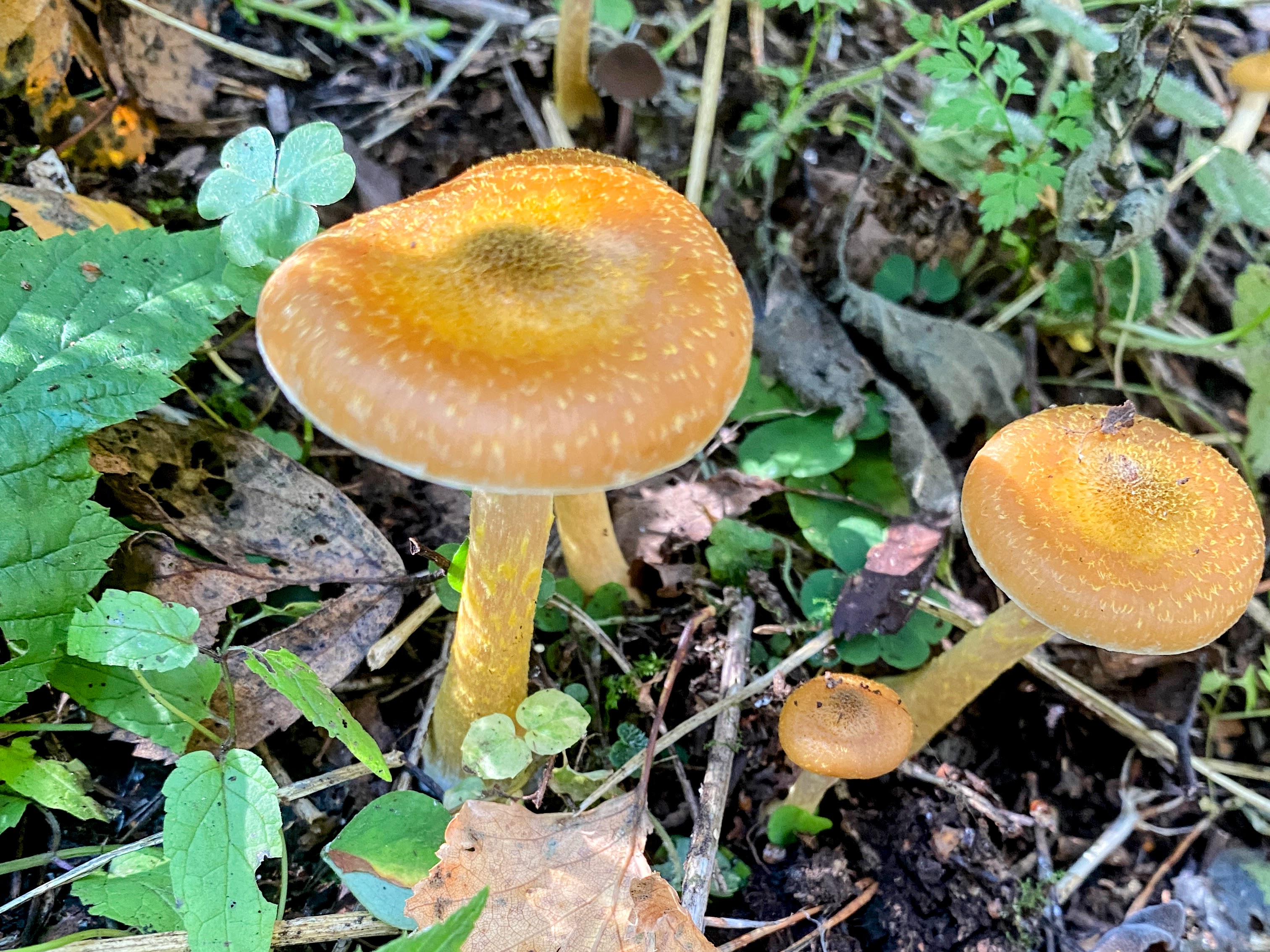
Fruit bodies agaricoid, clearly differentiated, medium sizes, prone to grow in tight groups-colonies, rarely - in small clusters or singly. Universal veil absent, partial - well developed, membranous type, leaving in majority of species noticeable ring on stem. Caps of adult unfolded mushrooms usually 6-9 cm in diam. (up to 15), initially rounded or hemispherical, in maturity expanded, flat, usually more or less scaly. Hymenophore lamellar. Gills light-colored: in youth white or cream, in mature mushrooms - brownish, dirty-white, weakly decurrent on stem. Spore print white. Partial veil membranous, white, yellowish, cream or brownish, in some species quickly disappearing and weakly noticeable, but usually leaving on stem distinct membranous ring of flat or skirt-like form. Stems long (1.5 - 3 diameters of unfolded cap), cylindrical, usually with ring, dense, fibrous. Flesh dense, usually not staining upon cutting, light (from white in caps to beige-brownish in stems of mature mushrooms), in many species with characteristic "honey fungus" smell (mushroom with spicy or sweetish note). Many species prone to formation of rhizomorph network - mycelial cords spreading through substrate over significant distances. Mycelium of many species bioluminescent (glows in dark); in individual species (e.g. A. ectypa) fruit body also glows.
Xylotrophs, developing on wood in various states - from living to practically completely decayed; saprotrophs and facultative parasites. Several species - dangerous parasites of trees, causing significant damage to forestry, but majority of Armillaria species usually behave as saprotrophs on stumps, fallen logs and buried wood, individual species - facultatively on soil saturated with wood debris. Certain number of species form specific obligate mycorrhiza with Orchidaceae.
In many countries species of genus are massively collected as good edible fungi without focusing on species affiliation of particular Armillaria (which can be noticed from Russian name of genus - autumn honey fungus), however many of Armillaria species have not been tested for safety or toxicity, information about this is absent and Book of Toadstools recognizes them as fungi of undetermined edibility. Individual species in mycological literature declared inedible. Parasitic species of autumn honey fungi (e.g. type species A. mellea) - dangerous pests of forestry, rapidly spreading under conditions unfavorable for forest.