Family: Physalacriaceae
Physalacriaceae — family of fungi within order Agaricales.
Family separated in 1970 by English mycologist E.J.H. Corner; majority of genera existing at that time, subsequently included in Physalacriaceae, belonged to Tricholomataceae. Initially family contained only one genus Physalacria. In 2002 genera Armillaria, Flammulina, Xerula and several others were transferred to family. As of 2023 family includes 23 genera.
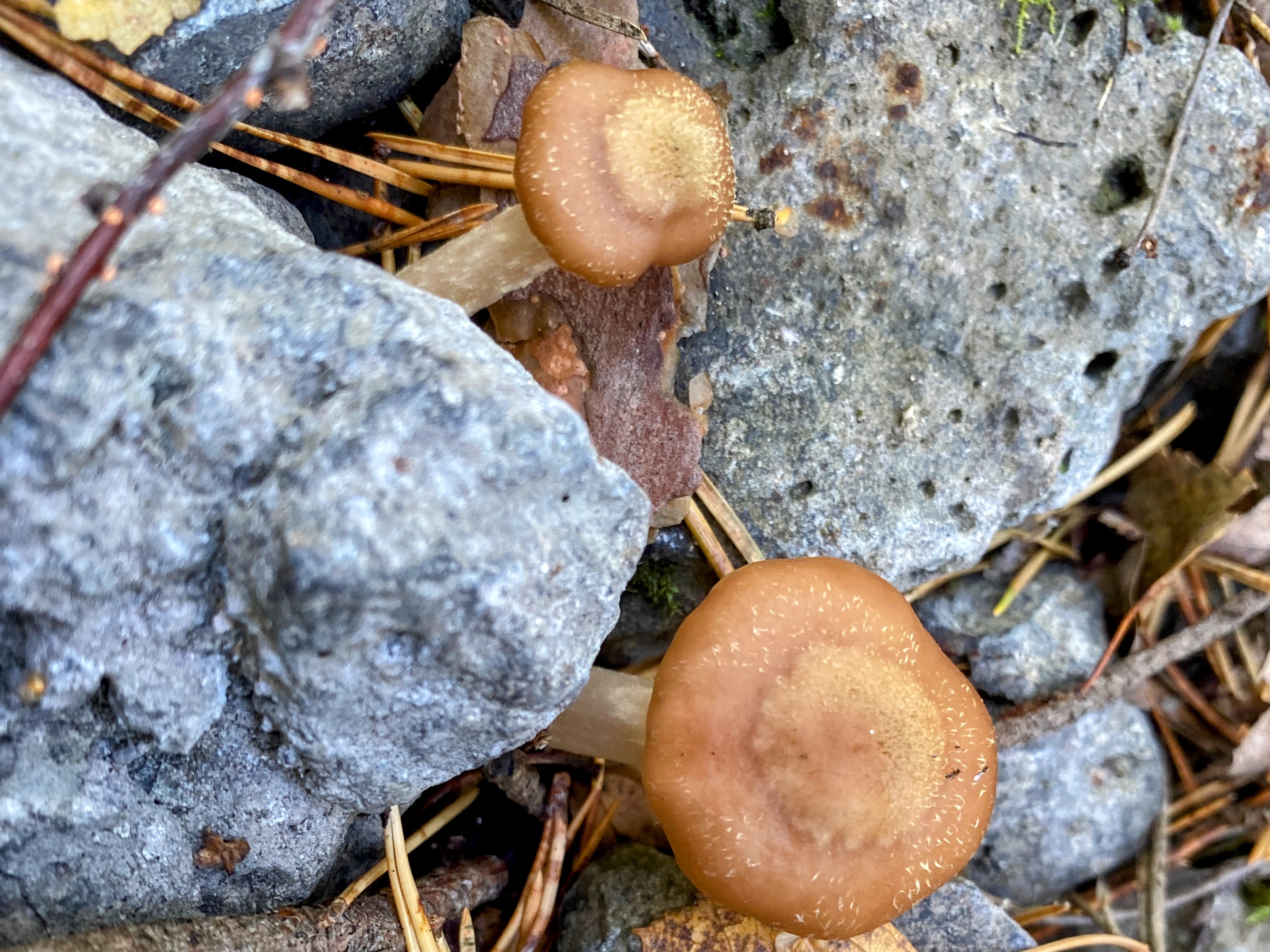
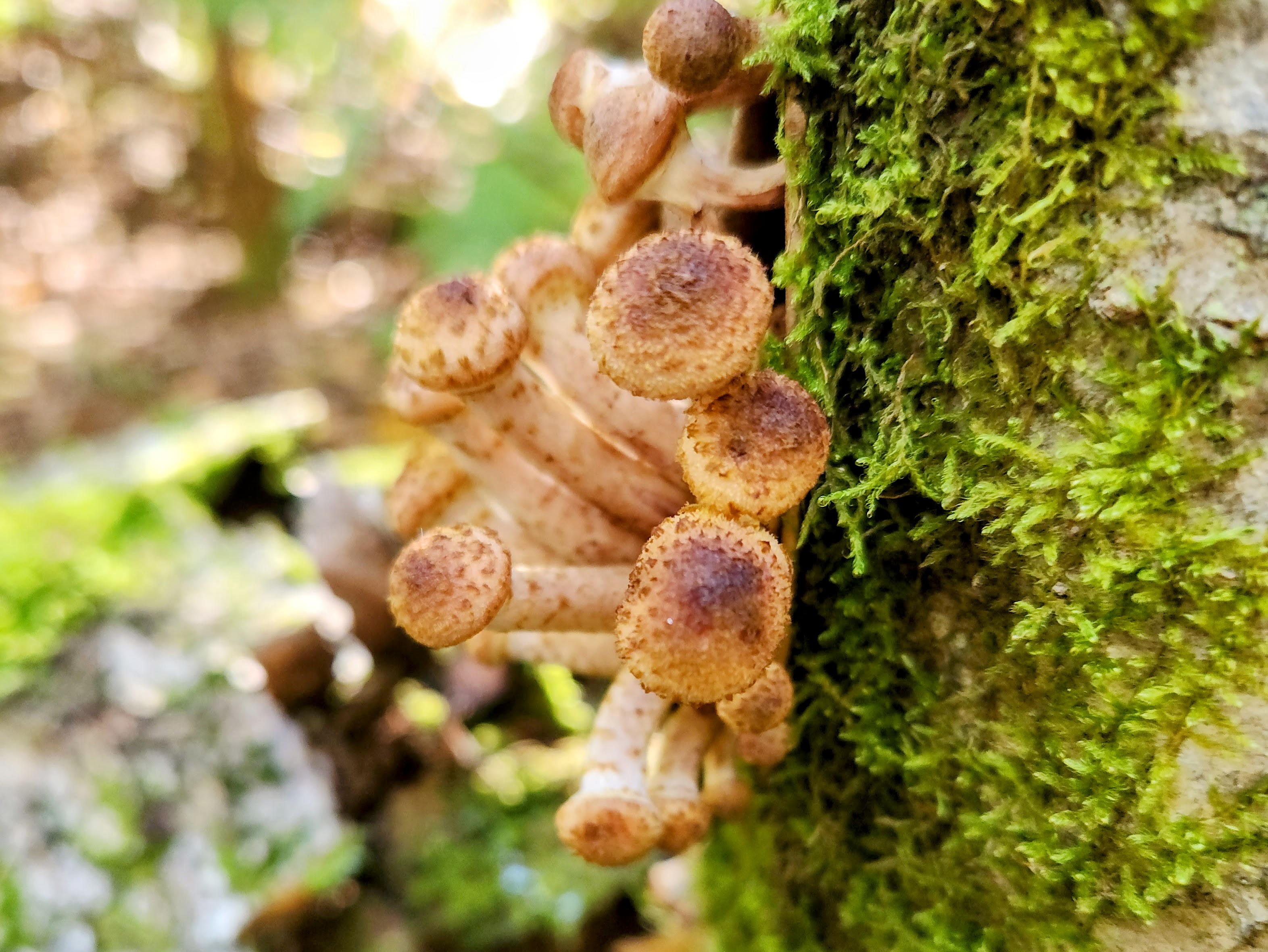
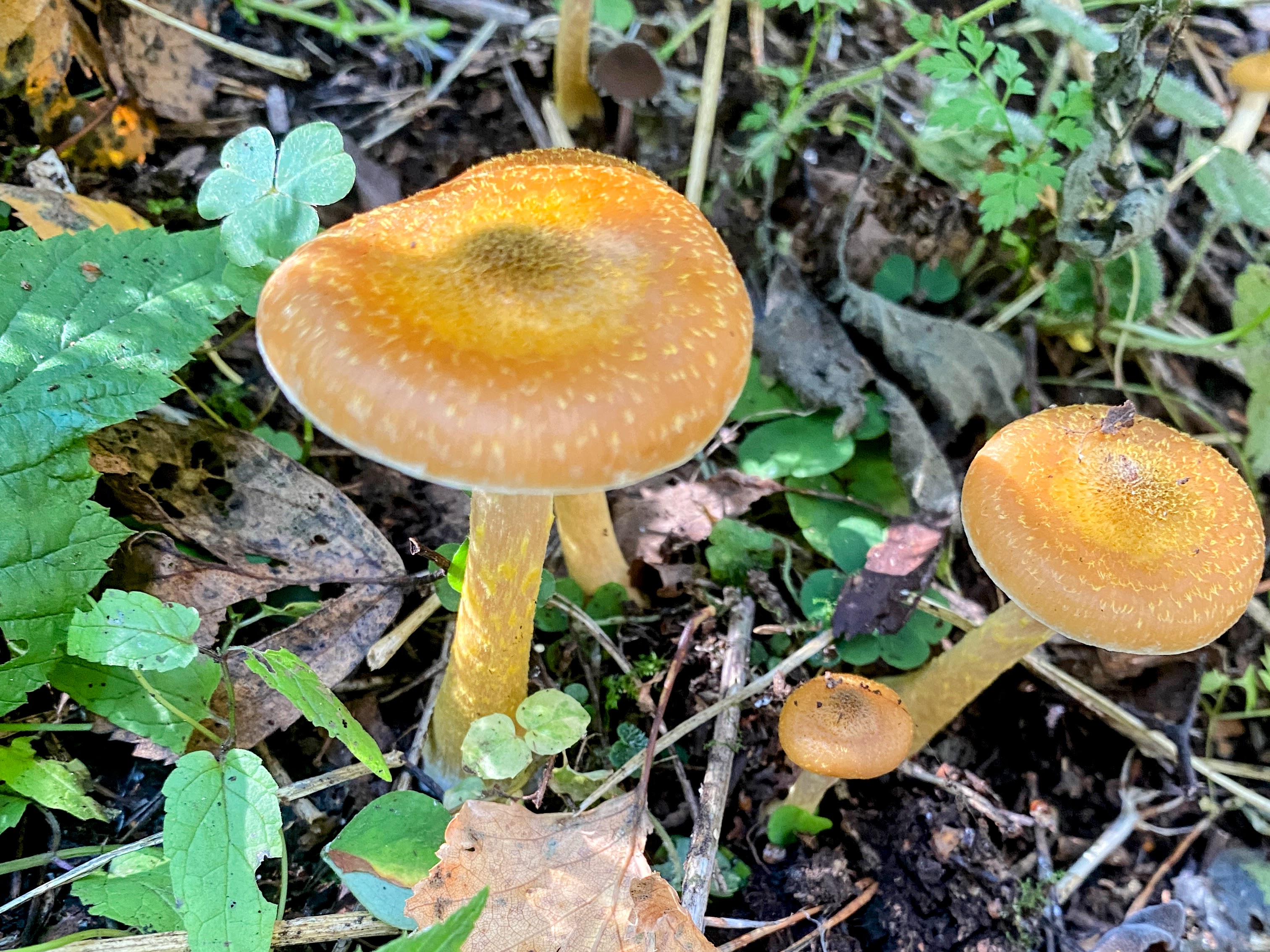
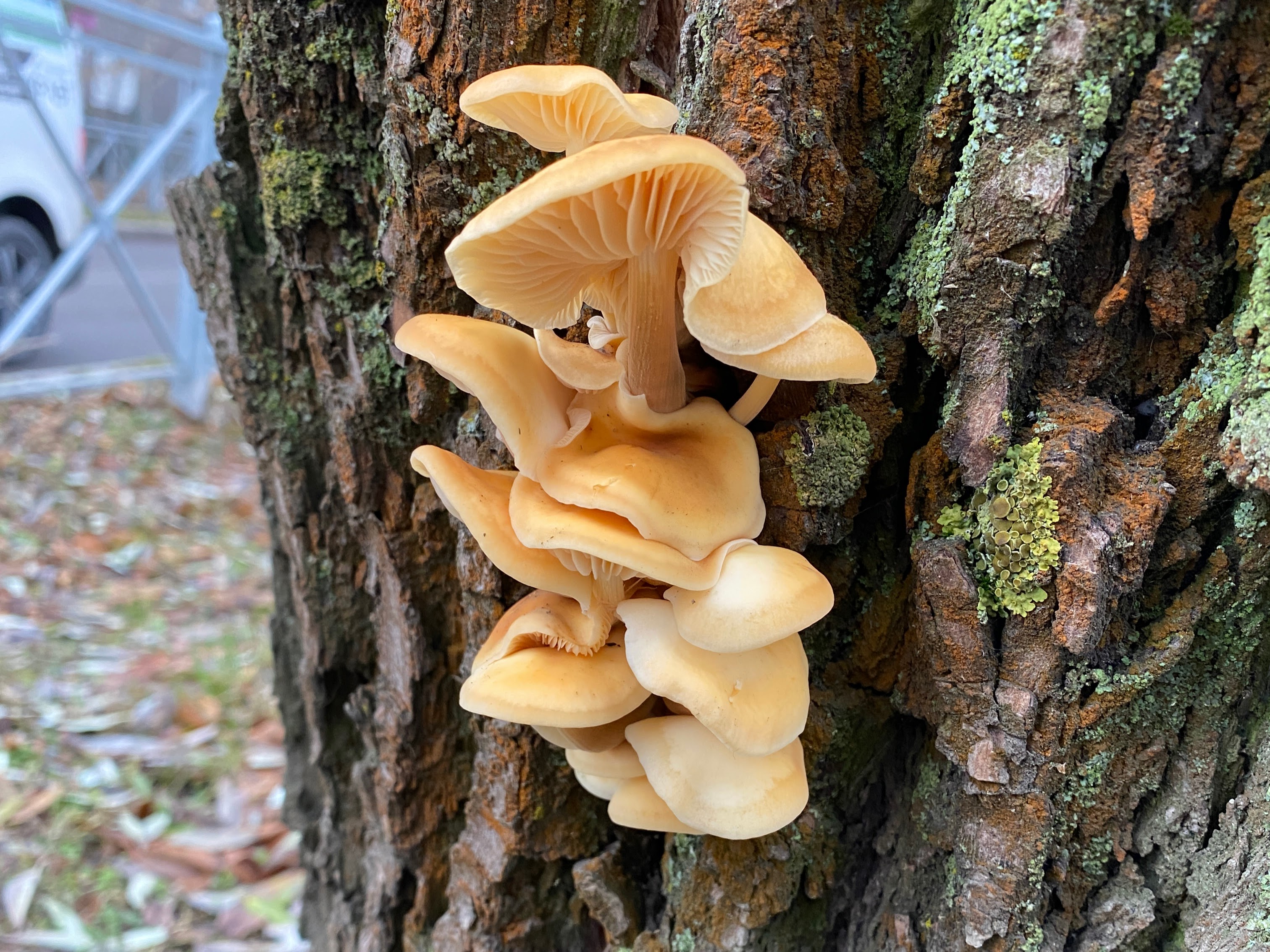
Fruit bodies of representatives of majority of genera – agaricoid, differentiated into cap and stem; in rare cases have different structure (corticioid, secotioid, etc.), small and medium, rarely large sizes. Caps 1-15 cm in diam., usually quickly assume form close to flat, various coloration, smooth, less frequently scaly or radially ribbed. Hymenophore lamellar. Gills more or less adnate, less frequently have different attachment, usually light-colored; spore print also light-colored, from white to cream. In species of genus Armillaria membranous partial veil present. Stems usually long relative to cap, tough, fibrous. Flesh usually thin, only in some species with large fruit bodies sufficiently fleshy, usually of fibrous consistency.
Saprotrophs on wood and various plant residues or parasites of woody and herbaceous plants (genus Mycaureola – parasite of red algae). Distributed on all continents except Antarctica, and inhabit all climatic zones.
Economic significance of Physalacriaceae as food product insignificant: widely consumed only species of genera Armillaria (honey fungus), Flammulina (velvet shank), also edible some species of Oudemansiella, Xerula and Strobilurus. Some species (Armillaria mellea, Oudemansiella mucida and others) parasitize living trees and can cause significant damage to forestry. Species Flammulina velutipes (velvet shank) cultivated for food purposes.