Family: Tricholomataceae
Tricholomataceae — family of fungi within order Agaricales.
Largest family of order Agaricales, initially separated by French botanist Roger Heim in 1934 and considered "wastebasket" for all fungi having light-colored gills and spores and not yet classified as representatives of genera assigned to other families. Forty years ago about quarter of species of order Agaricales belonged to Tricholomataceae. Subsequently families Amanitaceae (1940), Entolomataceae (1972), Lyophyllaceae (1982), Marasmiaceae (1980), Mycenaceae (first separated in 1876, but genera constituting family long time belonged to Tricholomataceae) and several others emerged from Tricholomataceae; many genera were transferred to other families only in 2000s after phylogenetic research. At present Tricholomataceae counts 56 genera including genera of disputed affiliation; also to family some systematists assign genera of family Hygrophoraceae, abolishing family itself. Sensu stricto family, nevertheless, currently counts only 10 genera, remaining have alternative affiliation or await further research.
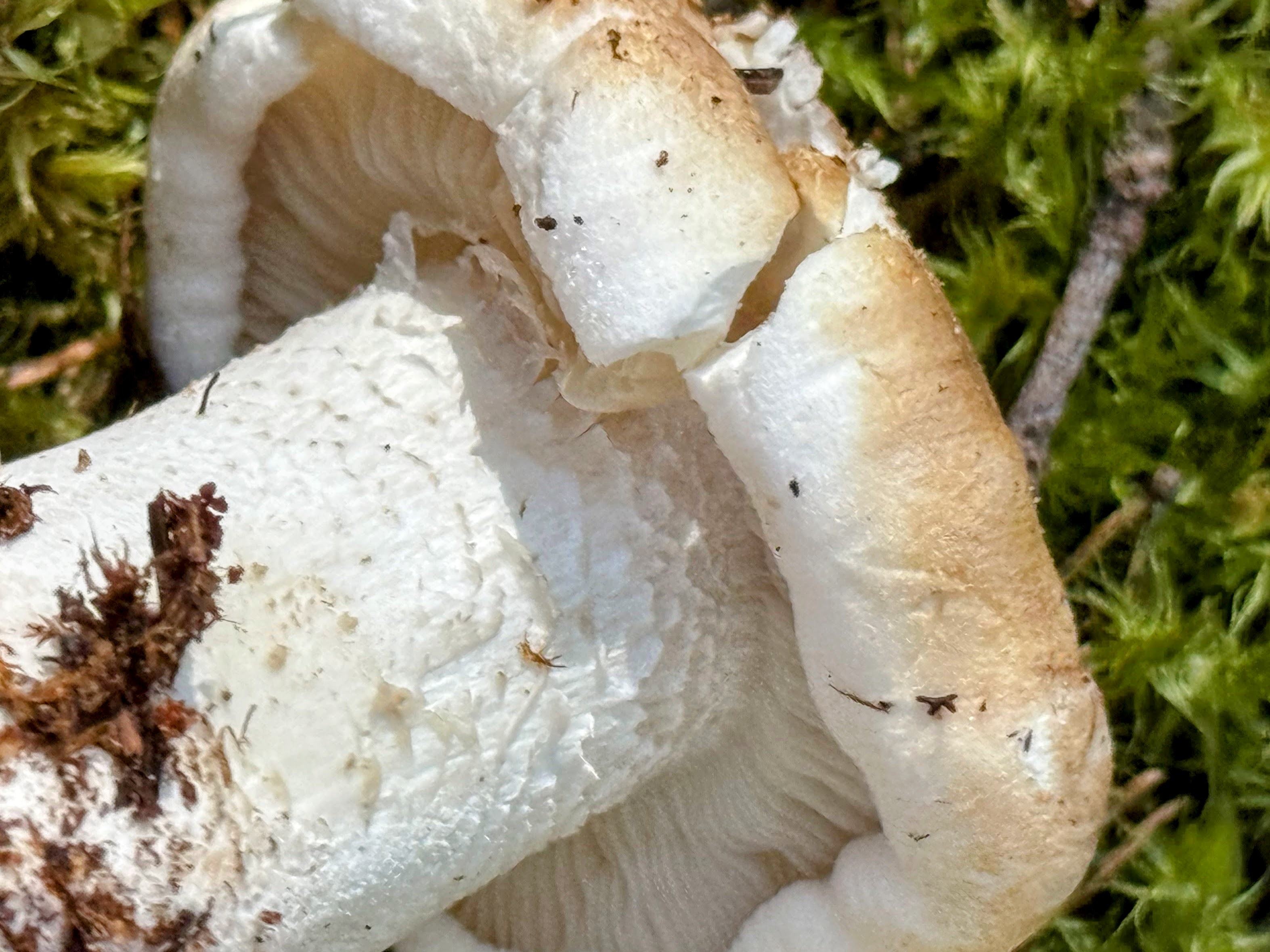
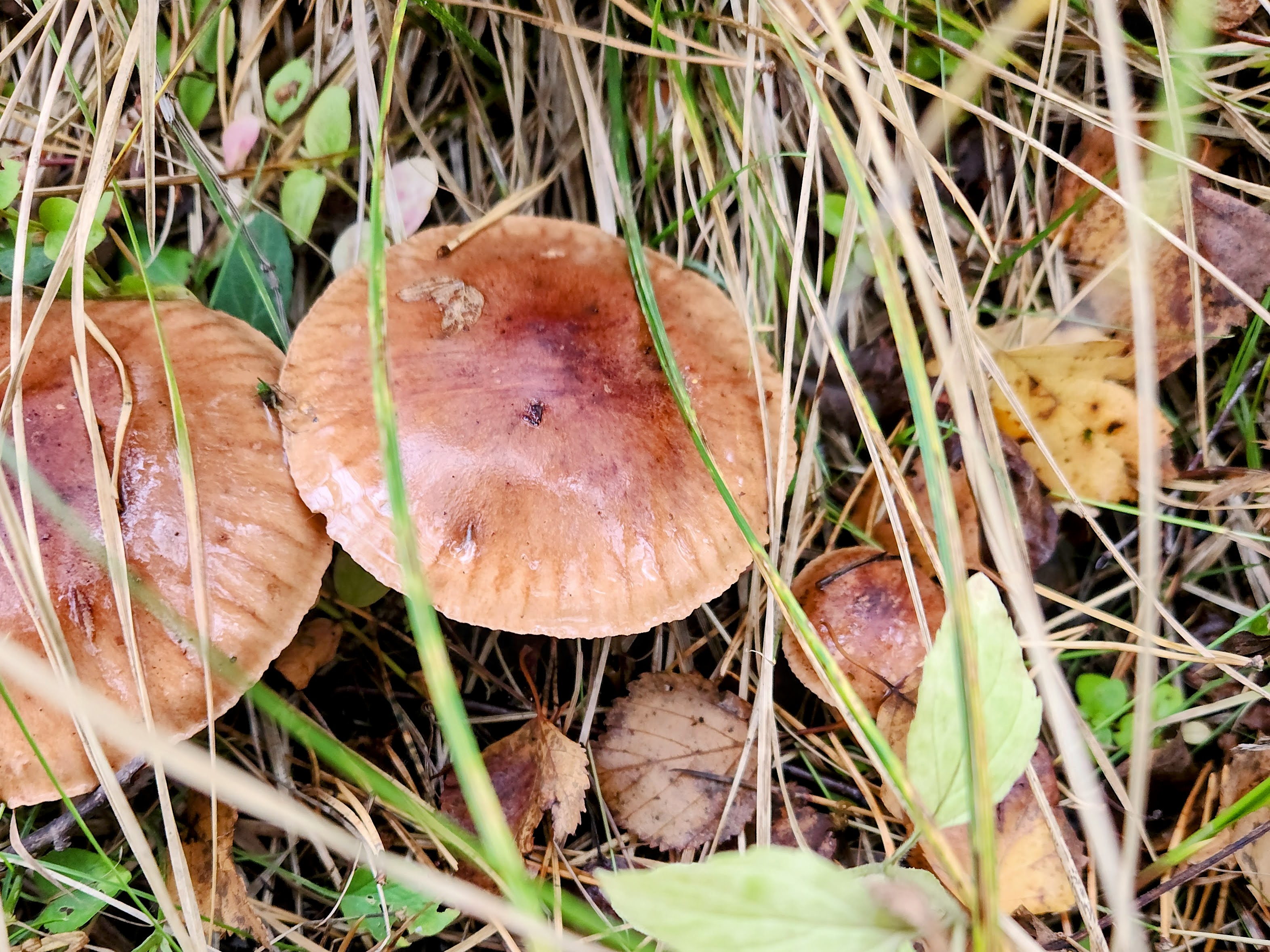
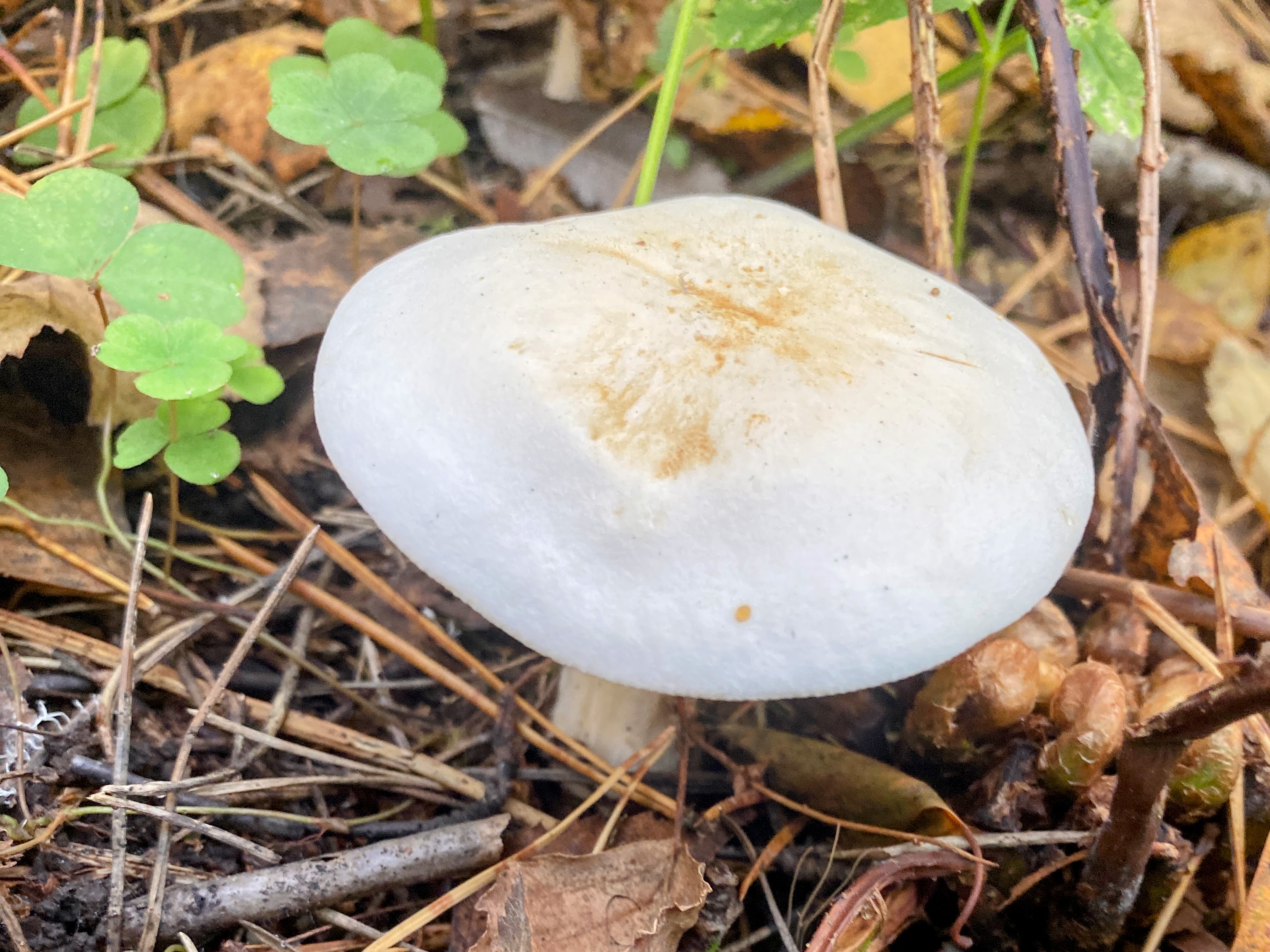
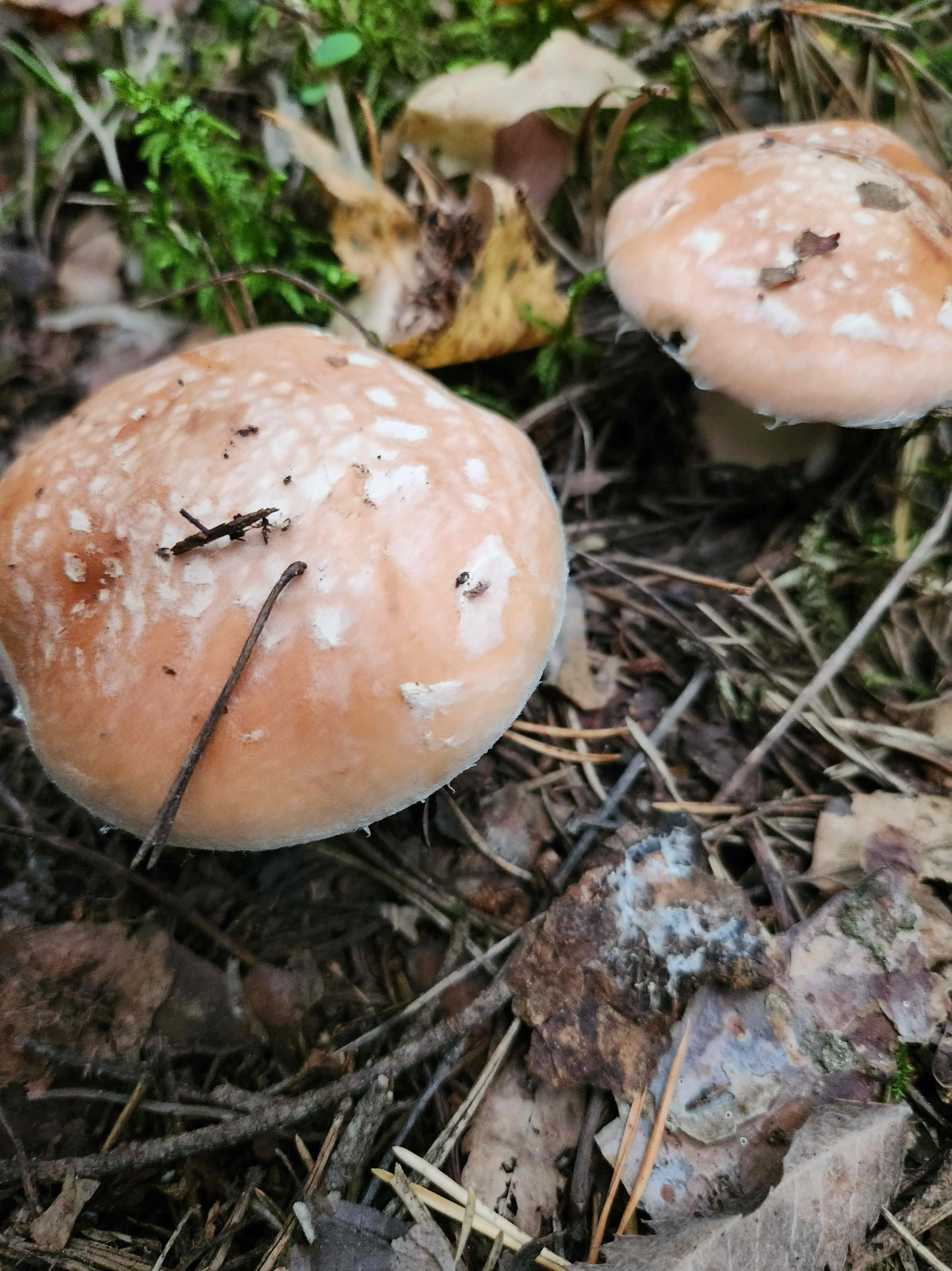
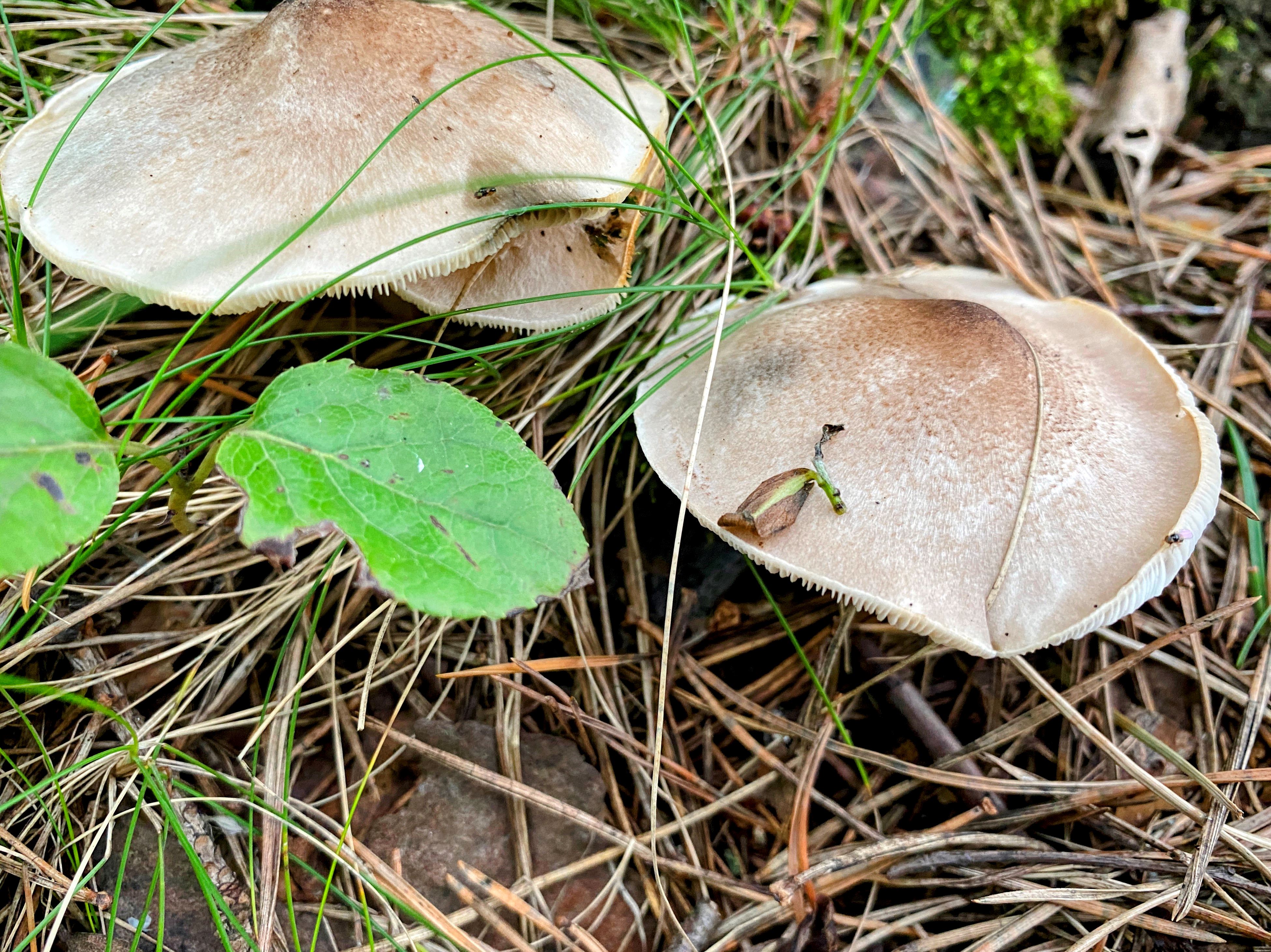
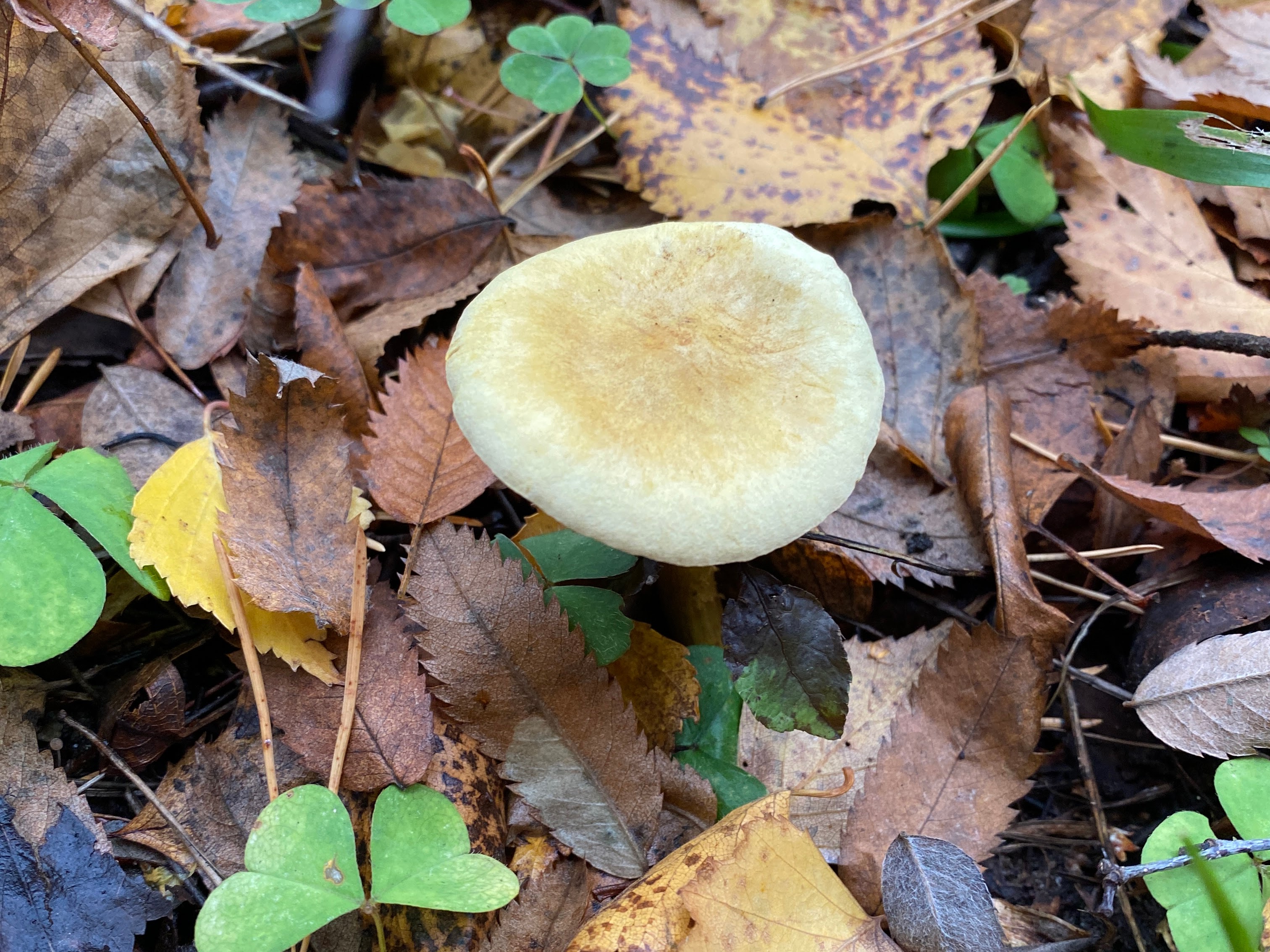
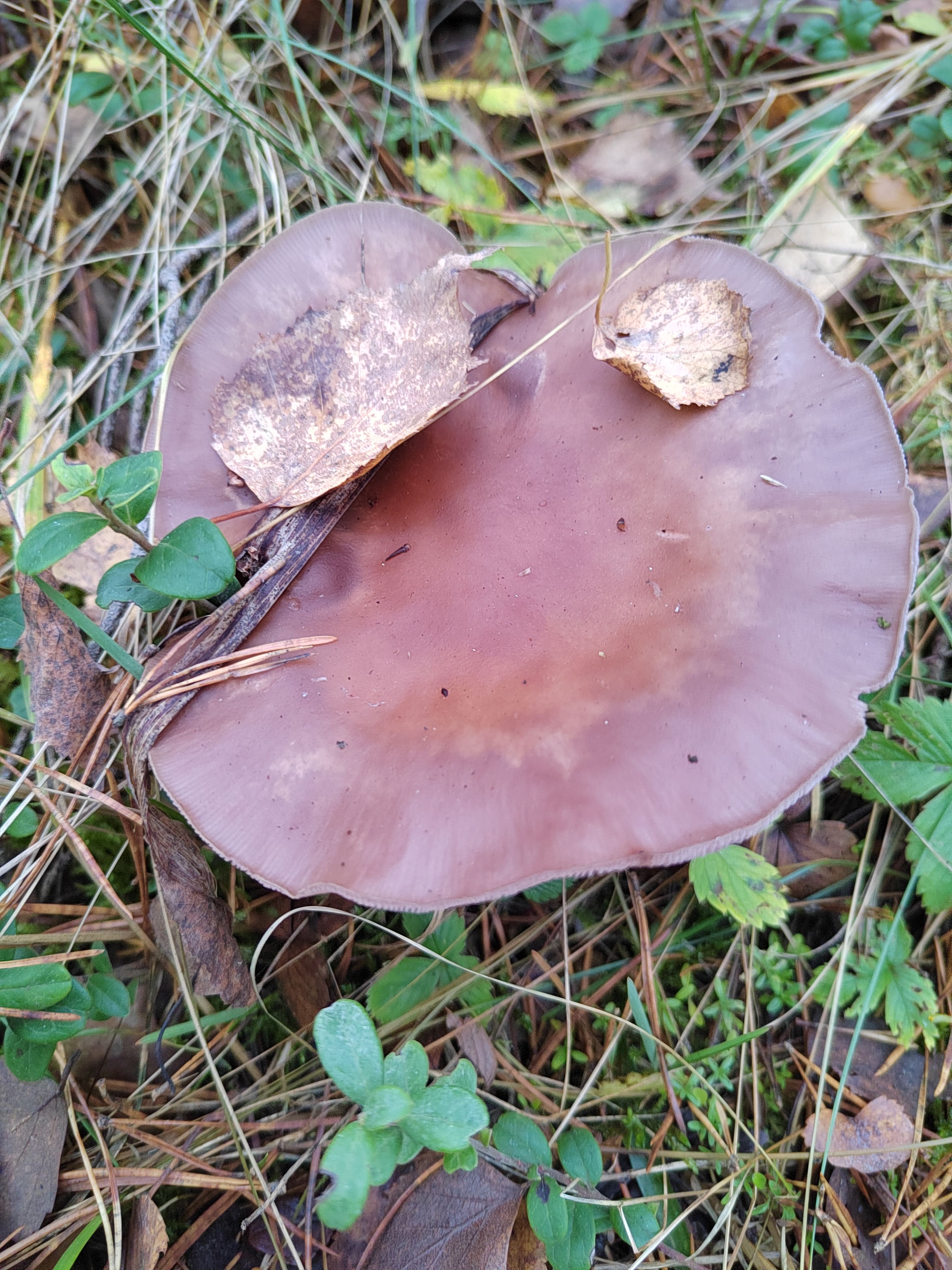
Fruit bodies of majority of species agaricoid, clearly differentiated into cap and stem and having developed lamellar hymenophore. Sizes vary. Caps from 0.2 to 30 cm in diam., in young mushrooms, as a rule, convex - hemispherical, bell-shaped or bluntly conical, with age unfolding to flat, less frequently - widely funnel-shaped or widely concave. Cuticle developed in some species, usually firmly adnate, less frequently removable. Hymenophore lamellar, attaches by various methods, except collarium, more often perpendicularly adnate or emarginate, less frequently semi-free, free or adnate with tooth; coloration of gills various - from pure white to rusty-brown, but more often they light-colored: white, gray, cream, yellow, light-pink. Spore print from white to light-brown color. Partial veil present in some genera and some species in genera traditionally lacking it; usually membranous type, less frequently cobwebby, may leave ring on stem, flakes along cap edges or disappear without trace. Universal veil absent. Stems of various forms and proportions, usually cylindrical, narrowed or weakly swollen at base, less frequently - club-shaped, fusiform, distinctly swollen. Flesh of various degree of development, more often thin, dense, fibrous, in cap - radially, in stem - longitudinally, sometimes changing color upon cutting.
In family in broad sense representatives of almost all ecological groups of fungi included: mycorrhiza formers, saprotrophs on various plant substrates, carbofiles, mycofiles, parasites of trees and fungi. Grow in any biotopes, both natural and disturbed by humans, and distributed across entire globe. Tricholomataceae sensu stricto - mycorrhiza formers, less frequently soil or litter saprotrophs, inhabiting mainly forests, less frequently in open spaces.
Family counts large number of species edible for humans, some of which widely known, as well as some number of dangerous toxic species (however deadly poisonous fungi in Tricholomataceae almost absent; lethal outcome may be caused only by severe cases of poisoning by some muscarine-containing species of Clitocybe). Especially often collected some species of type genus Tricholoma, as well as some species transferred to Physalacriaceae genus Armillaria and some species of Lepista. Widely known in certain localities may be some other species of Tricholomataceae. Several species contain biologically active compounds and have prospect of use as pharmaceutical raw material, also some Tricholomataceae used in folk medicine.