Family: Strophariaceae
Strophariaceae - family of fungi within order Agaricales.
Large family of lamellar fungi within Agaricales (order Agaricales). Family-forming genus - Stropharia (stropharia, ringlet - Russian name rarely used). Separated by Rolf Singer and Alexander H. Smith in 1945. Fungi with adnate perpendicularly or toothed gills, darkening with age, and spores from reddish-brown to dark-violet-black color were placed in family. Strophariaceae do not form mycorrhiza and feed on dead organic matter: wood, forest litter, humus, dead mosses, less frequently - manure, few species facultatively parasitize still living trees; predominantly saprotrophic type of nutrition became another criterion for separating family.
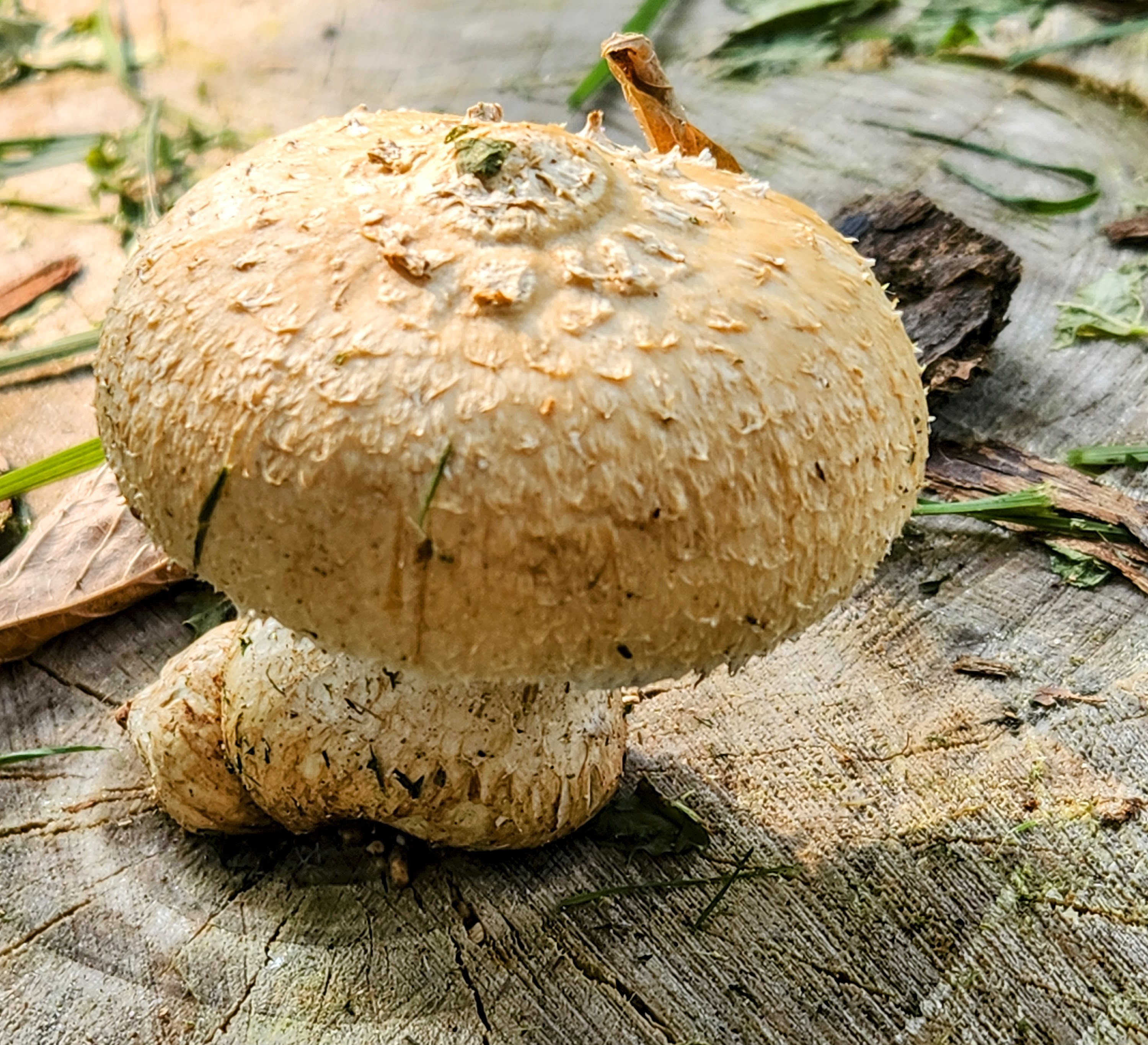
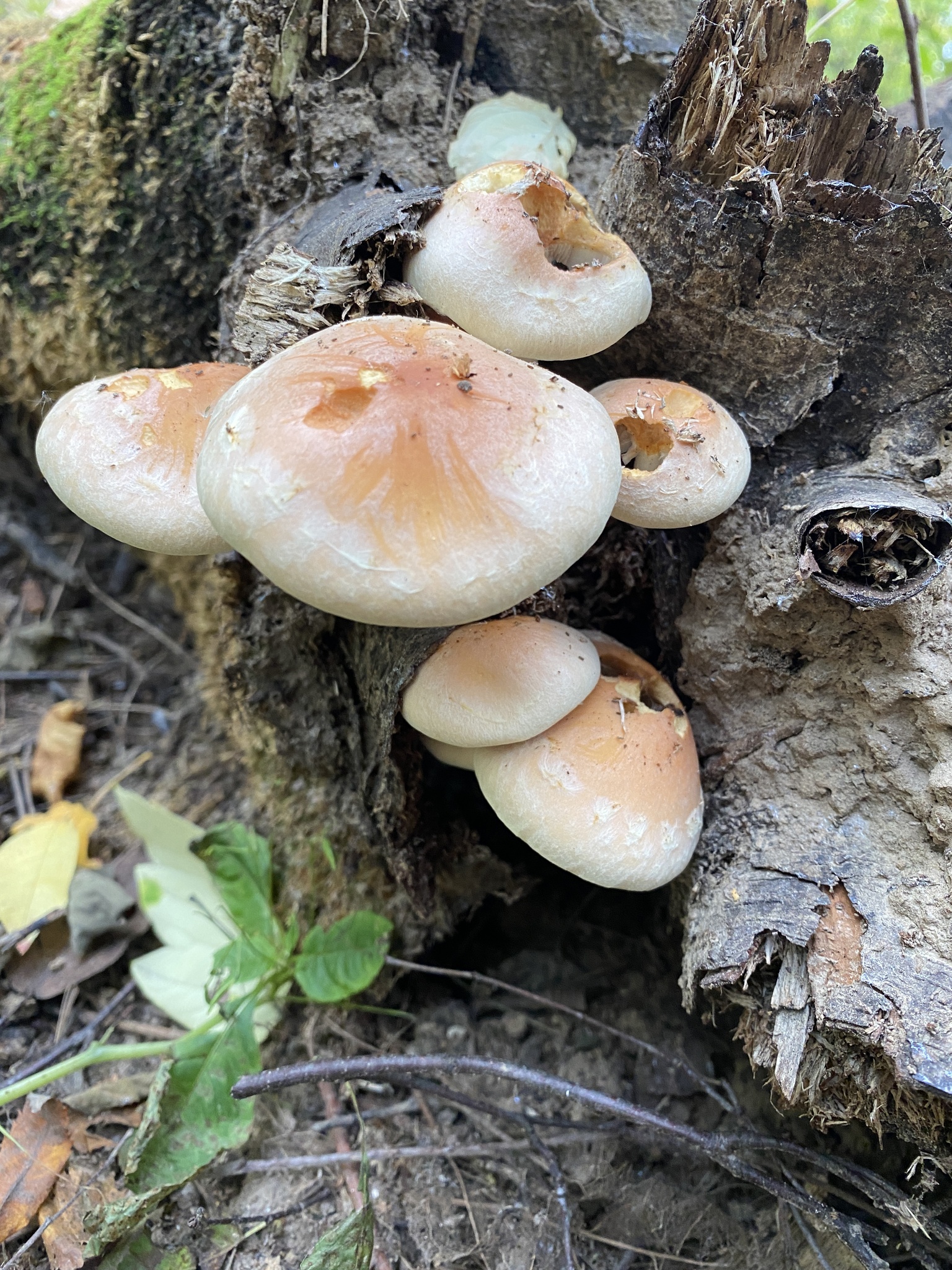
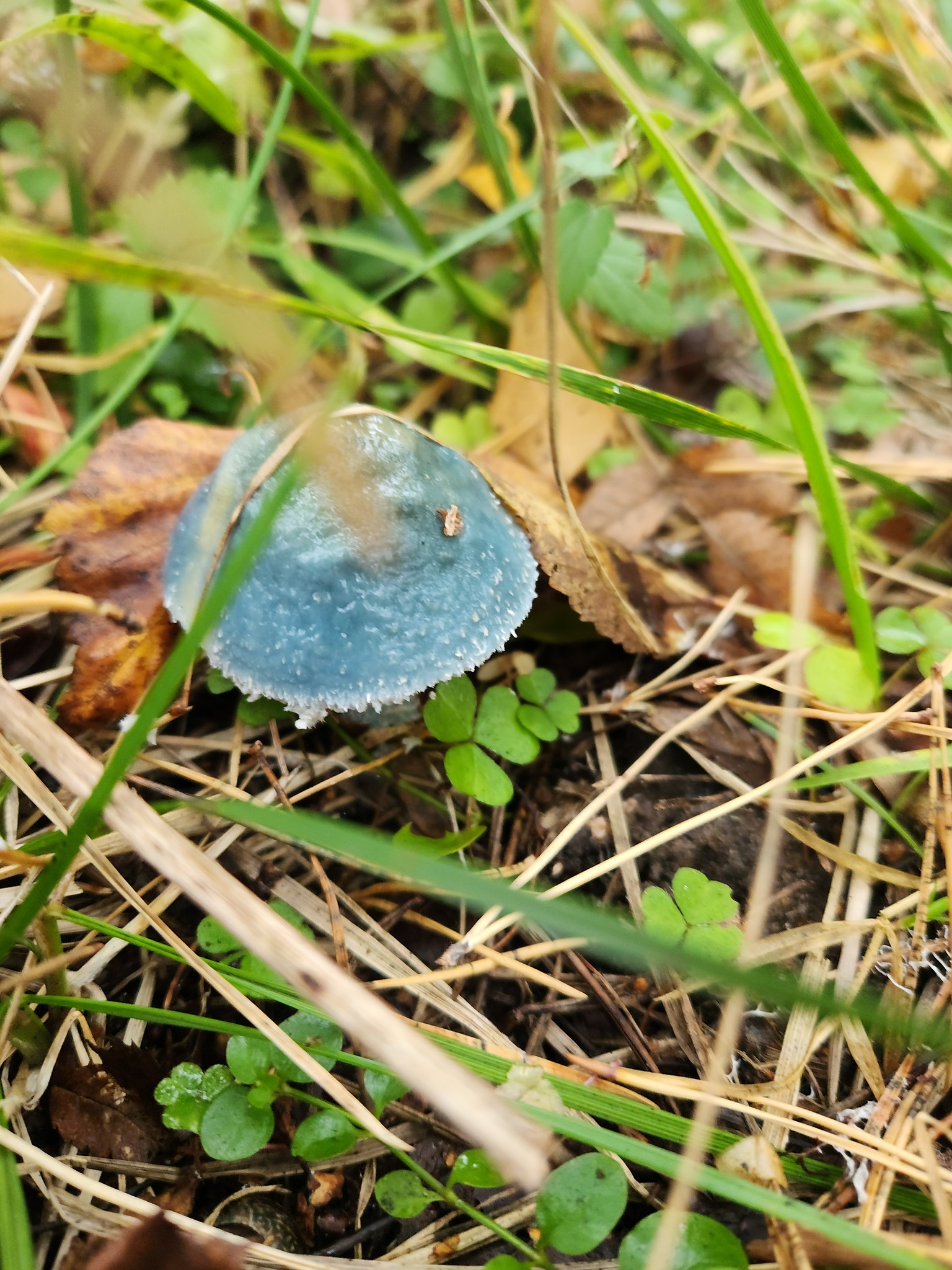
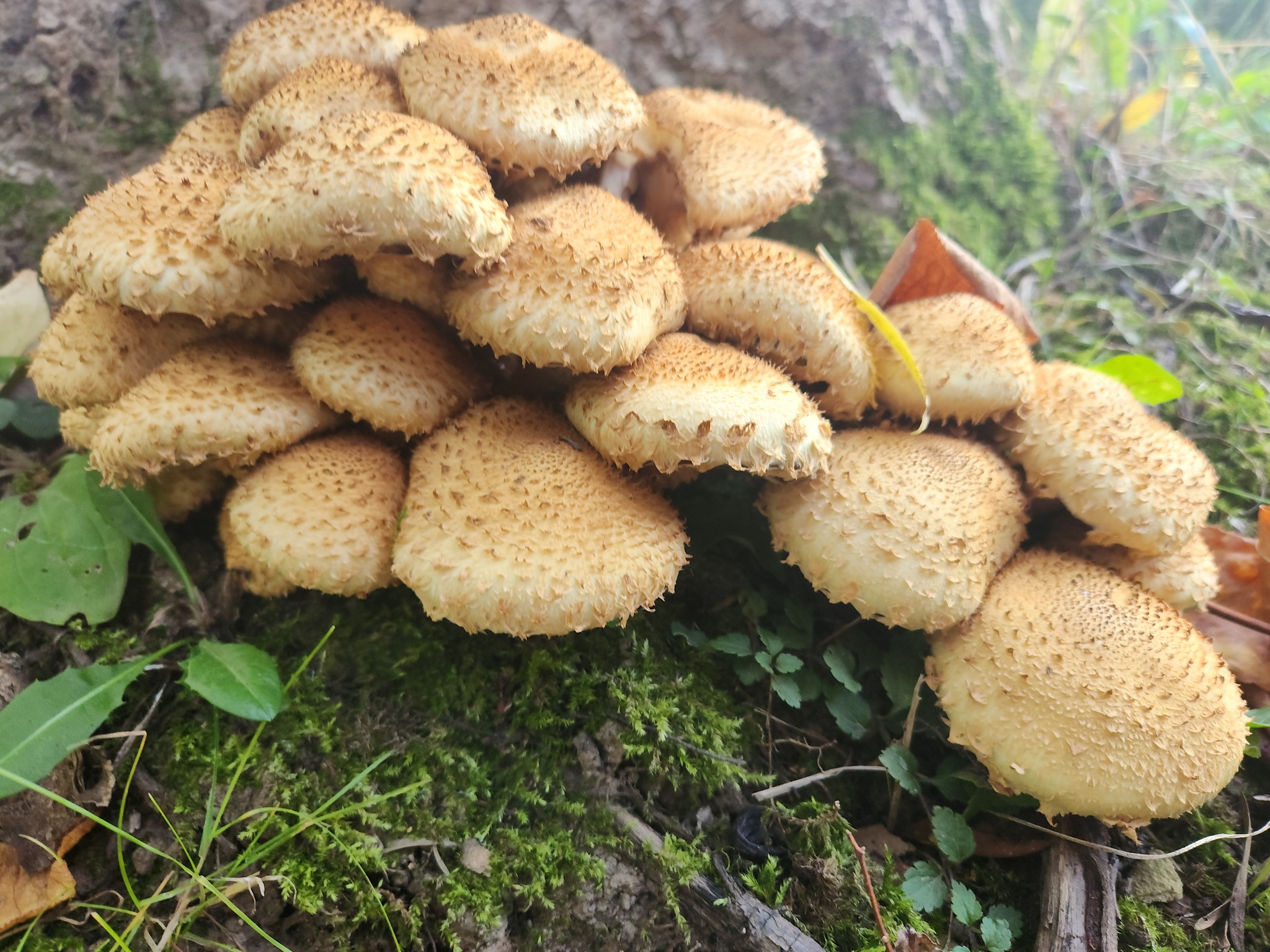
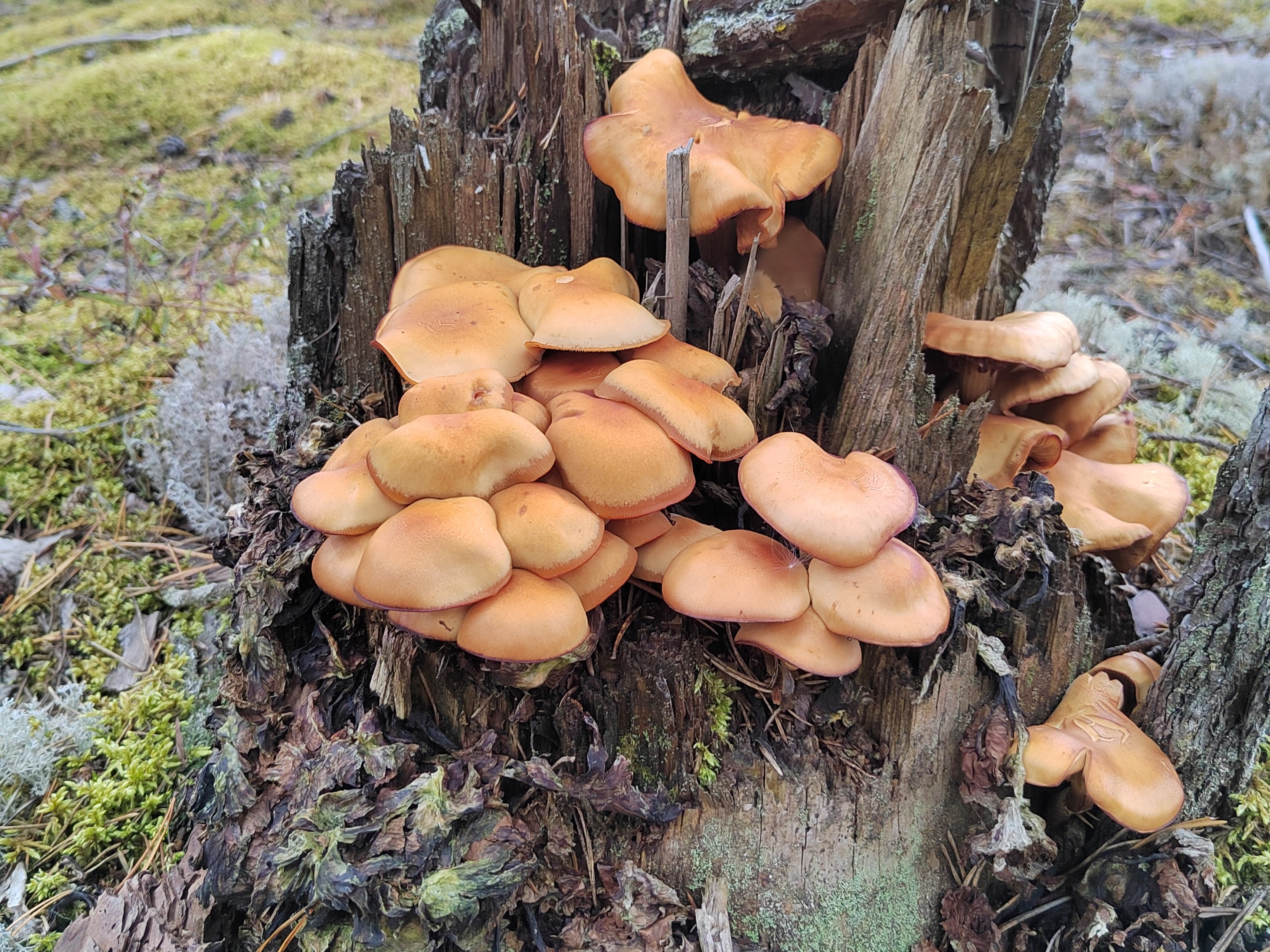
Fruit bodies of various sizes, more often medium, differentiated into cap and stem, with developed lamellar hymenophore, in individual species - secotioid. Partial veil usually present, membranous, more or less developed, leaving ring on stem (in genera Stropharia, Pholiota, Kuehneromyces) or fragments along cap edges (in genus Hypholoma), less frequently disappearing without trace (Protostropharia, some species of Stropharia and Pholiota). Rings usually collar-shaped, and with age - band-shaped form, in many species darken from falling spores above. Universal veil always absent. Caps hemispherical, less frequently bell-shaped or conical, in maturity unfold to flat and expanded, 1-18 cm in diam., in many species brightly colored in various tones of yellow, orange or green, less frequently white or brown. Surface bare or finely scaly, sometimes (in small species) radially ribbed. In several species thick removable cuticle developed. Hymenophore lamellar. Gills always more or less adnate (perpendicularly or toothed), sometimes weakly decurrent, medium frequency or rare, less frequently - frequent, in youth light-colored (whitish, yellow, light-gray), then darkening to dark-gray with violet (Stropharia) or greenish (Hypholoma) tint, or dark-brown. In some species outer edge of gills significantly lighter than plate, which facilitates species determination (thus two look-alike species S. aeruginosa and S. caerulea are distinguished). Stems long (from 1.5 to 5-7 diameters of cap), especially in species growing in clusters on wood, in soil-growing may be short, white or brightly colored - yellow, orange, often with ring. Cavity in stem usually initially absent, with age often narrow central appears. In many species of stropharias and scalycaps having ring, stem smooth above, and below ring - coarsely scaly and different in color from top, which creates illusion of presence on stem of "sleeve", ending above with collar-shaped or trumpet-shaped ring. This illusion is almost exclusively characteristic of Strophariaceae and in fungi from other families practically not encountered. Flesh of many species has characteristic smell, usually does not change color upon cutting, more or less developed, dense. Taste often bitter, less frequently sharp or not pronounced; in many species bitterness disappears after heat treatment.
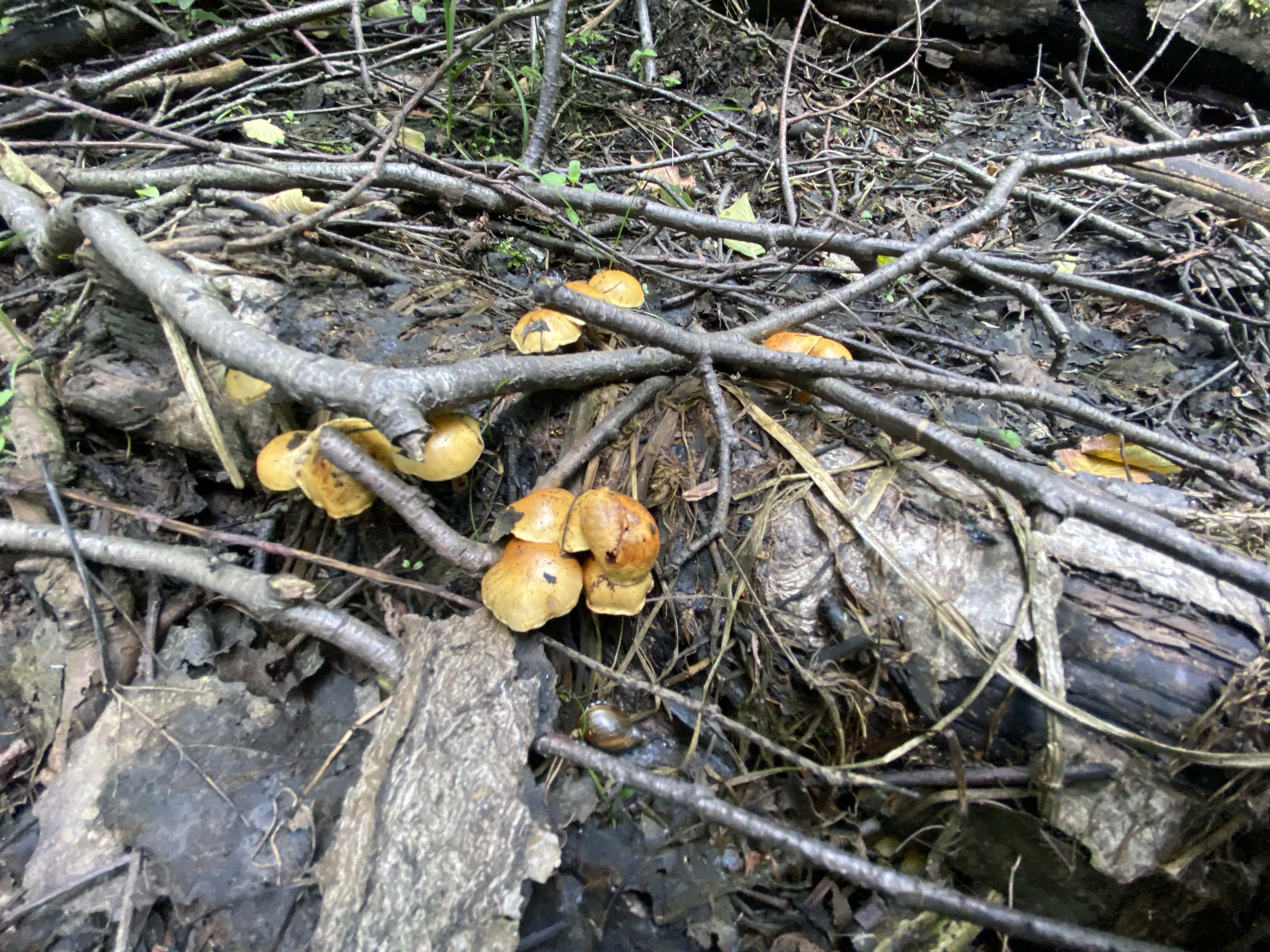
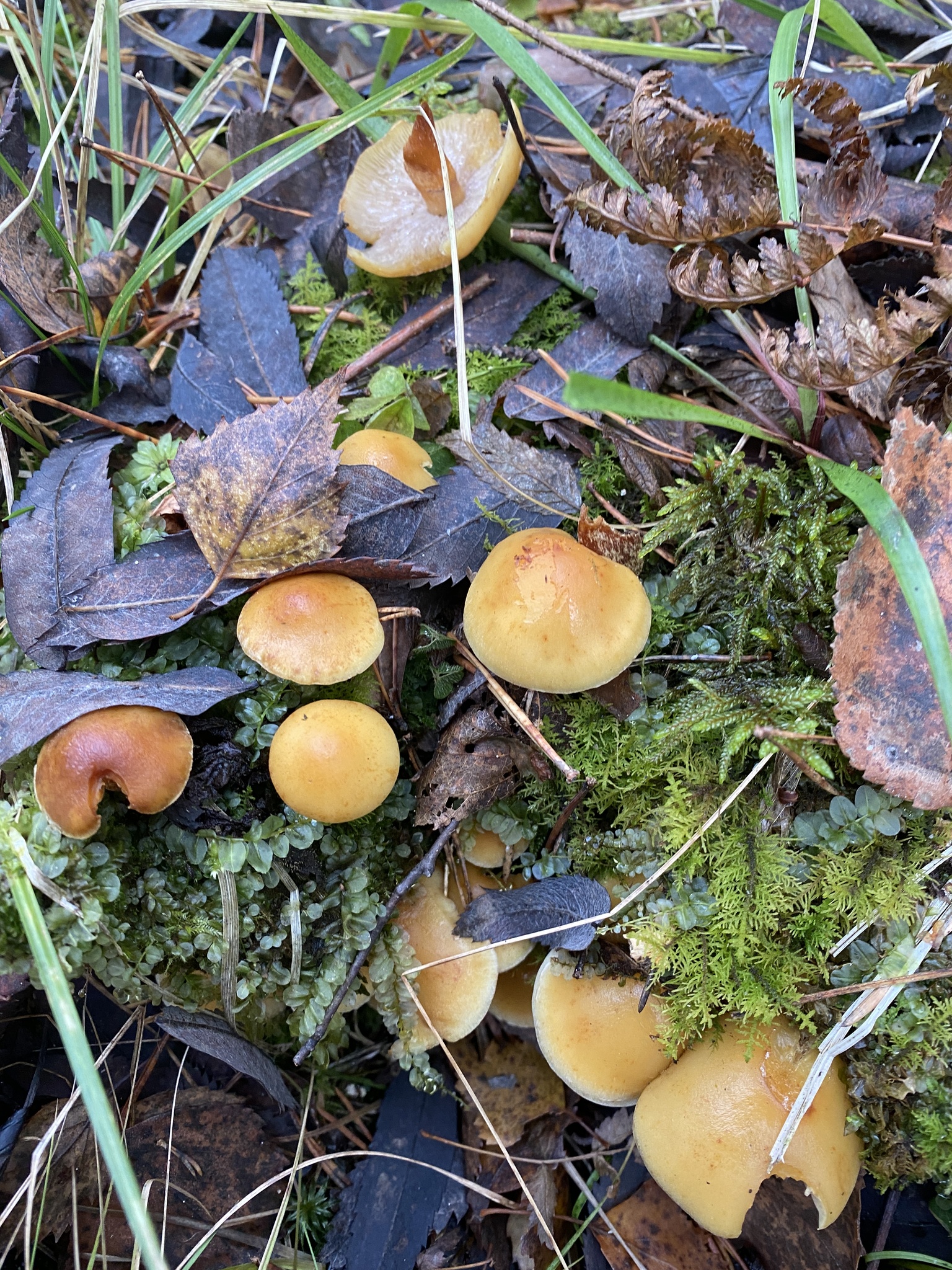
Species of type genus Stropharia develop predominantly on soil saturated with plant residues, less frequently - on wood (often facultatively). Remaining Strophariaceae grow on various dead organic matter: dead wood of deciduous and coniferous species, forest litter, humus, dead mosses, less frequently - on manure, excrement or living trees. Species capable of parasitism are not exclusive parasites and often behave as saprotrophs. Distributed across all climatic zones, although in polar regions and arid biotopes only few species found.
Edible many species of Stropharia, Pholiota, Kuehneromyces, some species of Hypholoma. Also consumed as food some species of genus Agrocybe, but its affiliation to Strophariaceae at present disputed. Many species amenable to artificial cultivation: thus, Stropharia rugosoannulata cultivated (in Europe and sometimes in Russia), Stropharia aeruginosa (apparently unprofitable), Kuehneromyces mutabilis (mainly in eastern Asia) and some species of Pholiota (Pholiota nameko - in Japan). Among Strophariaceae quite many fungi with confirmed medicinal properties. Dangerous poisonous species belong to genera Galerina and Gymnopilus, currently transferred to Hymenogastraceae; some species of Hypholoma and Pholiota weakly toxic, cause mild poisoning.